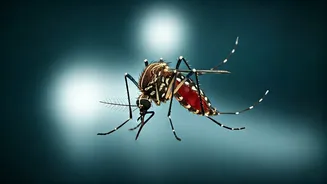







Understanding West Nile Fever
West Nile fever, a viral illness transmitted by mosquitoes, has prompted increased vigilance among health authorities in Kerala, particularly in the Ernakulam
district where five suspected cases have been reported across various locations. While official confirmation awaits laboratory test results, the situation underscores the importance of understanding this vector-borne disease. The virus primarily cycles between birds and mosquitoes, with humans acting as incidental hosts, typically infected through the bite of an infected mosquito, commonly of the Culex species. It's crucial to note that West Nile fever does not spread through direct human-to-human contact. Although most infections are mild or asymptomatic, a smaller subset of individuals, especially the elderly or those with compromised immune systems, can develop severe neurological complications. This recent development highlights the ongoing threat of mosquito-borne illnesses, especially during the warmer months when mosquito populations tend to increase.
Confirmation Process Explained
Diagnosing West Nile fever involves a meticulous laboratory process, primarily focusing on identifying virus-specific IgM antibodies within a patient's blood or cerebrospinal fluid. In the initial stages of infection, Polymerase Chain Reaction (PCR) testing might also be employed to detect the virus directly. The diagnostic journey can be prolonged due to the symptom overlap with other common viral fevers, requiring specialized laboratory facilities for accurate testing. Furthermore, antibody levels may not be immediately apparent post-infection, often necessitating repeat testing to arrive at a conclusive diagnosis. This careful, multi-step approach ensures that suspected cases are thoroughly investigated before definitive confirmation, which is crucial for effective public health management and targeted interventions.
Effective Prevention Strategies
Beyond general mosquito control measures, proactive steps by individuals and communities are paramount in mitigating the risk of West Nile fever. Personal protection includes the consistent use of effective mosquito repellents, wearing clothing that covers most of the skin, such as long-sleeved shirts and trousers, and ensuring that windows and doors are properly screened to prevent mosquito entry. A critical community and individual effort involves eliminating potential breeding grounds by removing stagnant water sources from around homes and public spaces. At a broader level, coordinated community initiatives are vital. These encompass regular fogging operations to control adult mosquito populations, widespread public awareness campaigns to educate residents about the risks and preventive actions, and ongoing surveillance to monitor mosquito density and identify high-risk areas. Such integrated efforts are essential for effectively containing the spread of the virus.