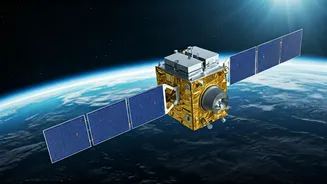










EOS-N1's Core Purpose
The EOS-N1 satellite represented a significant stride in India's capability to observe Earth from space. Its primary objective was to provide crucial data
for a wide array of applications, including resource management, disaster monitoring, and urban planning. Equipped with advanced imaging technology, it was designed to capture high-resolution imagery of the Earth's surface, enabling scientists and policymakers to gain deeper insights into environmental changes, agricultural productivity, and the impact of natural calamities. This satellite was envisioned as a key component in strengthening India's self-reliance in space-based Earth observation, offering continuity and enhancement to existing services. The data gathered would be instrumental in making informed decisions for sustainable development and improving the lives of citizens by providing timely and accurate environmental information.
Technological Advancements
EOS-N1 was not just another satellite; it embodied a leap forward in India's satellite technology. The mission was geared towards deploying a platform with enhanced spectral and spatial resolution capabilities compared to its predecessors. This would allow for more detailed analysis of land cover, water bodies, and atmospheric conditions. The satellite's payload was carefully selected to cater to diverse user needs, ranging from meteorological studies to mapping geological formations. Its design also focused on increased operational efficiency and longevity, ensuring a sustained period of data collection. The successful deployment of EOS-N1 would have further solidified ISRO's position as a leader in designing and operating sophisticated Earth observation satellites, paving the way for future, even more advanced missions.
Mission Context and Importance
The launch of EOS-N1 aboard the Polar Satellite Launch Vehicle (PSLV) was a highly anticipated event, underscoring the importance of Earth observation for national development. This mission was a testament to ISRO's consistent efforts in building robust and reliable space assets. Beyond its scientific and technical merits, EOS-N1 symbolized India's growing ambitions in space exploration and its commitment to leveraging space technology for societal benefit. The satellite was intended to support various governmental agencies and research institutions, providing them with the critical data needed for effective planning and response mechanisms. Its potential to contribute to fields like climate change research and disaster management made it a vital asset for India's future.