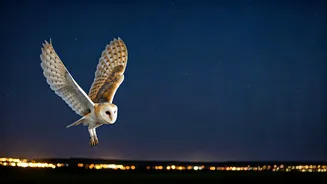








Nocturnal Vocalizations Explained
While most birds are programmed for nocturnal rest, some exhibit unusual vocal behavior after sunset, a phenomenon often amplified in urban settings. This
can stem from disruptions to natural light cycles and acoustic interference from sudden noises or artificial illumination. Such disturbances can impact breeding patterns and are more common in bird species that have adapted to city life. The reasons behind these 'midnight melodies' are varied and intriguing, offering a window into avian communication strategies beyond the well-known dawn chorus. It highlights the adaptability of birds in response to their ever-changing environments, especially when human presence and development alter natural habitats and their inherent rhythms.
Territory and Mating Calls
One of the primary motivations for birds to sing after dark is the assertion of their territory. For certain species, the quieter, less crowded nighttime offers an ideal platform to broadcast their presence and warn off potential rivals. This strategy is particularly prevalent in bustling urban areas where persistent artificial lighting can confuse natural circadian rhythms, compelling birds to adjust their vocalization schedules. The incessant noise of city environments can also make it challenging for birds to effectively communicate during daylight hours, pushing them to utilize the calmer periods of the night for their crucial messages. Furthermore, mate attraction plays a significant role. In many species, male birds engage in nocturnal singing to attract females, especially during the breeding season, signaling their vigor and readiness to pair. The cover of darkness can also provide a sense of security, reducing the risk of predation while they perform their elaborate songs.
Species-Specific Behavior
Some bird species have naturally evolved to incorporate nocturnal singing into their intrinsic behavioral repertoire. A prime example is the common nightingale, renowned for its intricate and melodious vocalizations that are often performed under the cloak of darkness. While the precise evolutionary drivers are still under active scientific investigation, it is widely believed that this behavior is intricately linked to both the need to defend their territories and the imperative to attract mates. These species demonstrate a specialized adaptation, using the night not as an anomaly but as a primary stage for essential life functions, showcasing the remarkable diversity within avian communication and the specialized roles different times of day can play in their lives.
Environmental Influences
Beyond intrinsic biological drives, external environmental cues can significantly influence when birds choose to vocalize. Factors such as fluctuations in temperature, shifts in humidity levels, and the pervasive presence of artificial light sources can all act as triggers for avian vocalizations in some species. For instance, a sudden cooling of the air might prompt a bird to emit calls, possibly as a mechanism to conserve body heat or to maintain contact with other members of its flock in the quiet dark. These environmental signals underscore the dynamic relationship between birds and their surroundings, demonstrating how subtle changes in their habitat can directly impact their communication patterns and daily activities, even extending into the hours of darkness.