

Bridging the Gap
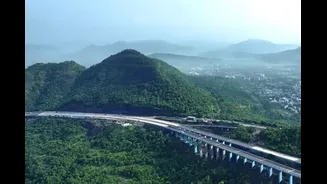
The Mumbai-Pune Expressway, a vital connection, is undergoing a major transformation with the imminent completion of its 'Missing Link'. This 13.3 km segment,
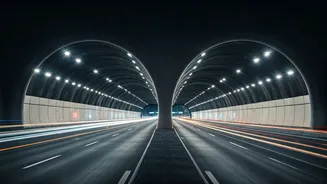
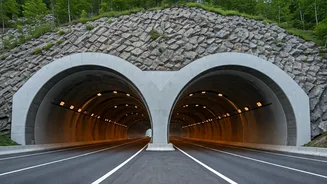
a substantial engineering feat, culminates in India's longest twin-tube road tunnel. This new stretch is engineered to drastically cut down travel duration between the two major Maharashtra cities by bypassing the challenging ghat section. This area is historically prone to traffic snarls and increased risks, particularly during the monsoon season. The Rs 8,000 crore project aims to create a more fluid and efficient travel corridor, significantly improving connectivity and reducing the overall journey length by approximately six kilometers compared to the existing route through the ghats. The reduction in travel time is estimated to be between 20-25 minutes due to this strategic bypass.
Enhanced Safety Measures
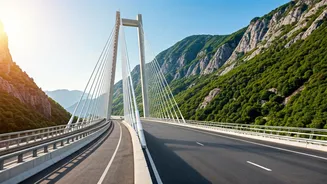
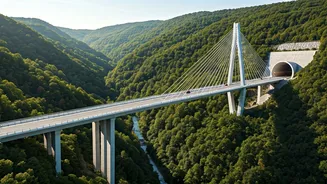
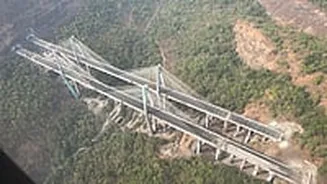
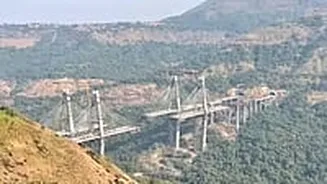
With the introduction of the Missing Link and its state-of-the-art infrastructure, including advanced tunnels and viaducts, discussions are underway to potentially adjust the established speed limits. Currently, light motor vehicles are permitted up to 100 kmph and heavy vehicles at 80 kmph. The Maharashtra Highway Police are prioritizing an upgrade in safety protocols, integrating sophisticated surveillance technology, speed detection cameras, and a robust emergency response framework. The Missing Link itself boasts an eight-lane structure across its tunnels and viaducts, offering a wider passage compared to the existing expressway. It's important to note that, akin to the main expressway, stopping vehicles is prohibited on this new stretch. This project includes two major tunnels, one approximately 1.75 km long and another nearly 8.92 km long, alongside two eight-lane viaducts measuring 790 meters and 650 meters respectively.
Tunneling Through Progress
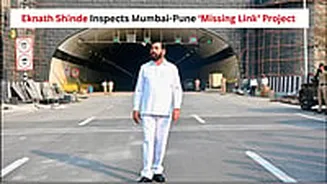
The core of the Missing Link project features impressive tunnel infrastructure designed for efficiency and safety. The longer of the two tunnels, measuring around 9 km, falls under the jurisdiction of the Khandala Traffic Aid Posts (TAP) in the Pune division. The subsequent valley bridge, a smaller tunnel, and the connection back to the main expressway are managed by the Borghat TAP, under the Raigad division. These tunnels are equipped with advanced safety systems, including automatic fire detection and suppression units, comprehensive ventilation, and clearly marked emergency exits. The entire system is integrated with an Intelligent Traffic Management System (ITMS) utilizing AI-enabled cameras for continuous monitoring. Officials emphasized the need for robust enforcement, stating that violations of speed limits and lane discipline will result in penalties.
Emergency and Enforcement Hub
To ensure round-the-clock safety and swift responses, a comprehensive emergency and enforcement system has been established. Two multi-agency control rooms are operational near the endpoints of the Missing Link, staffed 24/7 by personnel from the Highway Police, MSRDC, and RTO. These centers have access to real-time visuals from numerous Pan-Tilt-Zoom CCTV cameras. They are equipped to immediately initiate responses to vehicle stoppages, accidents, fires, or any other incidents. For rapid deployment, patrol vehicles, ambulances, and fire tenders are strategically positioned, with the unique capability to utilize the opposite tunnel corridor and connecting passages for faster access. SOS panic buttons are installed every 250 meters along the entire stretch, directly alerting the control room to emergencies. Speed guns will also be deployed to monitor vehicle velocities.
Impact and Future Outlook
The operationalization of the Missing Link is projected to significantly reduce travel time between Mumbai and Pune, potentially by at least 30 minutes, offering substantial benefits to daily commuters, business travelers, and the logistics sector, thereby boosting economic activity. Initially, Phase 1 of the Missing Link, effective from May 1 to October 31, will permit only Light Motor Vehicles, passenger buses, and passenger vehicles, maintaining speed limits of 100 kmph for cars and 80 kmph for buses. Heavy vehicles might be allowed from November 1 onwards, subject to a review of the first six months. However, vehicles carrying hazardous materials, including inflammable and explosive substances, will continue to use the existing expressway. This project sets a precedent for future infrastructure developments across India, underscoring the importance of engineering, education, enforcement, and emergency response in road safety.