



Eastern & Northeastern Narratives
The eastern and northeastern regions of India are renowned for their deep-rooted textile traditions, often weaving tales and showcasing raw, natural textures.
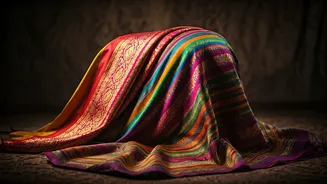
In West Bengal, the Baluchari saree stands out as a wearable chronicle, its pallus intricately depicting scenes from epics like the Ramayana and Mahabharata, transforming the drape into a narrative canvas. Bihar's Bhagalpuri Tussar offers an eco-friendly option with a rustic charm, suitable for both casual and formal settings, embodying a natural, earthy aesthetic. Jharkhand's Tribal Tussar and Odisha's Sambalpuri Ikat are characterized by their distinctive tie-dyed patterns and motifs deeply inspired by nature, reflecting the local environment and cultural ethos. Moving to the Northeast, a treasure trove of sustainable and intricate craftsmanship awaits. Assam's Muga Silk is legendary for its unparalleled golden sheen, which remarkably intensifies with each wash. Meghalaya's Eri Silk, often called peace silk, provides a beautiful matte finish and excellent thermal regulation, making it a comfortable choice in varying climates. Arunachal Pradesh's Apatani weaves and Sikkim's Lepcha sarees present a minimalist tribal aesthetic with earthy hues and distinctive stripes, blending seamlessly with contemporary fashion. Nagaland's Naga Motif drapes are adorned with striking geometric patterns representing clan affiliations, while Mizoram's Puan-inspired sarees feature tight weaves and bold stripes, showcasing vibrant traditional designs. Tripura's Risa-inspired fabrics add distinct tribal elements, and Manipur's Moirang Phee distinguishes itself with its sheer cotton fabric and delicate, temple-like motifs along the edges, epitomizing subtle elegance.
Western & Central Elegance
Western India is a vibrant hub for sophisticated dyeing techniques, where tradition meets meticulous craftsmanship. Rajasthan's Bandhani sarees are a visual spectacle, featuring hyper-saturated colors and fluid tie-dye patterns that evoke the spirit of the desert landscape. In stark contrast, Gujarat's Patola is a testament to precision; this double-ikat masterpiece is created with mathematical exactitude, demanding months of dedicated labor for its complex, geometric designs. Maharashtra's Paithani silk sarees are synonymous with luxury, distinguished by their opulent silk fabric and iconic peacock motifs gracing the pallus. Goa offers a more grounded yet equally significant heritage with its Kunbi saree, a breathable, red-checked cotton drape that revives the legacy of coastal tribal communities. At the country's heart, Madhya Pradesh presents the Chanderi saree, celebrated for its incredibly lightweight and translucent quality, making it an ideal garment for scorching summers. Neighboring Chhattisgarh contributes with its Kosa Silk, a beautifully textured, slightly coarse silk alternative often embellished with traditional tribal artwork, offering a distinct regional style.
Southern Splendor & Architectural Weaves
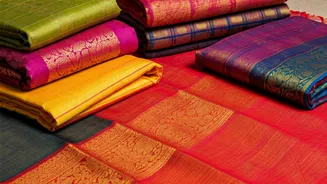
The southern Indian states are celebrated for their architecturally intricate weaves, where each saree tells a story of heritage and skilled artistry. Tamil Nadu's Kanjeevaram is arguably the undisputed queen of Indian textiles, crafted from pure mulberry silk and adorned with opulent zari borders that often feature temple-inspired motifs, signifying grandeur and tradition. Kerala embraces a minimalist elegance with its Kasavu sarees, the epitome of understated luxury, typically featuring crisp white cotton fabric beautifully edged with radiant gold threads, exuding a serene and refined aesthetic. Karnataka's Ilkal sarees are instantly identifiable by their distinctive 'tope teni' pallu, characterized by a striking red hue and intricate weaving patterns that add a unique visual element. Andhra Pradesh introduces the Uppada Jamdani, a marvel of delicate zari work that allows the fabric to breathe beautifully, creating a lightweight and exquisite drape. Rounding out the southern quartet, Telangana is renowned for its Pochampally Ikat, famous for its remarkably smooth silk-cotton blend and sharp, precise geometric designs that showcase the artistry of the ikat dyeing technique.
Northern Heritage & Mountain Craft
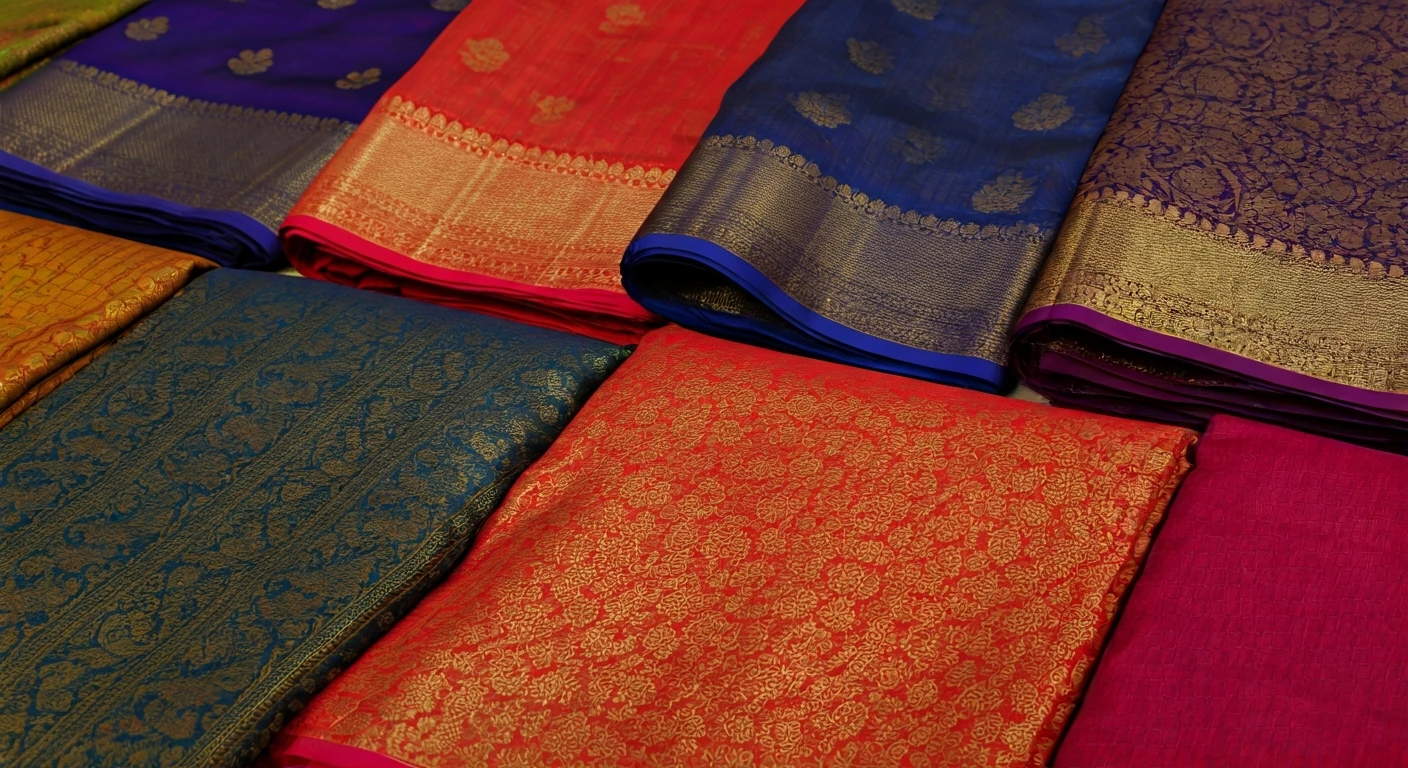
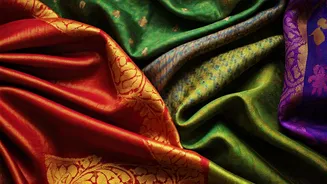
The northern regions of India present a fascinating blend of royal opulence and practical mountain craftsmanship in their saree traditions. Uttar Pradesh is home to the illustrious Banarasi saree, a symbol of grandeur characterized by its heavy brocades and intricate gold and silver floral jaals woven into the fabric, instantly commanding attention and exuding regal charm. In contrast, Punjab offers the vibrant and joyful Phulkari, where the saree becomes a lively canvas adorned with extensive, intricate floral embroidery, reflecting the spirit of celebration and exuberance. Haryana contributes with the Resham Dhuria, a comfortable yet celebratory saree that masterfully combines silk embroidery on soft cotton fabric, balancing elegance with ease. Moving towards the Himalayas, Himachal Pradesh's Kullu Patti sarees captivate with their vivid geometric patterns, often inspired by shawl borders, woven against wool or cotton backgrounds, adding a touch of mountain flair. Finally, Uttarakhand's Panchachuli weaves showcase fine, understated elegance, meticulously crafted by women in the Himalayas, embodying the serene beauty and resilience of mountain life.