





Embrace Flame-Free Cooking
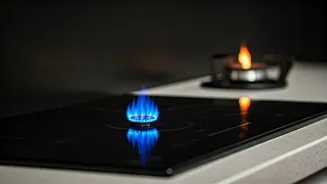
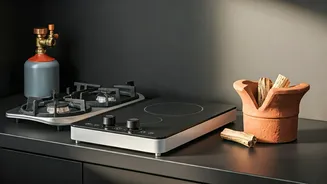
The most significant shift when moving from gas to induction is adapting to cooking without the visual cue of a flame. Gas stoves provide immediate visual feedback:
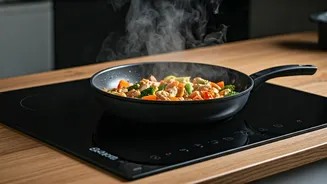
a larger flame equates to more heat, while a smaller one indicates less. Many home cooks rely heavily on this visual indicator for heat control. Induction cooktops, however, utilize numbered or digital settings, which can initially feel abstract. A setting like '5' or '7' might not convey intuitive temperature information until you've experienced it a few times. The key is to shift your focus from the burner to the food itself. Pay attention to the subtle signs, such as the sound of oil heating up, the fragrant aroma of spices being sautéed, or the distinct sizzle of ingredients as they begin to cook. These sensory cues provide much clearer indications of the pan's temperature than arbitrary numbers on a display, allowing for more precise cooking.
Quiet Cooktops, No Worries
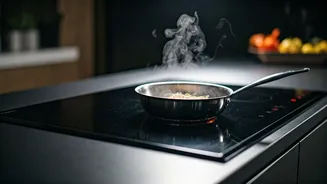
One of the unexpected surprises for many new induction users is the distinct lack of noise. Unlike the audible hiss or hum of electric coils, or the noticeable roar of a gas burner, induction cooktops operate in near silence. This quiet operation can lead to initial confusion, with some users questioning whether the appliance is even functioning. It's important to understand that this silence is normal. While generally quiet, certain cookware, particularly when used at higher power settings, might produce a soft humming or buzzing sound. This is a result of the magnetic interaction between the pan and the cooktop surface. Often, simply reducing the heat level slightly can mitigate or eliminate this noise, ensuring a peaceful cooking experience.
Rapid Heat Response
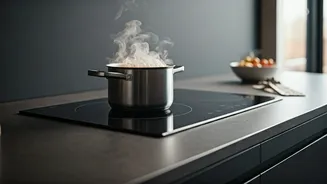
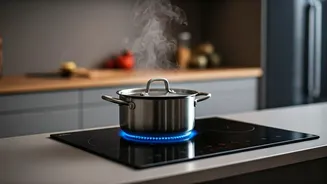
Induction cooktops are renowned for their incredibly quick response to temperature adjustments, a stark contrast to traditional gas or electric stovetops. When you change the heat setting on an induction unit, the pan's temperature alters almost instantaneously. This means that increasing the heat can bring a pan to temperature within mere seconds, and decreasing it works with the same swiftness. A pot of vigorously boiling water can be reduced to a gentle simmer almost immediately. However, this rapid heating can catch beginners off guard, leading to food cooking much faster than anticipated. To manage this, it's advisable to start cooking with moderate heat settings. As you become more familiar with how your specific cooktop reacts to different levels, mastering temperature adjustments will become significantly easier and more intuitive.
Essential Cookware Choices
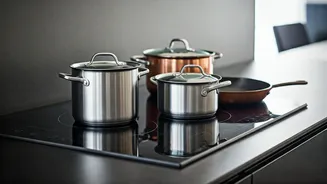
The principle behind induction cooking is magnetism, which dictates that not all types of cookware are compatible. For a pan to heat on an induction surface, it must possess a magnetic base. This generally includes most stainless steel cookware, cast-iron pans, and enamel-coated steel cookware. Materials like lightweight aluminum, glass, and ceramic typically will not work unless they are specifically designed with an embedded magnetic layer. Heavier pans tend to perform better on induction surfaces, as they distribute heat more uniformly and respond with greater stability to temperature changes. A crucial detail to remember is the size of the pan's base relative to the cooking zone. If the pan is significantly smaller or larger than the designated zone, heat transfer efficiency can be compromised, impacting cooking performance.
Streamline Preparation Habits
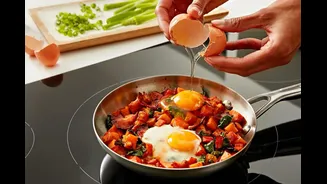
Adapting your cooking habits is key to a smooth induction experience. Because induction heats so rapidly, preparation becomes paramount. It's highly beneficial to have all your ingredients chopped, measured, and ready to go before you even turn on the cooktop. Overheating an empty pan on high heat can quickly damage cookware, so it's generally safer to start with a lower heat setting and add ingredients first. Gradually increase the heat as needed. For certain dishes, cooking at a slightly lower, controlled temperature can yield superior results. Furthermore, covering pots with lids helps to trap heat and steam, accelerating the cooking process and enhancing efficiency. Avoiding common beginner errors like immediately setting the heat to maximum or leaving a preheating pan unattended is vital for preventing burnt food and ensuring consistent cooking outcomes.