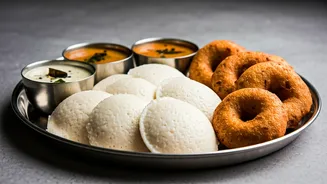

Idli: South Indian Staple
Idli, a steamed rice cake, is a cornerstone of South Indian cuisine and is loved all over the world. Made from a fermented batter of rice and lentils,
idli is light, fluffy, and easily digestible. The fermentation process enhances its nutritional value. The traditional way of preparing idli includes soaking the rice and lentils, grinding them into a smooth batter, allowing it to ferment overnight, and then steaming the batter in specially designed idli molds. Served with sambar (a lentil-based vegetable stew) and coconut chutney, idli is not only a breakfast staple but also a versatile dish that can be enjoyed at any time of the day. The simple ingredients and preparation method make it a healthy and satisfying choice, rich in carbohydrates and proteins. Variations exist, such as rava idli (made with semolina) for a quick alternative. It’s a very popular and healthy breakfast option in the region and is enjoyed by people of all ages.
Uttapam: Savory Pancake
Uttapam, often called a savory pancake, is another South Indian breakfast gem. Similar to idli, it uses a fermented batter, but the consistency is thicker, allowing for toppings to be added directly to the pan. Unlike idli, uttapam is cooked on a griddle, resulting in a slightly crispy exterior and a soft interior. The batter usually includes rice and lentils, and it can be seasoned with various spices. Common toppings include onions, tomatoes, chilies, and coriander leaves. Uttapam provides a wonderful canvas for culinary creativity. It is usually served with sambar and chutney, making it a complete meal that is both filling and flavorful. Uttapam is a great way to incorporate vegetables into your morning meal, making it a healthier option. The variations depend on the region, with specific combinations of toppings, making each bite unique.
Dhokla: Gujarati Delight
Dhokla, a beloved Gujarati snack, also makes for an excellent steamed breakfast option. Made from fermented batter of gram flour (besan), the mixture is often seasoned with spices and then steamed until it becomes light and spongy. Dhokla offers a delightful combination of sweet, sour, and savory flavors. The fermentation process adds a tangy note, while the tempering of mustard seeds, chilies, and curry leaves brings a unique aroma and taste. It’s often served with a sweet and tangy chutney. Dhokla is a relatively light and nutritious breakfast choice, as it is steamed rather than fried. The use of gram flour provides a good source of protein, making it a great way to start your day. Different types of dhokla exist, each with its unique flavor profile, such as the khatta dhokla, and rava dhokla made with semolina.
Modak: Maharashtrian Sweet
Modak is a traditional sweet dumpling, particularly popular in Maharashtra, often associated with the festival of Ganesh Chaturthi. While typically considered a sweet treat, modak can also be eaten as a morning breakfast. The outer layer is made from rice flour or wheat flour, and the filling typically consists of grated coconut and jaggery, which is then steamed. The dumpling is soft, and has a sweet filling that balances the simplicity of the outer layer. The process involves a specific technique, making it an art form in itself. Modak provides a delightful burst of sweetness and a rich texture, making it a satisfying breakfast. The simple combination of ingredients, such as coconut and jaggery, offers a natural sweetness. It is not only a delicious treat, but also represents religious significance for many families in Maharashtra.
Puttu: Kerala Favorite
Puttu, a traditional Kerala breakfast, consists of steamed cylinders of ground rice, layered with grated coconut. It is typically cooked in a puttu-kutti (a special steamer) or a bamboo vessel. The layering of rice and coconut creates a unique texture and flavor. Puttu is usually served with kadala curry (black chickpea curry), or with banana and sugar, providing a balanced meal. The steaming process makes puttu light and easy to digest. It is a nutritious breakfast choice, as it’s rich in carbohydrates from the rice and provides the health benefits of coconut. Its simplicity and delightful flavors make it a favorite across Kerala. Puttu is often enjoyed with other accompaniments, such as papadams (thin crispy wafers). The process of steaming adds to the overall flavor of the dish.
Khaman: Another Gujarati
Khaman, another Gujarati favorite, is a variation of dhokla. It is also made from fermented gram flour batter, but the texture is generally fluffier and lighter. The batter is seasoned with spices, and it is steamed until it becomes spongy and airy. Khaman is often tempered with mustard seeds, curry leaves, and sometimes green chilies, enhancing its flavors. It is typically served with chutney and is a popular breakfast or snack option. Khaman provides a good source of protein. Its airy texture makes it light and easy to enjoy. Khaman comes in many forms, with the most common being the ones served in squares. Khaman is known for its ability to absorb flavors making it a perfect dish to accompany chutneys and other dishes.
Idiyappam: String Hoppers
Idiyappam, also known as string hoppers, is a popular breakfast dish throughout South India and Sri Lanka. They are made from rice flour, pressed into noodle-like strands, and then steamed. The delicate strands create a light and fluffy texture, which makes for a delightful breakfast. Idiyappam is usually served with vegetable stew, or with coconut milk and sugar, offering a variety of flavor combinations. It is a relatively light and easily digestible breakfast choice, and it's a good source of carbohydrates from the rice flour. Idiyappam's simple preparation makes it a quick and healthy option, loved by people of all ages. The texture of idiyappam is soft, and it's a versatile dish that pairs well with savory and sweet accompaniments.
Poha: Flattened Rice
Poha, a popular breakfast dish, made with flattened rice, is often consumed across India, particularly in the states of Maharashtra and Madhya Pradesh. The flattened rice is softened by soaking it in water, then it's sautéed with onions, potatoes, mustard seeds, turmeric, and spices. This cooking method results in a slightly chewy and aromatic dish. Poha offers a great source of carbohydrates, making it a filling breakfast option. It is a quick and easy dish to prepare. Poha is often garnished with coriander leaves and a squeeze of lime juice, adding to its fresh flavor. Different regions have their own versions of poha. The inclusion of vegetables and spices gives the dish various flavors.
Bati: Rajasthani Bread
Bati, a traditional Rajasthani dish, is a baked or steamed, round bread that is primarily consumed as a breakfast staple. It is made from whole wheat flour, and is known for its hard exterior and soft interior. The preparation includes mixing the flour with ghee and spices, forming dough, and then baking it. Bati is usually served with dal (lentil soup) and churma (sweet crumble), providing a complete and satisfying meal. The baking process gives bati a unique texture, and its heartiness provides sustained energy. Bati is a good source of carbohydrates, making it an excellent breakfast option. The use of ghee adds a rich flavor and helps in digestion. It’s often served during festivals and is a symbol of Rajasthani culture. Bati is sometimes also steamed to cook.
Thukpa: Tibetan Noodle
Thukpa, a noodle soup of Tibetan origin, is a great breakfast choice. Thukpa is made with wheat noodles, vegetables, and sometimes meat, simmered in a flavorful broth. It’s a nourishing and warming dish, perfect for cooler mornings. The broth is usually seasoned with various spices, giving it a unique aroma and taste. Thukpa provides a good combination of carbohydrates, protein, and vegetables, providing a balanced and filling meal. The warmth from the soup makes it ideal. Thukpa can be adapted to suit personal preferences, with options such as vegetarian or non-vegetarian versions. Different regions have their own versions of thukpa. It's a breakfast that combines taste and nutrition in a single bowl.