
Frozen Time Capsules
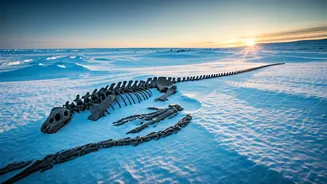
The discovery of baby dinosaur fossils in the Arctic permafrost is like opening a time capsule. These fossils provide a unique window into the lives of dinosaurs
that lived in a world far different from what we see today. The permafrost, a permanently frozen layer of soil, acts as a natural preserver, keeping the fossils in remarkable condition. This allows scientists to study details like bone structure and even sometimes, soft tissues. The importance of these finds can't be overstated. They help to understand how these creatures managed to thrive in a place that is now known for its extreme cold, and provides insight into the broader picture of dinosaur adaptation and evolution. The ability to find such well-preserved remains is a testament to the preservation power of the Arctic's frozen ground, offering unparalleled opportunities for paleontological research.
Adapting to Cold
Surviving the Arctic winters wasn't easy for the dinosaurs, yet these creatures managed it. The fossil evidence reveals that many dinosaurs, including young ones, had developed specific survival strategies. One key adaptation was the likely existence of insulation, like feathers or thick skin, which acted as a shield against the cold. The research also suggests that dinosaurs may have migrated to warmer regions during the harshest months, much like some animals do today. Some species may have also been able to huddle together for warmth or had specific metabolic adjustments, allowing them to endure the extreme cold. Furthermore, the size and the diet of the dinosaurs must have also played a role. Larger dinosaurs have a greater surface area to volume ratio, retaining more heat, and what they ate greatly impacted their body's overall thermal regulation. The remarkable adaptations showcased that dinosaurs were highly adaptable and resilient beings, able to colonize and flourish in a vast array of environments.
Unveiling the Youngsters
The discovery of baby dinosaur fossils is especially significant because it provides insights into how these animals grew and developed. Studying the bones of young dinosaurs reveals patterns of growth, how their bodies changed as they matured, and how they learned to survive. The smaller size of the juvenile dinosaurs likely meant they were more vulnerable to the cold and predators, therefore, they may have required different strategies compared to adults. Fossil analysis enables paleontologists to reconstruct their early lives, from their feeding habits to the habitats they inhabited. This data provides an important element to understanding the full picture of dinosaur behavior and evolution. Studying these fossils not only provides data about how these animals lived and died, but also helps to uncover the challenges and hurdles that they faced while growing up. It provides crucial information about how these creatures overcame adversity during their lives and the different pressures that shaped their species.
Arctic Climate Clues
Examining the fossil record in the Arctic also helps reconstruct the climate of the region millions of years ago, giving scientists important insights into Earth's past climate. During the time of the dinosaurs, the Arctic was much warmer and experienced seasonal changes. There was a mix of mild summers and winters, but the environment was still challenging. By studying the fossils, scientists can learn about the plants and animals that lived there, which helps to piece together the picture of the environment. The types of dinosaurs found, and the condition of their remains, can give details about the average temperatures, snowfall, and the duration of daylight and darkness during various seasons. This knowledge is important, as it helps climate scientists to model and understand climate change and how environmental conditions affected life on Earth over vast periods of time. Additionally, this insight is valuable in understanding how life adapts to environmental changes, which can provide insights into modern climate change and its impact on living species.
Future Research
The field of paleontology is constantly growing, and the study of Arctic dinosaur fossils is no exception. Future research promises to unearth even more fascinating discoveries. Scientists are using advanced techniques such as CT scanning and 3D modeling to study the fossils in even greater detail. This allows them to examine the internal structures of the bones and reconstruct the dinosaurs' bodies more accurately than ever before. New fossil finds are constantly being made. Ongoing research will also focus on studying the genes and the soft tissues of dinosaurs to better understand their biology and evolutionary relationships. Combining all these methods will lead to a more complete and sophisticated understanding of dinosaurs and their adaptation to different conditions. This continued research will not only fill in gaps in our knowledge, but will also challenge and refine existing theories. With each new discovery, we get one step closer to solving the mystery of the dinosaurs and their remarkable world.