







Oxygen from Lunar Soil
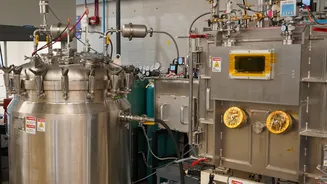
Blue Origin has achieved a groundbreaking feat by extracting oxygen from materials mimicking lunar regolith under controlled laboratory conditions. This
advancement is crucial for establishing a long-term human presence beyond Earth, as it addresses the significant logistical challenge of transporting essential resources from our planet. The process leverages years of research focused on liberating oxygen chemically bound within the minerals that constitute the Moon's surface. By generating oxygen locally, future lunar missions can drastically cut down on the prohibitively expensive costs associated with Earth-based resupply operations. While this technology is still in its nascent stages, it clearly demonstrates the growing capacity of private space enterprises to transform theoretical scientific principles into practical systems capable of supporting future extraterrestrial endeavors.
Molten Regolith Electrolysis
The method employed by Blue Origin for oxygen extraction is known as molten regolith electrolysis, a technique also explored by prominent space agencies like NASA and the European Space Agency. This sophisticated process involves heating lunar-like soil to incredibly high temperatures, causing it to liquefy into a molten state. Subsequently, an electric current is passed through this molten material, effectively dismantling the chemical bonds that hold oxygen atoms within the mineral structures. This electrical intervention liberates the oxygen as a gas, which can then be collected and utilized. While the fundamental concept has been a subject of scientific inquiry for a considerable period, the current emphasis has shifted towards developing robust systems engineered for reliability in the harsh realities of the lunar environment, moving beyond mere laboratory demonstrations.
Oxygen's Lunar Abundance
Despite its barren appearance, lunar soil, or regolith, harbors a substantial amount of oxygen, typically comprising 40% to 45% of its total mass. This oxygen is primarily incorporated into mineral compounds such as silica, iron oxides, and aluminum oxide, formed over eons through volcanic activity and relentless meteorite bombardment. Crucially, this oxygen is not present in a gaseous, breathable form as it is on Earth. Instead, it remains chemically bound within solid materials, necessitating energy-intensive extraction techniques. Nevertheless, the sheer volume of oxygen locked within lunar regolith makes it an immensely valuable resource for the prospective expansion of human activities on the Moon, offering a locally sourced supply.
Blue Origin's Lunar Vision
Founded by Jeff Bezos, Blue Origin is increasingly directing its efforts toward the development of infrastructure essential for establishing sustained human operations on the Moon. The company's technological advancements are geared towards maximizing the use of local lunar resources, thereby reducing the absolute dependence on supplies that must be ferried from Earth. This ambitious strategy encompasses not only the production of oxygen but also the extraction of metals and the potential fabrication of solar panels using lunar materials. Such in-situ resource utilization capabilities are fundamental to achieving the overarching objective of creating self-sufficient lunar bases capable of supporting astronaut crews for extended durations, fostering a true off-world presence.
The Energy Conundrum
A primary hurdle in making oxygen extraction from lunar soil a practical reality is the substantial energy requirement. Heating regolith to temperatures exceeding 1600°C and sustaining the electrolysis process demands a consistent and dependable power infrastructure. Future lunar installations will likely depend on expansive solar arrays strategically positioned in regions experiencing near-perpetual sunlight, particularly around the Moon's poles. Concurrently, NASA is investigating the feasibility of compact nuclear reactors that could provide a stable energy output, irrespective of external environmental conditions. Without a reliable and powerful energy source, scaling this vital technology beyond controlled laboratory settings will remain an formidable challenge, hindering its widespread application.
Building Materials from Regolith
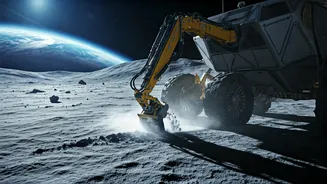
A significant secondary benefit of processing lunar regolith for oxygen is the generation of valuable byproducts. After the oxygen has been extracted, the residual material is rich in metals like iron, aluminum, and silicon. These extracted metals hold immense potential for constructing essential lunar infrastructure, including habitats, tools, and various other necessary components, directly on the Moon's surface. This approach, known as in-situ resource utilization (ISRU), promises to drastically decrease both the cost and the inherent complexity of space missions. Instead of transporting heavy construction materials from Earth, future spacefarers could effectively manufacture their requirements using the abundant resources readily available on the lunar landscape.
Revolutionizing Space Travel
The transportation of oxygen from Earth presents significant cost barriers and inherently limits the duration of astronaut stays in space. By enabling the production of oxygen directly on the Moon, space missions can achieve greater sustainability and diminish their reliance on frequent resupply flights. Oxygen is not merely vital for respiration; it also plays a critical role in synthesizing water and serves as an indispensable oxidizer for rocket propellant. This capability suggests that the Moon could potentially evolve into a crucial refueling depot for missions venturing further into the solar system, including ambitious journeys to Mars and beyond, fundamentally altering the economics of deep space exploration.
Enabling Lunar Habitation
Although the oxygen extraction technology has yet to be deployed on the Moon itself, its successful laboratory demonstration represents a pivotal milestone in space exploration. Programs like NASA's Artemis initiative, which aims to establish a sustained human presence on the lunar surface, recognize oxygen extraction as a cornerstone technology. By transforming lunar dust into a readily usable resource, scientists and private companies are diligently laying the essential groundwork for a future wherein humans can comfortably reside and actively work on the Moon for extended periods, moving from brief visits to permanent settlements.