


Salar de Uyuni's Mirror
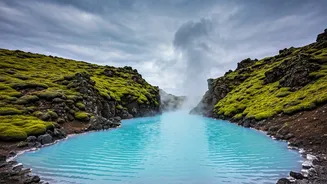
Imagine a landscape where the sky meets the earth in a perfect reflection. Salar de Uyuni in Bolivia transforms into the world's largest mirror during
the wet season, creating an illusion of endlessness. Covering over 10,000 square kilometers, this vast salt flat is a photographer's dream and a traveler's ultimate spectacle. The sheer expanse of white salt crystals during the dry season is equally mesmerizing, a stark, otherworldly terrain that stretches to the horizon. It's a place that truly blurs the lines between reality and dream, offering an unparalleled visual experience unlike any other on Earth.
Antelope Canyon's Glow
Nestled within the Navajo Nation in Arizona, Antelope Canyon is a slot canyon sculpted by millennia of wind and water. Its narrow passageways feature smooth, flowing sandstone walls that catch sunlight, creating a ethereal glow. The light beams that pierce through the openings above illuminate the canyon floor in a shifting dance of light and shadow, painting the rocks in vibrant hues of orange, red, and purple. Exploring its depths feels like stepping into a natural cathedral, a testament to the raw, artistic power of erosion and time.
Plitvice Lakes' Cascades
Croatia's Plitvice Lakes National Park is a geological marvel, a system of sixteen terraced lakes interconnected by a series of stunning waterfalls and cascades. The water's vibrant turquoise and emerald hues are due to the mineral composition and the presence of unique algae and mosses. Wooden walkways wind through the park, allowing visitors to immerse themselves in this aquatic wonderland. The constant flow of water over tufa barriers creates new formations, making each visit a dynamic experience of nature's continuous artistry.
Zhangjiajie's Pillars
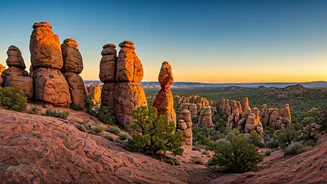
Often cited as the inspiration for the floating mountains in the movie Avatar, Zhangjiajie National Forest Park in China features thousands of towering sandstone pillars. These immense natural skyscrapers, some reaching hundreds of meters high, are cloaked in lush vegetation and often shrouded in mist, creating a surreal, almost mystical atmosphere. Visitors can traverse the park via skywalks, glass bridges, and cable cars, offering unparalleled views of this unique geological landscape that appears to float amidst the clouds.
Giant's Causeway's Hexagons
On the coast of Northern Ireland lies the Giant's Causeway, an area of approximately 40,000 interlocking basalt columns, most of which are hexagonal. Legend has it that the giant Finn McCool created this formation to step across to Scotland. Geologically, these columns are the result of an ancient volcanic eruption, where molten lava cooled and contracted, forming these remarkably uniform shapes. Walking amongst these natural geometric wonders feels like stepping into a mythical realm, a place where myth and geology spectacularly converge.
Pamukkale's Terraces
Pamukkale, meaning 'Cotton Castle' in Turkish, is a natural site in southwestern Turkey famous for its surreal white terraces of travertine. These terraces are formed by hot springs depositing calcium carbonate over centuries, creating a series of pristine, shallow pools that cascade down a hillside. The dazzling white landscape, set against the blue sky, resembles a frozen waterfall. Beneath the terraces lie the ruins of the ancient Greco-Roman city of Hierapolis, adding a layer of historical intrigue to this visually stunning natural wonder.
Socotra Island's Flora
Off the coast of Yemen lies Socotra, an island renowned for its alien-like flora, much of which is found nowhere else on Earth. The most iconic is the Dragon's Blood Tree, with its umbrella-shaped canopy and red sap. The island also boasts the Bottle Tree, with its swollen trunk and sparse branches. This unique biodiversity has earned it the nickname 'the Galapagos of the Indian Ocean,' a living laboratory of evolution isolated for millions of years, presenting a landscape that truly feels prehistoric and otherworldly.
Waitomo Caves' Glowworms
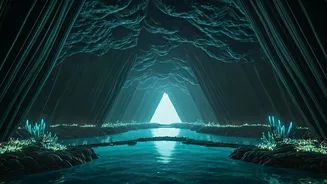
Beneath the rolling hills of New Zealand's North Island lies a subterranean world illuminated by thousands of tiny glowworms. The Waitomo Glowworm Caves are famous for their Grotto, where a silent boat ride takes visitors under a galaxy of bioluminescent lights. These glowworms, in their larval stage, emit a phosphorescent glow to attract prey, creating a breathtaking celestial display on the cave ceilings. It's an intimate encounter with nature's own light show, a serene and magical experience that leaves a lasting impression.
Skaftafell's Ice Caves
Within Iceland's Vatnajökull National Park, particularly in the Skaftafell area, lie stunning ice caves that form within glaciers. These ephemeral structures are carved by meltwater streams during the summer and freeze over in winter, creating breathtaking chambers of crystalline blue ice. The light filtering through the dense ice casts an ethereal glow, transforming the caves into natural cathedrals of sapphire. Exploring these transient wonders offers a profound connection to the raw power and beauty of glacial landscapes.
Daigo-ji Temple's Autumn
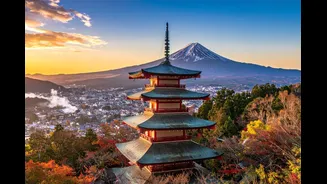
While a temple might not sound 'unreal,' the sheer spectacle of autumn foliage at Kyoto's Daigo-ji Temple transforms it into a magical realm. This UNESCO World Heritage site is renowned for its stunning display of momiji (maple leaves), where hillsides and temple grounds are awash in vibrant reds, oranges, and yellows. The reflection of the colorful leaves in the temple's ponds and the contrast with the ancient wooden structures create a scene of unparalleled natural beauty that feels like stepping into a living painting, a truly breathtaking seasonal transformation.