






Endurance Survives Space Simulation
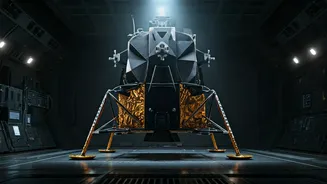
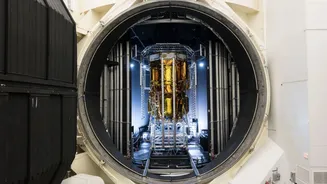
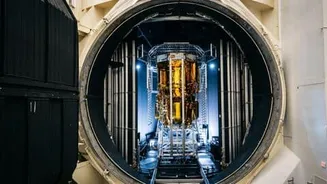
Blue Origin has achieved a significant milestone with its uncrewed lunar lander, dubbed 'Endurance' or Blue Moon Mark 1 (MK1). This critical phase involved
rigorous environmental testing within the specialized Thermal Vacuum Chamber A at NASA’s Johnson Space Center. This colossal facility allowed engineers to meticulously replicate the extreme conditions encountered during a journey to the Moon, including the profound cold and near-vacuum of space. The primary objective of this exhaustive testing was to unequivocally verify that the lander's structural integrity and its various operational systems could not only endure these harsh extraterrestrial environments but also function flawlessly. The collaboration between NASA and Blue Origin, formalized through a Space Act Agreement, underscores the shared ambition to advance lunar exploration capabilities. This successful test paves the way for demonstrating the lander's readiness for its crucial role in upcoming lunar missions.
MK1's Lunar Payload Mission
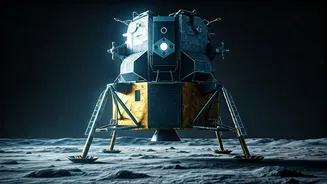
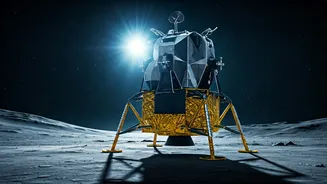
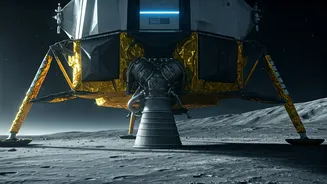
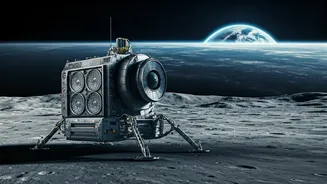
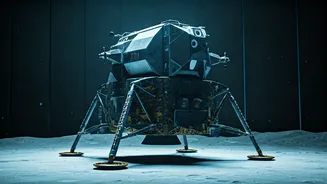
The Blue Moon Mark 1 (MK1) is designed as an uncrewed cargo delivery system, playing an instrumental role in achieving the ambitious goals of the Artemis program. Its primary function is to showcase and validate several key technologies essential for a successful lunar landing. These capabilities include precise navigation and landing techniques, the efficient utilization of cryogenic propellant systems for propulsion, and the autonomous operation of its guidance, navigation, and control (GNC) systems. The MK1 is slated to target the lunar south pole, a region of immense scientific interest due to its potential for future lunar bases and the confirmed presence of water ice, a vital resource for extended missions. Beyond its own operational experiments, the lander will carry scientific payloads, including the Stereo Cameras for Lunar Plume-Surface Studies, which will capture the interaction between the lander's engine plume and the lunar surface during descent, and a Laser Retroreflective Array.
Bridging to Human Missions
Although the MK1 is an unmanned cargo mission, its development and testing represent a foundational step towards enabling human presence on the Moon. The technologies being proven with MK1 are directly contributing to the evolution of Blue Origin's Mark 2 (MK2) lander, a significantly larger vehicle designed specifically to transport astronauts between lunar orbit and the Moon’s surface. The invaluable lessons learned from MK1's design conceptualization, its rigorous testing protocols, and its anticipated operational performance will directly enhance the safety, reliability, and overall mission planning for future crewed lunar landings. This iterative approach, leveraging the expertise and infrastructure of NASA alongside private industry innovation, is crucial for the sustained advancement of lunar exploration and the eventual establishment of a long-term human presence on our celestial neighbor.