
What is Astrology?
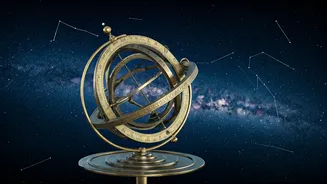
Astrology, as a practice, can be defined as the study of the movements and relative positions of celestial bodies, interpreted as having an influence on human
affairs and the natural world. It is a system that attempts to explain and predict events in a person's life by studying the positions of the sun, moon, planets, and other celestial objects at the time of their birth. This system is deeply rooted in ancient traditions and has been practiced for thousands of years. The fundamental belief underlying astrology is that the celestial bodies and their movements have a significant impact on individuals, societies, and the broader world. This belief has led to the development of complex astrological systems, each employing different techniques and methods for interpretation. Despite its long history and wide-ranging popularity, astrology remains a subject of considerable debate, with scientific communities largely dismissing it as a pseudoscience, citing a lack of empirical evidence to support its claims.
Historical Roots
Astrology's roots trace back to ancient civilizations, where observing the sky was critical for agriculture, navigation, and religious practices. The earliest evidence of astrological thought comes from Mesopotamia, specifically Babylonia, around the second millennium BCE. Babylonians meticulously tracked celestial events, associating them with earthly occurrences. Over time, these observations evolved into a systematic belief, where the positions of celestial bodies were thought to correspond with human events and destinies. From Mesopotamia, astrological practices spread to other ancient cultures, including Egypt, Greece, and India. Each civilization adapted astrology to their unique worldview and cultural context. The Greeks, for example, refined Babylonian astrology, integrating philosophical concepts to create a more sophisticated system. They developed the concept of the zodiac, which divides the celestial sphere into twelve equal segments, each associated with specific personality traits and characteristics. During the Hellenistic period, astrology spread widely, reaching Rome and becoming an integral part of various cultures and societies.
How Astrology Works
At its core, astrology operates on the principle that the positions of celestial bodies at the time of a person's birth, known as the birth chart or natal chart, provide insights into their personality, potential, and life events. Astrologers use birth charts, which are a map of the sky at a specific time and location, to analyze the placements of the sun, moon, and planets in the zodiac signs and houses. The sun sign, or the zodiac sign the sun was in at the time of birth, is often the most well-known aspect of astrology, representing the core personality traits. The moon sign represents emotions and inner self, while the rising sign, or ascendant, represents the individual's outward persona. Each planet in a birth chart is believed to influence different aspects of life, such as communication, love, career, and spirituality. Astrologers analyze the angles, or aspects, between planets, as well as their positions in the houses, to gain a deeper understanding of the individual's life path. Through this complex interpretation, astrology attempts to provide a comprehensive profile and predictive analysis.
Astrological Charts
The astrological chart, a detailed map of the heavens at a specific moment in time and place, is essential in astrological practice. This map is generated using the birth date, time, and location of an individual. The chart visually represents the positions of the sun, moon, and planets within the twelve zodiac signs and houses at the time of birth. Each element within the chart carries significance, providing a roadmap of personality traits, life experiences, and future possibilities. The zodiac signs, each covering 30 degrees of the ecliptic, categorize personality archetypes and behavioral patterns. These signs offer insights into character traits, tendencies, and preferred modes of expression. The houses, or the twelve divisions of the chart, signify different areas of life, from relationships and career to health and spirituality. The planets, serving as symbolic actors in the astrological drama, represent core drives and themes, such as the expression of emotions, communication style, or the pursuit of goals. The interplay of these elements, their positions within the signs and houses, and the aspects they form, contribute to a comprehensive profile.
Astrology's Popularity Today
Astrology continues to be a widely popular topic, maintaining relevance in the modern world. Its appeal spans various cultures and demographics, supported by its ability to offer self-exploration, understanding of relationships, and a sense of direction. The ease of accessing astrological content online has undoubtedly contributed to its recent surge in popularity, with apps and websites offering daily horoscopes, birth chart readings, and personalized insights. Despite not being recognized as a science, astrology has secured its place in mainstream culture. The exploration of personal identity through astrology resonates with many people seeking self-discovery and direction. Many view astrology as a tool for self-reflection and personal growth. Astrology's popularity also extends into popular culture, where it often appears in media such as magazines, social media, and various forms of entertainment. However, it's important to approach astrology critically, understanding its limitations and potential biases while balancing it with scientific thought.