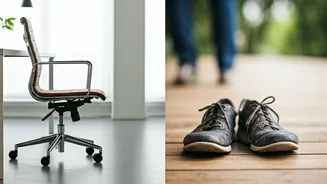






The Power of Small Movements
Instead of relying on infrequent, intense workouts, the key to combating sedentary stiffness lies in incorporating small, consistent movements throughout
your workday. Experts highlight that fragmented activity, spread across the day, proves far more beneficial than a single, prolonged exercise session followed by extended inactivity. This approach ensures your body remains engaged and prevents the build-up of stiffness and discomfort that often accompanies prolonged sitting. Prioritizing these micro-movements can significantly enhance joint comfort and maintain overall physical mobility, making your workday more dynamic and less taxing on your body. These subtle yet impactful actions are crucial for sustained well-being.
Calf Raises: A Seated Boost
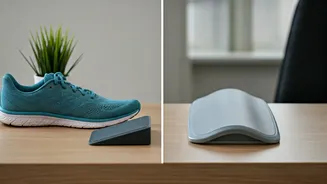
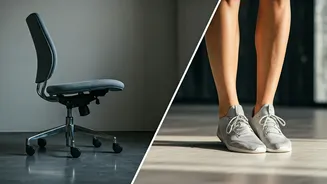
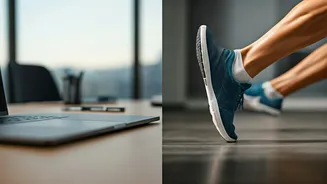
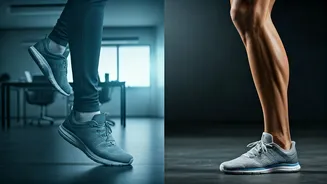
While seemingly modest, seated calf raises offer a surprisingly effective way to maintain lower leg circulation when extended periods of sitting are unavoidable. The calf muscles function akin to a secondary heart, vital for propelling blood from the extremities back towards the core. Prolonged sitting can impede this natural flow, leading to sensations of heaviness or visible swelling in the legs. By performing calf raises, which involves repeatedly lifting and lowering the heels while seated, individuals can keep these crucial muscles engaged and actively support improved blood circulation. Although they don't substitute for comprehensive, full-body physical activity, these seated movements serve as a practical and accessible method to remain somewhat active during long desk-bound hours, offering immediate relief and circulatory support.
Walking: The Comprehensive Choice
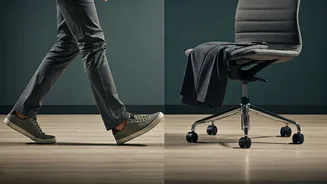
Walking stands out as a more comprehensive method for staying active due to its ability to engage a wider array of muscle groups, including those in the legs, hips, and core. This fundamental activity not only enhances blood circulation but also contributes positively to cardiovascular health and effectively mitigates the stiffness that arises from prolonged sitting. Even brief walking intervals, as short as five to ten minutes taken during work breaks, can yield noticeable improvements in physical comfort and energy levels. While seated calf raises have their place, particularly when movement is restricted, walking offers superior benefits by promoting overall physical engagement and well-being. It's the go-to for holistic health improvement.
The Best of Both
For individuals whose work necessitates spending the majority of their day seated, the optimal strategy involves integrating both walking and seated exercises. Walking is undoubtedly advantageous, stimulating numerous muscle groups, boosting circulation, promoting joint health, and significantly reducing the risks associated with stiffness and potential blood clots. It also plays a vital role in cardiovascular fitness and weight management. Seated calf raises, on the other hand, are particularly useful during extended periods at a desk where continuous movement isn't feasible. They directly target the calf muscles, aiding venous return and alleviating lower leg swelling, though they lack the full-body benefits of walking. Ultimately, a blended approach, combining hourly short walks with in-between seated movements like calf raises and ankle rotations, offers the most robust solution for combating sedentary lifestyle challenges and maintaining overall physical vitality.