




The Orbital Farewell
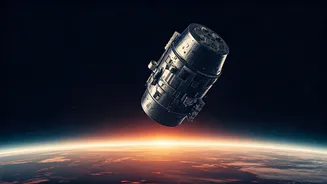
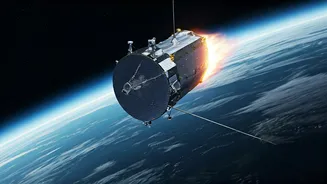
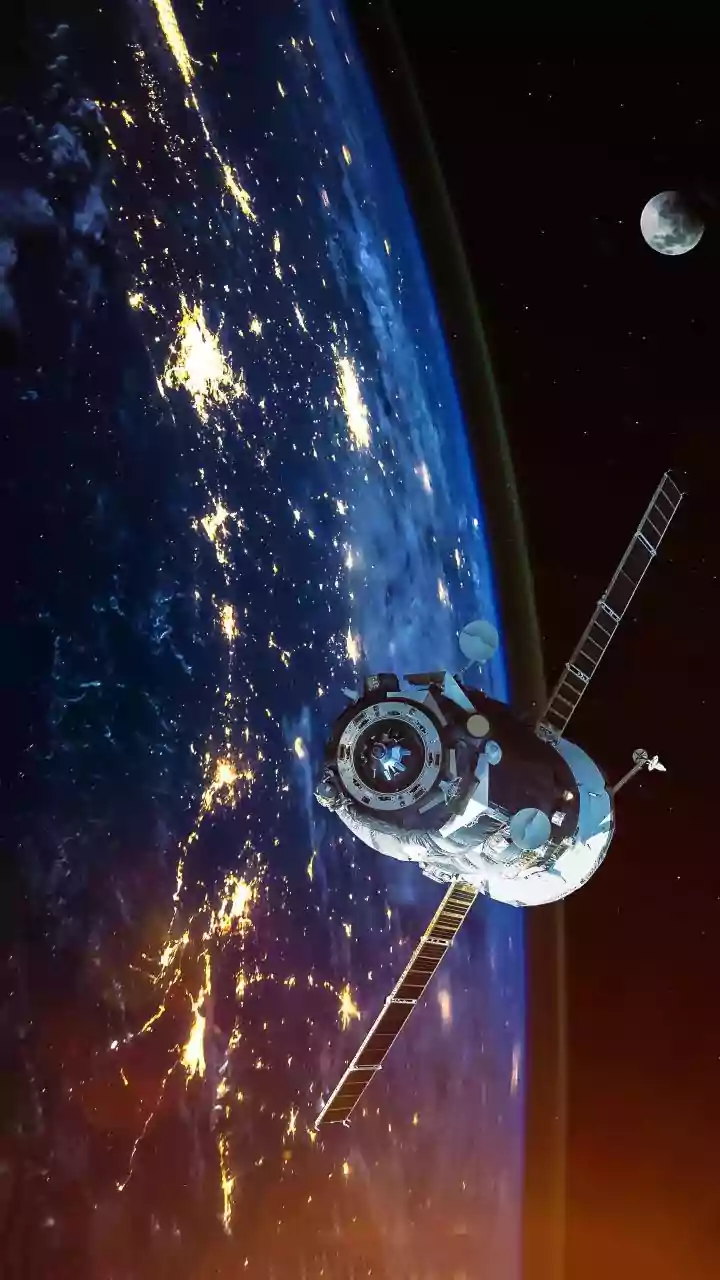
After an impressive 14-year journey orbiting our planet, NASA's Van Allen Probe A, a substantial satellite weighing approximately 1,323 pounds (600 kilograms),
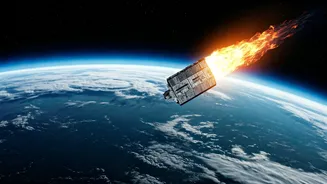
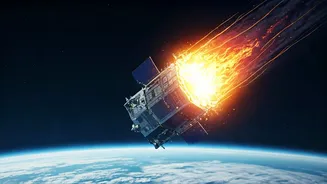
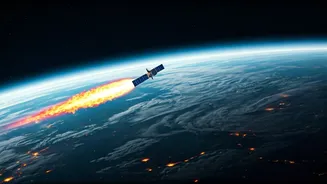
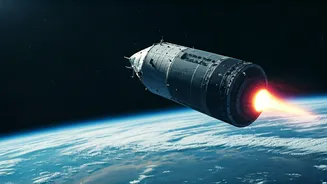
is anticipated to make its descent back to Earth around March 10. This probe, launched in August 2012 alongside its counterpart, Van Allen Probe B, was specifically designed to investigate the complex radiation belts enveloping our world. While both probes were retired in 2019, Probe A's orbital tenure has now concluded. The scientific community expects that the vast majority of the satellite will disintegrate and burn up upon re-entering Earth's atmosphere, a common fate for spacecraft. However, there's a slight possibility that some components might survive this fiery passage and reach the surface.
Debris Risk Analysis
Regarding the potential impact of surviving satellite fragments, NASA and space authorities have provided reassuring data. The likelihood of any human being injured by falling debris is exceedingly small, estimated at around 0.02 percent, or roughly 1 in 4,200. The most probable scenario for any surviving pieces is that they will splash down harmlessly into the ocean, which covers the majority of our planet. The US Space Force will be actively monitoring the reentry and providing updated predictions in real time as the event draws nearer, allowing for more precise timing information to become available. While it's an interesting astronomical event to observe, there is no cause for alarm among the public.
Mission's Scientific Legacy
The Van Allen Probes, initially named the Radiation Belt Storm Probes, embarked on a mission to explore Earth's magnetosphere. Their orbits were highly elliptical, taking them from an altitude of about 384 miles (618 km) to as far out as 18,900 miles (30,415 km). Although originally planned for a two-year mission, both probes significantly exceeded expectations, with Probe A continuing its data collection until October 2019 and Probe B until July 2019. The mission's findings have been invaluable in understanding how solar activity influences satellites, astronauts, and crucial terrestrial systems like GPS and communication networks. The data collected has helped refine space weather forecasts and better anticipate the hazards posed by solar storms, contributing significantly to space exploration safety and planning.
Factors Influencing Descent
Recent solar activity has played a role in the accelerated orbital decay of Van Allen Probe A. Experts suggest that increased solar activity has led to an expansion of Earth's atmosphere, thereby increasing atmospheric drag on satellites. This enhanced friction is likely the reason Probe A's descent occurred sooner than initially projected. In contrast, its twin, Probe B, is expected to remain in orbit until approximately 2030, its trajectory seemingly less impacted by these recent atmospheric changes. Even in their deactivated state, both satellites continue to serve as important reference points for scientists studying space weather phenomena and the dynamics of orbital mechanics, contributing to our understanding of how satellites behave in orbit.