
Origins and History
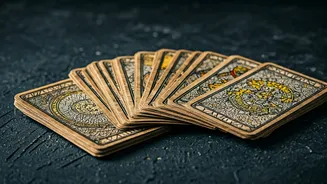
The exact origins of tarot are shrouded in a bit of mystery, but it is widely believed that the cards first appeared in 15th-century Europe. Initially,
tarot was not used for divination, but as a card game called 'tarocchi' in Italy. Over time, the cards evolved, incorporating symbolic imagery and spiritual meanings, with each card acting as a symbol. The earliest tarot decks were handmade and were often commissioned by the wealthy or the royal families. The decks depicted scenes of everyday life, allegorical figures, and astrological symbols, providing a glimpse into the art and beliefs of the Renaissance era. The structure of the cards also evolved, eventually forming the standard deck of 78 cards we recognize today. The cards started being utilized as a tool for divination in the late 18th century. Today, tarot reading is popular worldwide.
Deck Structure Overview
A standard tarot deck consists of 78 cards, divided into two main categories: the Major Arcana and the Minor Arcana. The Major Arcana, featuring 22 cards, represents significant life lessons, archetypes, and spiritual journeys. Cards like The Fool, The Magician, The Empress, and Death are a few examples of cards included in this category. They depict important events and figures on a grand scale. The Minor Arcana consists of 56 cards divided into four suits: Wands (representing fire, action, and will), Cups (water, emotions, and relationships), Swords (air, intellect, and challenges), and Pentacles (earth, material possessions, and stability). Each suit includes ten numbered cards and four court cards: Page, Knight, Queen, and King. These cards, along with the numbers, provide a comprehensive picture of everyday experiences and situations, representing smaller, more immediate influences.
Understanding Card Meanings
Interpreting tarot cards requires understanding both the individual card meanings and how they interact with each other in a spread. Each card possesses a wealth of symbolic meaning, and these meanings can differ based on the context of the reading and the position of the card within a spread. The upright position of a card typically signifies the positive aspects of its meaning, while the reversed position often suggests a negative or hidden aspect of its symbolism. For instance, The Sun card signifies joy, success, and positivity when upright, while the reverse might indicate delays or a lack of clarity. When looking at the Minor Arcana cards, the number and suit together provide a nuanced reading, such as the Three of Cups, which represents celebration and friendship within a group. Furthermore, each suit represents a different aspect of life – Wands can highlight action and career matters, Cups can deal with love and emotions, Swords bring intellectual pursuits, and Pentacles represent material stability and finances.
Reading Card Spreads
Tarot readings can range from simple, single-card draws to complex spreads that provide in-depth insights into many aspects of life. The choice of the spread can affect how well the interpretation is. A simple one-card pull is perfect for a quick answer, while a three-card spread is helpful for exploring the past, present, and future, or for answering a particular question about relationships or choices. More involved spreads, like the Celtic Cross, use ten cards to explore a person’s life from various angles, from influences to outcomes. When performing a reading, the reader must create a tranquil atmosphere and formulate the questions, shuffle the deck, and then select the cards. The interpretation involves considering the meanings of each card, its position in the spread, and the connections between the cards. The reading should be framed with intuition and the reader's understanding of the subject.
Ethical Considerations
Ethical considerations are an important part of tarot readings, as well as maintaining integrity. Tarot readers should approach the practice with respect and should offer guidance in a thoughtful and caring manner. Readings should never be used to predict or dictate life choices, but rather to offer insights and perspectives. Readers have to avoid using tarot to promote fear or manipulation, and must focus on empowering the person they are reading for. Honesty and transparency are essential. Tarot readers should be open about the limitations of the cards and should be very aware of the potential for the reading to be influenced by personal bias. Confidentiality is also essential. Readers should keep all the information shared during a reading private and build trust.
Starting Your Tarot Journey
Embarking on the journey with tarot requires patience, study, and a desire to connect with the cards' symbolism and guidance. Choose a deck that resonates with you—the artwork and style should appeal to your aesthetic. There are various tarot decks available, from the Rider-Waite Smith deck, which is the most widely known and is a popular starting point, to more modern or themed decks. Studying each card's meanings, the Major and Minor Arcana, is very helpful. Consider using books, online resources, or workshops. Practice is very essential to understanding tarot cards. Begin by doing readings for yourself and then for friends and family. Keep a journal to record your readings and interpretations. Regularly reflecting on how the cards' advice aligns with your experiences can improve your abilities and comprehension. Trust your intuition, and most of all, enjoy the process of self-discovery through the wisdom of tarot.