




Weather: The Crucial Factor
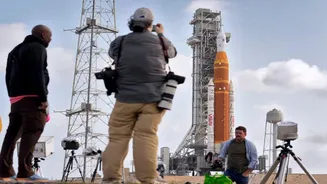
With just days separating humanity from the anticipated Artemis II mission's departure to the Moon, excitement is palpable not just for the voyage itself,
but also for the atmospheric conditions that will greet the launch. Official pronouncements indicate an 80% probability of accommodating weather in Florida, a figure that significantly boosts the mission's prospects. This high 'go' percentage is particularly welcome given the paramount importance of weather in orchestrating a successful rocket launch. Even minor atmospheric shifts can necessitate postponement, underscoring the delicate balance between readiness and the unpredictable nature of the skies.
Decoding the '80% Go'
An '80 percent go' for the Artemis II launch signifies that prevailing atmospheric conditions are largely within the stringent safety parameters required for a successful liftoff. This forecast is a composite assessment by meteorologists, taking into account crucial elements like wind velocity, cloud density, and the presence of precipitation. It represents the likelihood that these factors will not impede the launch sequence. While this high probability is certainly encouraging, it's important to remember that space launches are never entirely guaranteed. The atmosphere remains a dynamic entity, and even the slightest deviation, such as unexpected cloud formations or sudden gusts of wind – the primary culprits for launch delays – can lead to a hold. Experts from NASA and the U.S. Space Force are continuously scrutinizing these developing conditions.
Why Weather is Paramount
Weather is an absolutely critical determinant in the success of any space mission, and NASA's Artemis II is no exception. Rockets, particularly powerful ones like the Space Launch System (SLS), must navigate through multiple atmospheric layers, rendering them inherently susceptible to weather phenomena. For instance, the presence of thick clouds can disrupt tracking systems crucial for monitoring the ascent, and if these clouds are accompanied by lightning, they pose a significant hazard. Similarly, strong winds, especially at higher altitudes, can destabilize the rocket during its initial climb. NASA has indicated that cloud cover and potential high winds are the primary concerns for the Artemis II launch. Furthermore, stringent protocols, such as the "Thick Cloud Rule," are in place, dictating that launches cannot proceed if there's a risk of electrical charges within clouds triggering lightning strikes, thereby ensuring mission safety above all else.
Final Countdown Vigilance
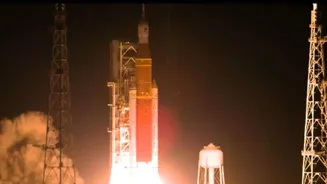
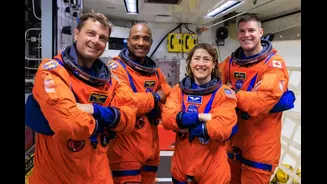
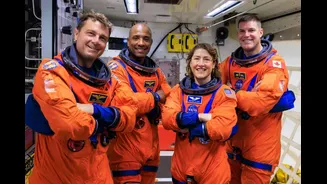
The Artemis II mission stands as a monumental achievement, marking humanity's first crewed orbit around the Moon in over half a century, a truly historic milestone in space exploration. This mission will carry four astronauts on a 10-day expedition, utilizing the journey to rigorously test essential systems vital for future lunar endeavors and beyond. The optimistic weather forecast only amplifies the excitement surrounding this landmark event. Despite the favorable outlook, NASA's dedicated experts will maintain a relentless watch on atmospheric conditions right up until the scheduled liftoff. While a launch window has been established, any adverse weather developments could trigger delays, potentially spanning hours or even days. Flexibility is therefore paramount, with safety consistently remaining the utmost priority. The 80% favorable weather prediction is a significant positive, and while challenges like cloud formations and wind speed are under continuous observation, the overall weather pattern is leaning favorably towards enabling this pivotal mission as humanity embarks on its return to deep space.