






The Ethereal Glow
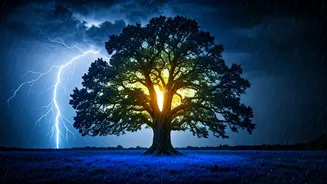
For the very first time, researchers have successfully documented the captivating sight of trees emitting an electrical luminescence during severe thunderstorms.
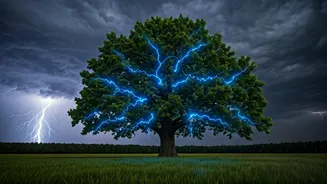
Using advanced high-speed cameras and sensitive sensors strategically placed within the Blue Ridge Mountains, scientists captured striking footage of this phenomenon. They observed that the branches of trees can produce a subtle, bluish light, scientifically known as corona discharge. This captivating glow emerges when the intense electrical fields generated by an approaching storm interact with the sharp, pointed edges of tree leaves, causing the air to ionize. This remarkable discovery builds upon centuries of anecdotal evidence, as sailors have long reported witnessing a similar, faint illumination on their ship masts during turbulent weather, a testament to the enduring presence of this natural electrical display.
Science Behind the Sparkle
The enchanting blue light observed at the upper reaches of trees during thunderstorms is a distinct event, separate from the dramatic force of a lightning strike or the destructive heat of a wildfire. This phenomenon, termed corona discharge, occurs because the sheer magnitude of the electrical field within a storm has the power to strip electrons from nearby air molecules. This interaction results in a release of electricity into the atmosphere in a plasma state. Unlike the massive and intensely hot energy burst of a lightning bolt, corona discharge represents a 'cooler' form of electricity. This less potent and more localized electrical energy tends to concentrate at the most acute points on a tree, such as the fine tips of pine needles and the edges of leaves. This concentration allows the tree to emit its characteristic faint glow without sustaining any actual damage, burning, or other adverse effects from the electrical currents.
Atmospheric Cleansing Power
Beyond their visually stunning display of sparkling blue light, the electrical discharges generated by corona discharges at the extremities of trees play a profoundly significant role in maintaining our planet's air quality. Scientific research has revealed that this electrical activity produces substantial quantities of free hydroxyl radicals. Hydroxyl acts as the primary atmospheric cleansing agent, working tirelessly to break down pollutants and greenhouse gases. These highly reactive hydroxyl radicals are instrumental in degrading substances like methane, a potent greenhouse gas that would otherwise accumulate and contribute to global warming. Therefore, these glowing trees are not just a beautiful natural spectacle but also vital contributors to atmospheric health and climate regulation.
Evergreens Shine Brightest
Following a thunderstorm, different tree species exhibit varied responses regarding this electrical phenomenon. Recent scientific investigations have confirmed that the overall size of a tree's canopy directly influences the quantity of this 'ghostly' light it produces, with this capacity potentially changing as the tree ages. Evergreen trees, particularly those with coniferous characteristics, demonstrate the most active participation in generating this electrical glow. The naturally sharp and pointed morphology of their needle-like leaves serves as exceptionally efficient natural conductors. This design allows the upward-moving electrical fields to become highly concentrated at their very tips, facilitating the creation of the upward-propagating electrical flash that manifests as the blue light numerous times over.