




Nadella on Microsoft's Role
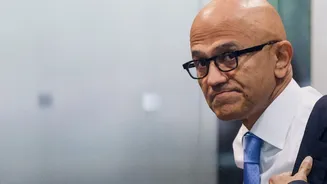
Satya Nadella, Microsoft's CEO, offered crucial testimony via video deposition, detailing the tech giant's substantial financial backing and collaborative
relationship with OpenAI. Nadella emphasized that Microsoft views OpenAI as a strategic partner, with its significant investment driven by the groundbreaking potential of OpenAI's AI technologies. He addressed concerns regarding OpenAI's strategic direction, affirming Microsoft's confidence in the leadership's ability to navigate any challenges. Nadella further elaborated on Microsoft's early risk-taking, stating, "I’m very proud of the fact that we took the risk when no one else was willing to sponsor this fledgling lab" and attributed the industry's current innovation to this support. He clarified that Microsoft's investments, totaling over $13 billion since 2019 (including a $1 billion investment in 2019, $2 billion in 2021, and a substantial $10 billion in 2023), were not charitable donations but held a clear commercial intent. This commercial aspect was evident in Microsoft's provision of discounted computing resources, expecting significant marketing benefits in return. Nadella also recalled the surprising events surrounding Sam Altman's brief ouster in November 2023, noting his initial surprise and his immediate priority to ensure continuity for Microsoft's customers. He expressed a need for clearer explanations from the board regarding the reasons for Altman's removal, describing the communication as "amateur city." Interestingly, Nadella stated he never directly demanded Altman's reinstatement, a point that contrasts with some other testimonies.
Sutskever's Internal Account
Ilya Sutskever, a foundational figure at OpenAI, provided testimony that illuminated the internal complexities and disputes within the company. Sutskever, who had previously worked at Google and was reportedly offered as much as $6 million annually to remain there, discussed his decision to join OpenAI. A pivotal aspect of his testimony revolved around the tumultuous events leading to Sam Altman's temporary removal as CEO in November 2023. Sutskever revealed that he had spent approximately a year gathering information for the OpenAI board, documenting what he perceived as Altman's "consistent pattern of lying" and behaviors such as "undermining and pitting executives against one another." He indicated that this alleged pattern of dishonesty was the basis for his belief that Altman should be removed. Sutskever also detailed discussions with then-CTO Mira Murati about Altman's conduct. Following Altman's firing, Sutskever confessed to avoiding the internet and was initially unaware of urgent contingency plans, like Microsoft's potential offer to integrate Altman and other OpenAI employees. Despite his initial role in Altman's ouster, Sutskever later expressed regret, citing fears of OpenAI's potential collapse and stating, "I simply cared for it, and I didn’t want it to be destroyed." He confirmed his significant ownership stake in OpenAI, valued around $5 billion by November 2025 and about $7 billion currently. Sutskever also disclosed that after Altman's brief departure, other board members engaged in discussions with rival Anthropic about a potential merger, a prospect he was "not excited" about. Sutskever has since departed OpenAI to launch his own AI startup, Safe Superintelligence.
Mission Drift and AI Ethics
Elon Musk's lawsuit fundamentally questions OpenAI's adherence to its original mission of developing AI for humanity's benefit, alleging a shift towards profit maximization, heavily influenced by Microsoft. Musk contends that the company's focus on advanced, proprietary models like GPT-4, coupled with its deep integration with Microsoft, deviates from its founding principles as a non-profit, open research entity. Nadella's testimony offered a counterpoint, asserting that the creation of OpenAI's for-profit arm was approved by the non-profit, with the intention that any increased profitability would ultimately benefit the original mission. He also stated that Musk never directly raised concerns with him about Microsoft's investments violating any specific commitments, despite their direct contact. This legal battle also brings critical issues of AI safety and ethics to the forefront. The testimonies are expected to shed light on the proprietary nature of OpenAI's groundbreaking models, the extent of Microsoft's influence and control, and the broader implications for the future trajectory of AI research and development globally. The trial scrutinizes the inherent tension between the company's initial commitment to open-source ideals and its current path of developing closed, proprietary AI systems, raising significant questions about transparency and equitable access to advanced AI technology.