







A New Lifeline Unveiled
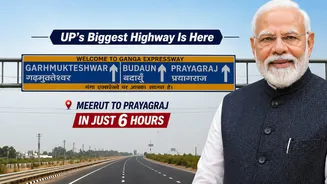
The much-anticipated Ganga Expressway, spanning an impressive 594 kilometers, has officially been inaugurated by Prime Minister Narendra Modi. This groundbreaking
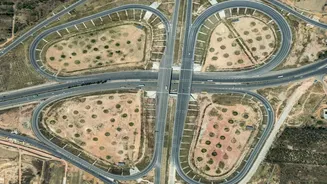
infrastructure project, the longest of its kind in India and featuring six lanes, serves as a vital artery connecting the districts of Meerut and Prayagraj. Its strategic alignment traverses western, central, and eastern Uttar Pradesh, effectively bridging geographical divides and heralding a new era of enhanced statewide connectivity. The expressway's primary impact is the dramatic reduction in travel duration; journeys that once spanned 11 to 12 hours will now be completed in a mere 6 to 7 hours. This significant time saving is poised to transform mobility, ease the movement of goods and people, and ultimately serve as a powerful catalyst for economic expansion throughout the state, solidifying its role as a new developmental lifeline.
Economic Engine Activated
Beyond merely reducing travel times, the Ganga Expressway is designed to be a powerful engine for economic growth. By connecting key freight corridors and facilitating smoother passage, it is expected to improve average speeds for vehicles from a previous 50–60 kmph to a swift 100 kmph. This enhanced efficiency translates to an estimated 30% in fuel savings for logistics operations. The project itself is recognized as the largest transport Public-Private Partnership (PPP) project of its kind, aligning seamlessly with national development blueprints such as the PM Gati Shakti National Master Plan, the National Infrastructure Pipeline, and the Bharatmala Pariyojana. The revenue generation for this massive undertaking is primarily anticipated from private vehicle traffic. Major construction contributions were made by Adani Enterprises Ltd., through Adani Road Transport Ltd., handling 464 km (80% of the project), and IRB Infrastructure Developers Ltd., responsible for 130 km (20%). During its peak construction phase, over 12,000 workers and substantial heavy machinery were deployed to bring this ambitious project to fruition, with an estimated total cost of Rs 36,230 crore.
Transforming Regional Access
The extensive reach of the Ganga Expressway ensures that 12 districts across Uttar Pradesh experience greatly improved connectivity. This enhanced network is expected to stimulate industrial investment and bolster logistics operations significantly. Plans are underway to establish industrial clusters strategically located along the expressway, with a particular focus on areas around Prayagraj, where ample land is available for future development. These initiatives are projected to create numerous employment opportunities and invigorate regional economies. The improved infrastructure will streamline supply chains, encouraging businesses to expand their presence and contributing to sustained economic development. The expressway's route facilitates quicker access to major markets like Delhi and Meerut for agricultural produce, benefiting farmers, particularly those in regions like Pratapgarh who can now transport perishable goods such as amla in 6–7 hours, potentially leading to better pricing and increased incomes.
Boosting Tourism and Culture
For Prayagraj, a city renowned for its profound religious significance and host to major events like the Maha Kumbh and Magh Mela, the Ganga Expressway promises a substantial boost to tourism. Improved road connectivity is anticipated to draw more visitors from across the nation and internationally. Furthermore, the expressway will shine a spotlight on lesser-known tourist attractions situated along its path, fostering the growth of rural tourism. This development is expected to enhance both religious and cultural tourism, significantly elevating the region's appeal as a major travel destination. Districts adjacent to the expressway, such as Kaushambi and Pratapgarh, are also set to reap the benefits of enhanced connectivity. While not directly passing through every area, their proximity to Prayagraj will improve access to popular tourism circuits. Even historical Buddhist sites like Ghositaram Vihara will benefit from better linkage to national and international travel routes, making Uttar Pradesh a more accessible and attractive destination.
Infrastructure Network Growth
The inauguration of the Ganga Expressway represents a significant leap in Uttar Pradesh's infrastructure development, adding to an already growing network of expressways. Under the purview of UPEIDA (Uttar Pradesh Expressways Industrial Development Authority), the state boasts 4 operational expressways covering 1030 km, with the Ganga Expressway (594 km) under construction, and 8 more expressways (863 km) in the process or proposed. Beyond UPEIDA, other agencies like NHAI (National Highways Authority of India) and various others manage an additional operational network of 3 expressways, with 4 more currently under construction, including projects like the Lucknow-Kanpur Expressway (63 km) and the Ghaziabad-Kanpur Expressway (380 km). Key operational expressways under UPEIDA include the Agra-Lucknow Expressway (302 km), Purvanchal Expressway (341 km), Bundelkhand Expressway (296 km), and Gorakhpur Link Expressway (91 km), with significant investment in each. Other operational routes managed by agencies like GNIDA (Noida-Greater Noida E-Way) and YEIDA (Yamuna E-Way) further solidify the state's connectivity.
Toll System and Future Outlook
To support the ongoing maintenance and operational efficiency of this extensive corridor, the state government has authorized private companies to manage toll collection across the Ganga Expressway. The estimated one-way toll for a four-wheeler is approximately Rs 1,800 for the full 594-kilometer stretch. While the base toll rates are designed to be competitive with other expressways in the country, the private operators have the flexibility to introduce discounts, especially in the initial phase. These introductory concessions are intended to encourage traffic and incentivize early usage of the expressway. This financial model ensures the sustainability of the project and contributes to its long-term success, making it a vital component of Uttar Pradesh's ambitious infrastructure development plans and a key driver for future economic prosperity.