


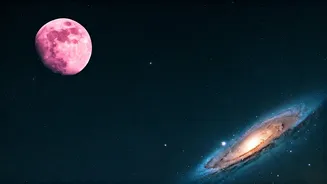

Pink Moon's Glow
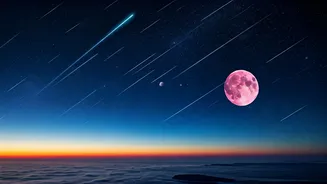
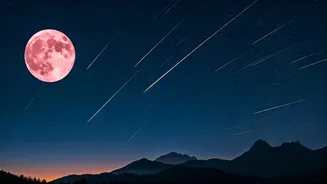
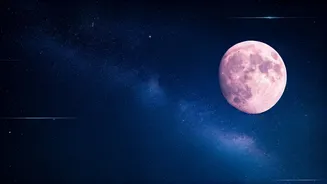
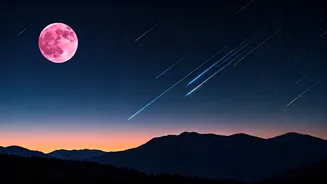
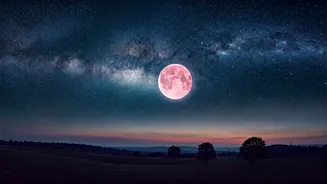
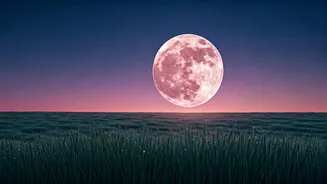
As April unfolds in 2026, the night sky will be graced by the appearance of the Pink Moon. Contrary to its name, this full moon isn't actually pink; the moniker
originates from the early springtime blooming of a particular wildflower, Phlox subulata, also known as moss phlox, which typically appears around this time. This natural satellite will reach its peak illumination on a specific date, offering a splendid spectacle visible across the globe. Stargazers can anticipate a larger and brighter moon than usual due to its perigee, the point in its orbit closest to Earth, making it a supermoon. For the best viewing experience, find a location away from city lights and give your eyes about 20 minutes to adjust to the darkness.
Virginis' Meteor Shower
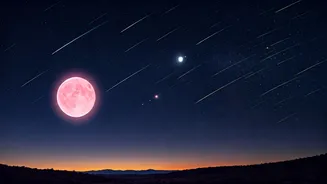
April 2026 will also bring the annual Virginis meteor shower, a celestial event that promises a dazzling display of shooting stars. While not as prolific as some other meteor showers, the Virginis shower is known for its bright meteors, some of which leave persistent trains that linger in the sky for several seconds. The peak activity is expected on a particular night, but viewers might spot activity for a few days surrounding this date. The radiant point for this shower lies in the constellation Virgo, hence its name. To maximize your chances of seeing these cosmic fireworks, aim to observe during the pre-dawn hours when the radiant is highest in the sky. A dark, clear night is essential for appreciating the fainter meteors.
Andromeda's Ascent
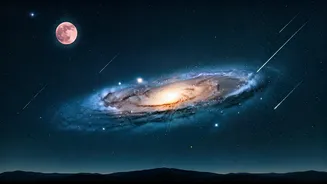
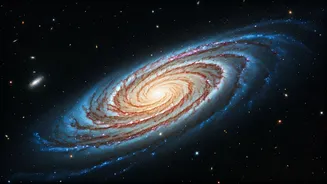
The Andromeda Galaxy, our closest major galactic neighbor, will be prominently positioned in the April 2026 night sky. This grand spiral galaxy, visible to the naked eye under dark skies as a faint smudge, is a true marvel of the cosmos. Binoculars or a small telescope will reveal its majestic structure, including its bright core and surrounding arms. Andromeda is so vast that it spans an area larger than the full moon in our sky, though only its central region is typically visible without optical aid. Observing it requires patience and finding a location free from light pollution. Its presence in April offers a fantastic opportunity to ponder our place in the universe and the sheer scale of cosmic structures.
Jupiter's Brightness
The gas giant Jupiter, the largest planet in our solar system, will be a spectacular sight in April 2026. While Jupiter is often visible throughout the year, its position in April during this specific year will make it particularly bright and easily observable. The planet will be well-placed for viewing, rising in the evening and remaining visible for much of the night. Its four largest moons, Io, Europa, Ganymede, and Callisto, often referred to as the Galilean moons, may be discernible with even a modest pair of binoculars. A telescope will offer a more detailed view, revealing cloud bands and potentially even the Great Red Spot, a colossal storm that has raged for centuries.
Saturn's Rings
In April 2026, the ringed planet Saturn will also be a notable celestial visitor. While it might not be at its absolute brightest, Saturn's iconic rings will be a captivating sight for those equipped with telescopes. The planet's position in the sky during April will allow for good viewing opportunities, especially later in the evening. The magnificence of Saturn lies in its spectacular ring system, which is composed primarily of ice particles. Even small telescopes can reveal these stunning features, making Saturn one of the most rewarding planets to observe. Understanding the planet's orbital path helps in predicting its visibility and optimal viewing times throughout the month.
Mars' Crimson Hues
The Red Planet, Mars, will continue to be a point of interest in the April 2026 sky. Although it may not be as close and bright as during its opposition periods, Mars will still present a distinct reddish hue, making it easily identifiable. Observing Mars offers a chance to study surface features through a telescope, such as polar ice caps and darker regions, which can shift in appearance over time due to dust storms. Its presence in the night sky during April provides a consistent target for amateur astronomers interested in planetary observation and understanding the dynamics of our solar system's neighbors.
Comet's Passage
A potentially notable comet may grace the April 2026 skies, offering a rare and fleeting celestial experience. While specific details about its brightness and visibility will depend on its trajectory and composition, comets are often unpredictable but incredibly rewarding to observe. If this particular comet becomes bright enough, it could be visible to the naked eye, appearing as a fuzzy patch of light with a trailing tail. Binoculars or telescopes will significantly enhance the view, revealing more detail and luminosity. Tracking comets requires up-to-date astronomical information, as their appearance can change rapidly.
Lunar Occultations
April 2026 is also set to feature several lunar occultations, events where the moon passes in front of a star or planet, temporarily hiding it from view. These are dynamic and precise astronomical occurrences that can be observed with telescopes. Different bright stars or planets might be occulted by the moon throughout the month, depending on its phase and orbital position. Observing these events provides an excellent opportunity for amateur astronomers to practice timing and precision viewing. The precise timing and location of these occultations are predictable through astronomical software, allowing enthusiasts to prepare for these brief but fascinating cosmic alignments.