





The Ornithologist's Quest
Leo Schilperoord, a dedicated Dutch ornithologist with a passion for rare avian species, found himself at the center of a catastrophic hantavirus outbreak.
His lifelong pursuit of observing elusive birds led him and his wife, Mirjam, to Ushuaia, Argentina, in late March. Their itinerary involved an extensive five-month journey across South America, including previous visits to Chile and Uruguay. As seasoned birdwatchers, the couple had a history of contributing to ornithological studies, even co-authoring a paper on pink-footed geese in 1984 and spotting the rare Serendib Scops Owl in Sri Lanka in 2013. Their specific objective in Ushuaia was to observe the white-throated caracara, a species also known as Darwin’s caracara, which frequents local landfills. It was during this seemingly innocuous birdwatching excursion to a landfill outside Ushuaia on March 27 that authorities now believe the couple contracted the virus.
The Deadly Exposure
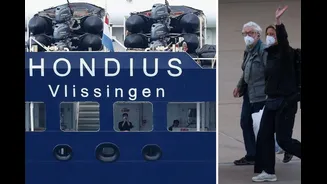
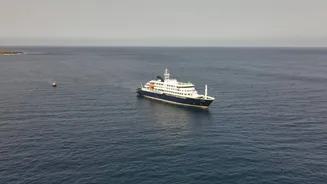
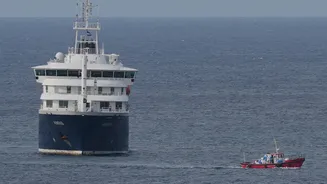
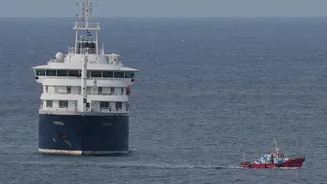
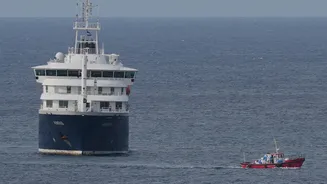
The investigation into the hantavirus outbreak on the MV Hondius expedition cruise ship points to a landfill visit as the origin of the infection. Argentinian authorities suspect that Leo Schilperoord, 70, and his wife, Mirjam, 69, inhaled airborne virus particles. These particles are believed to have originated from the droppings of long-tailed pygmy rice rats, carriers of the Andes strain of hantavirus. This particular strain is significant because it is the only known variant capable of human-to-human transmission. Just four days after their landfill visit, on April 1, the couple boarded the MV Hondius in Ushuaia. The ship was carrying over 100 passengers, many of whom shared their interest in birdwatching and scientific observation, unaware of the looming health crisis.
The Outbreak Unfolds
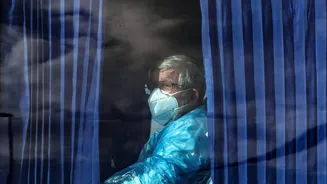
Tragedy struck aboard the MV Hondius shortly after its departure. Leo Schilperoord began exhibiting severe symptoms, including fever, headache, stomach pain, and diarrhea, on April 6, just five days into the voyage. He tragically passed away onboard five days later. His wife, Mirjam, disembarked with his body on April 24 during a scheduled stop on the Atlantic island of Saint Helena. Her own health deteriorated rapidly; she developed severe illness while en route to Johannesburg and collapsed at the airport, succumbing to the virus the following day. By May 2, the World Health Organization was alerted to a cluster of severe respiratory illnesses among the 147 passengers and crew from 23 countries. The virus had already spread, with 34 individuals disembarking on Atlantic islands before the ship's trajectory towards Cape Verde.
Repatriation and Remembrance
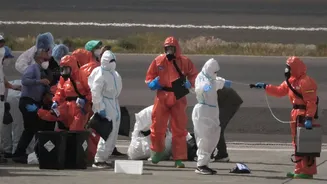
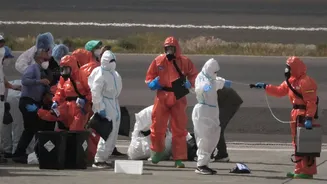
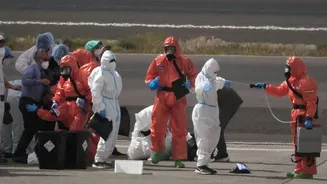
The aftermath of the hantavirus outbreak on the MV Hondius triggered a complex international repatriation operation. Forty-one days after leaving southern Argentina and nine days after the first positive hantavirus test, 94 individuals were successfully returned to their home countries. The ship itself continued its journey to the Netherlands after the evacuation of the remaining passengers and crew members from Tenerife. The profound impact of Leo Schilperoord's passing, marked by his dedication to ornithology, was poignantly captured in an obituary published in the Haulerwijk village magazine. It read, 'Like birds in flight,' expressing the community's sorrow and the void left by his absence and the stories he carried.