







Unexpected Wingtip Contact
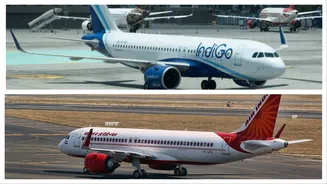
On February 3rd, a routine day at Mumbai's bustling airport turned unusual when two passenger aircraft experienced an unintended contact on the taxiway.
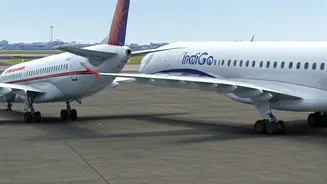
Air India flight AI2732, preparing for its journey from Mumbai to Coimbatore, was stationary on the taxiway, awaiting clearance for takeoff. Simultaneously, IndiGo flight 6E 791, having just completed its landing after arriving from Hyderabad, was taxiing. As the IndiGo aircraft navigated the taxiway, its wingtip brushed against the stationary Air India plane. This minor but significant incident occurred as Air India's aircraft was positioned between taxiway C1 and M4, while the IndiGo flight was moving towards B1. The impact, though resulting in minor damage, immediately halted operations for the affected Air India flight, necessitating a thorough safety inspection and grounding of the aircraft.
Passenger Safety and Immediate Response
In the wake of the wingtip collision, the immediate priority for both airlines was the safety and comfort of their passengers. For Air India flight AI2732, all passengers were safely disembarked from the aircraft that had sustained minor damage to its wingtip. The airline's ground teams swiftly implemented contingency plans, arranging for alternative flights to ensure passengers could reach their destination in Coimbatore as soon as possible. Similarly, for IndiGo flight 6E 791, passengers were disembarked without any reported injuries after the aircraft had safely reached the gate. Both carriers demonstrated adherence to safety protocols by immediately notifying the Directorate General of Civil Aviation (DGCA) about the ground incident. The prompt reporting allowed for regulatory oversight and the initiation of necessary investigations to ascertain the cause of the collision.
Regulatory Scrutiny and Airport Operations
The wingtip contact between the Air India and IndiGo aircraft has triggered a formal investigation by the Directorate General of Civil Aviation (DGCA). Officials from the DGCA were dispatched to the scene at Mumbai Airport to assess the situation firsthand. Both aircraft involved in the incident were returned to their respective bays for detailed inspection and maintenance. While the incident caused a delay for the Air India flight, operations at Mumbai Airport, one of India's busiest aviation hubs, remained largely normal. This rare taxiway clash underscores the growing pressures on ground traffic management within major airports, especially given the surge in air travel. The findings from the DGCA investigation are eagerly awaited to understand the precise circumstances that led to this uncommon ground event and to implement any necessary preventive measures for the future.