






Significance of Navratri
Navratri stands as a cornerstone of Hindu festivals, observed globally by adherents of the faith. Spanning nine days, this period is dedicated to the veneration
of the nine distinct manifestations of Goddess Durga. Its occurrence typically aligns with March and April, marking a significant temporal juncture as it ushers in the new year according to the Vikram Samvat calendar. This occasion is celebrated with diverse nomenclature across various regions of India. During this auspicious time, devotees engage in profound acts of worship towards Maa Durga, expressing their deep reverence and gratitude to the divine feminine energy. The nine forms of the Goddess embody pivotal virtues such as strength, bravery, serenity, purity, fearlessness, wisdom, protection, and spiritual advancement. The festival culminates joyously with Ram Navami, celebrated on the final day of Navratri, symbolizing the victory of righteousness and divine order.
Ghatsthapana Auspicious Timings
The observance of Chaitra Navratri in 2026 commences with the significant ritual of Ghatsthapana on March 19th. The most auspicious time for this ceremony, known as the Ghatasthapana Muhurat, is from 06:52 AM to 07:43 AM. An additional auspicious window, the Abhijit Muhurat, is available from 12:05 PM to 12:53 PM on the same day. The Pratipada Tithi, marking the beginning of the lunar month, commences at 06:52 AM on March 19th and concludes at 04:52 AM on March 20th. The Meena Lagna, a propitious astrological period, starts at 06:26 AM on March 19th and ends at 07:43 AM on March 20th. Notably, the Ghatasthapana Muhurta will occur during the Dvi-Svabhava Meena Lagna. It's also important to note that due to the specific lunar calendar alignment, the Muhurta might fall on Amavasya Tithi, necessitating careful adherence to traditional timings for effective observance.
Navratri Daily Observance
The nine days of Navratri, dedicated to honoring Goddess Durga, are celebrated with immense zeal and devotion worldwide where Hindu communities reside. This festival symbolizes the ultimate triumph of divine forces over malevolent entities, epitomized by Goddess Durga's victorious battle against the demon Mahishasura. Each day of Navratri is specifically consecrated to the worship of a unique form of Goddess Durga. Many devotees undertake a rigorous fast for the entire nine-day period, adhering to a sattvik (pure, vegetarian) lifestyle to seek Maa Durga's blessings and favor. The spiritual and religious significance of this festival for Hindus is profound. Chaitra Navratri commences with the Pratipada tithi of the waxing moon (shukla paksha) in the month of Chaitra and concludes with the celebration of Ram Navami.
Puja Rituals and Offerings
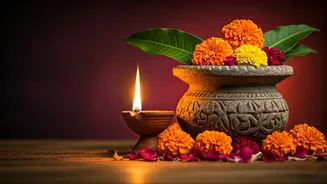
The inaugural day of Navratri is marked by the crucial Ghatsthapana ritual. This involves meticulously purifying the space designated for the altar. Following this, an idol of Goddess Durga is placed, and prayers are offered to Maa Shailputri, the presiding deity of the first day. A sacred kalash (pot) is then set up, topped with a coconut. Devotees light a lamp using pure ghee and adorn the goddess with traditional auspicious items and garlands. The invocation of Maa Durga's divine presence is achieved through the chanting of specific mantras. A key practice is the recitation of the Durga Saptashati; if the entire scripture cannot be recited, it is customary to at least read its sections: Kavach, Argala, and Keelak. After observing a day of fasting, devotees often partake in fruits. Some also consume special Navratri dishes like fried potatoes, kuttu poori, and aloo ki sabzi, prepared exclusively with rock salt (sendha namak).
Mantras for Devotion
During the sacred period of Chaitra Navratri, the chanting of specific mantras is a vital practice to invoke divine blessings and foster spiritual connection with Goddess Durga. Two potent mantras that are widely recited by devotees are: 'Om Jayanti Mangala Kali Bhadra Kali Kapalini Durga Kshama Shivadhatri Swaha Swadha Namostute..!!' This powerful chant addresses various formidable aspects of the Goddess, acknowledging her benevolent and formidable nature. Another significant mantra is: 'Sarva Mangal Manglyayei Shive Sarvartha Sadhike Sharanyayei Triyambike Gauri Narayani Namostute..!!' This prayer seeks auspiciousness and fulfillment of all desires, invoking the universal benefactress and the compassionate form of the Divine Mother. Regular and sincere recitation of these mantras is believed to bestow peace, protection, and spiritual growth upon the practitioner.



![[Watch] Young fans wearing RCB jerseys request MS Dhoni for an autograph, former India captain's reaction](https://g-mob.glance-cdn.com/public/fc/image/MTruezkAO3E0.webp)