







Poha: A Staple
Poha, or flattened rice, is perhaps the most iconic Maharashtrian breakfast. This dish is quick to prepare and incredibly versatile, readily adapting to personal
preferences. Preparing poha involves softening the flattened rice, then tempering it with mustard seeds, curry leaves, onions, and turmeric. The dish can be further customized with peanuts, green chilies, and a squeeze of lemon juice, which adds a zing. Served warm, poha is often garnished with fresh coriander and enjoyed with a cup of tea. It's a breakfast that's both light and satisfying, making it a perfect start to the day. The simplicity of poha is part of its charm, reflecting the practical and flavorful essence of Maharashtrian cuisine. Its ease of preparation and palatable taste also make it a popular choice across various age groups, adding to its widespread popularity.
Upma: Creamy Delight
Upma is another popular breakfast dish, made with semolina (rava). Its preparation involves roasting the semolina until fragrant, then tempering it with spices similar to poha, including mustard seeds, curry leaves, and onions. Vegetables like carrots, peas, and beans can be added to enhance its nutritional value and flavor. Upma is cooked with water, which is absorbed by the semolina, creating a creamy texture. This dish often gets a finishing touch of lemon juice and coriander. Upma's variations are many, with each household adding their touch. Its adaptability and comforting texture have made it a favorite across generations. The dish's appeal lies in its quick cooking time and the ability to customize its ingredients, catering to various taste buds. Upma’s versatility has firmly established it as a breakfast staple.
Thalipeeth: Savory Pancakes
Thalipeeth is a savory pancake made from a mixture of various flours, including wheat, jowar, and bajra. This nutritious breakfast is seasoned with spices, onions, and coriander. The dough is shaped into small pancakes and cooked on a griddle with a bit of oil or ghee until golden brown. Thalipeeth is often served with yogurt or chutney. This dish is a hearty meal, providing sustained energy for the day. Its rustic taste and the variety of flours used make it both wholesome and delicious. Thalipeeth also showcases the resourcefulness of Maharashtrian cuisine, using locally sourced ingredients. The combination of flours and spices gives it a unique flavor profile. Thalipeeth remains a cultural symbol of Maharashtrian breakfast, representing a balanced and traditional way of eating.
Misal Pav: Spicy Pleasure
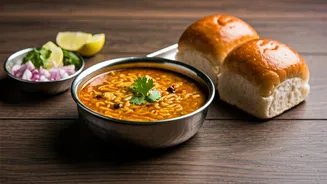
Misal Pav is a spicy and flavorful breakfast originating from the Maharashtra region. The dish consists of a spicy sprouted bean curry (misal), topped with farsan (crispy savory mixture), onions, tomatoes, and a squeeze of lime. It is served with pav (bread rolls) on the side, perfect for soaking up the flavorful curry. The preparation involves cooking the sprouted beans with a blend of spices. Its fiery taste profile is a defining feature of this dish, offering a burst of flavors. Misal Pav is a hearty and satisfying meal, providing a complete and enriching start to the day. The contrast of textures and flavors makes it a delightful breakfast option. The popularity of Misal Pav extends beyond Maharashtra, enjoyed by food lovers across India.
Sabudana Khichdi: Sago Treat
Sabudana Khichdi is a popular breakfast made from sago pearls (sabudana). The pearls are soaked overnight to soften them, then tempered with spices, potatoes, and peanuts. The dish is cooked until the sago becomes translucent and soft. It is often garnished with coriander and served with a squeeze of lemon juice. Sabudana Khichdi is commonly eaten during fasting periods but is a popular breakfast choice otherwise. Its mild flavor and the use of simple ingredients make it accessible and comforting. The chewy texture of the sago pearls makes this dish unique. It represents a balanced blend of flavors and textures, ensuring a satisfying breakfast experience. Its adaptability makes it ideal for different diets and occasions.
Vada Pav: The Burger
Vada Pav, often called the 'Indian burger', is a quick and popular breakfast and snack. It consists of a deep-fried potato patty (vada) placed inside a pav (bread roll) and served with various chutneys. The vada is made from mashed potatoes mixed with spices and dipped in a chickpea flour batter before frying. The combination of crispy vada, soft pav, and flavorful chutneys creates a delightful taste experience. Vada Pav is a common street food and is accessible and affordable, widely enjoyed in Maharashtra. Its ease of preparation and satisfying taste make it a preferred breakfast for many. The dish represents the quick, convenient, and flavorful essence of Maharashtrian street food.
Pohe: A Soft Treat
Pohe or kanda pohe (onion poha) features flattened rice cooked with onions and spices. The key is in preparing the poha, which requires softening it without turning it mushy. The tempering includes mustard seeds, curry leaves, and often, asafoetida. Onions are sautéed until translucent, and then the softened poha is added. The dish is finished with fresh coriander and a squeeze of lime juice. Kanda pohe is a simple yet flavorful dish. Its mild spices and the freshness of the coriander give it a balanced taste profile. The dish can be prepared quickly, and this is a major factor contributing to its popularity. It is suitable for those looking for a light yet satisfying breakfast. Its adaptability makes it a versatile breakfast option, enjoyed across various occasions.
Kothimbir Vadi: Coriander Bites
Kothimbir Vadi is a savory snack made from coriander leaves, gram flour, and spices. The batter is steamed until firm, then cut into bite-sized pieces and shallow-fried or deep-fried until golden. This dish highlights the use of coriander, giving it a unique flavor and aroma. Kothimbir Vadi offers a crispy exterior and a soft interior, making it appealing to the senses. It is a popular breakfast or snack option, often served with chutney or tomato sauce. This dish is rich in herbs and spices, making it a flavorful experience. Its preparation also reveals the importance of textures in Maharashtrian cooking. The dish's use of fresh ingredients also enhances its culinary appeal.
Shira: Sweet Semolina
Shira is a sweet breakfast dish made from semolina, sugar, and ghee. The semolina is roasted until golden, then cooked with water or milk and sugar, and cardamom and nuts added for flavor. Shira provides a creamy texture and sweet taste, making it a favorite among those who prefer a sweet start to their day. Its simplicity makes it easy to prepare, while its richness satisfies the sweet tooth. Shira’s versatility allows for various adaptations, with the inclusion of fruits, nuts, and spices. Its cultural significance reflects the importance of sweets in Maharashtrian cuisine and traditions. It is a great dish for all ages.
Masala Dosa: Crispy Delight
While masala dosa is not exclusive to Maharashtra, it is widely enjoyed as a breakfast option. The dosa is a thin pancake made from fermented rice and lentil batter, filled with a spiced potato mixture (masala). It is served with sambar (lentil-based vegetable stew) and coconut chutney. Masala dosa offers a delightful mix of crispy and soft textures, complemented by a flavorful filling and accompaniments. Although originating from South India, it has become a staple in Maharashtra. Its popularity extends beyond geographical boundaries, becoming a favorite among breakfast lovers. It showcases the integration of different culinary influences and traditions, making it a well-loved breakfast choice.