







Echoes of the Past
Decades ago, the distinctive call of the striped hyena was a common, albeit often feared, element of Goa's nighttime soundscape. Environmental activists
and folklorists recall the vocalizations, often associated with superstitions about ill omens or mating rituals, that would instill a sense of dread in local communities. Elders share poignant memories of spotting these creatures during their youth, often in agricultural fields during the late 1960s while tending to crops. Similarly, former forest officers recount hearing their calls frequently near their homes in the mid-1970s, painting a picture of a time when hyenas were a more visible part of the local fauna. These personal anecdotes underscore a significant shift, as the once-familiar sounds have become increasingly rare, leading to a sense of nostalgia and concern among those who remember their presence.
Whispers of Sightings
While their calls have largely faded, stray sightings of striped hyenas have been sporadically reported over the years, offering glimmers of hope amidst their apparent decline. In 1986, a news report from Mormugao documented a hyena being mistaken for a tiger and shot, a stark reminder of their presence in industrialized areas, which ecologists find hard to reconcile with current conditions. Further evidence emerged in 1994 when a hyena carcass was recovered from a well in Loliem and preserved for educational purposes. Footprints were identified in Fonsarem in 1997, and sporadic sightings occurred on the Arpora-Nagoa hill in the 1980s and near Mayem-Naroa in the mid-1990s. The last recorded encounter by a forest patrol team happened in 2006 within the Cotigao forest. A notable incident in 2010 involved a bison carcass showing signs of being dismembered by powerful hyena jaws, suggesting their continued activity. In April 2010, during a wildlife census, experts and forest officials spotted both tiger and hyena pugmarks in Bhagwan Mahavir WLS, indicating coexistence.
Habitat Under Threat
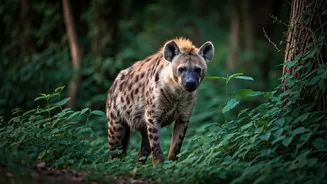
The striped hyena, classified as 'near threatened' by the IUCN, faces significant challenges to its survival, primarily due to habitat fragmentation and degradation. These large mammals, characterized by their striped legs and flanks, require extensive areas with free movement, easy access to food, and water sources to thrive. Ecologists emphasize that large infrastructure projects, such as highways, severely disrupt their habitats, leading to increased risks like roadkill and human-wildlife conflict, ultimately pushing the species towards local extinction. The shrinking availability of their preferred open scrubland forests, where they dig burrows or utilize natural hollows and caves, is another critical factor. Although sightings have been reported near the borders of Maharashtra and Karnataka, the reduction of suitable living spaces within Goa itself poses a substantial threat to their long-term viability.
Dietary Declines
The dwindling numbers of striped hyenas in Goa are also closely linked to a decline in their primary food sources. These opportunistic carnivores and scavengers primarily subsist on small animals, including mouse deer, rabbits, and poultry. Reports indicate a noticeable decrease in the rabbit population, a crucial prey item. Furthermore, traditional chicken rearing practices have seen a significant decline; where once nearly every household maintained a 'gudd' or hen sty, such practices are now less common. This reduction in readily available prey forces hyenas to travel greater distances in search of carcasses, increasing their exposure to various threats and making their survival increasingly precarious. The interconnectedness of the ecosystem means that changes in prey availability directly impact predator populations.
The Call for Surveys
As Goa prepares to participate in the All India Tiger Estimation exercise in 2026, which includes enumerating other species like hyenas, there's a growing sentiment among wildlife enthusiasts for more proactive measures to assess the striped hyena's status. Despite past sporadic sightings, including one reported in the Cotigao-Neturlim area about seven months ago, the forest department's perceived lack of dedicated surveys for this species is a point of disappointment. Enthusiasts advocate for camera trap-based surveys in areas where hyenas have been sighted recently to gather concrete data on their population and distribution. Such detailed assessments are crucial for understanding the true extent of their decline and for developing effective conservation strategies to protect this iconic, yet increasingly elusive, animal.