




A Bold Stance Unravels
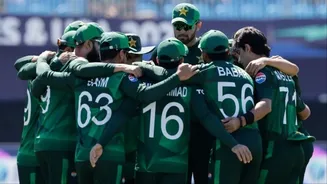
What began as a firm declaration of solidarity quickly transformed into a public relations predicament for Pakistan's cricket board. The initial announcement
to boycott the highly anticipated T20 World Cup match against India, made with significant fanfare, proved to be short-lived. This dramatic shift was met with widespread skepticism, with many anticipating the eventual retraction. Legendary cricketer Sunil Gavaskar was among the prominent voices to predict the U-turn, drawing parallels to past instances where Pakistani cricketers rescinded their retirements. The Pakistani government's statement, emphasizing the 'spirit of cricket,' was seen by many as a thinly veiled attempt to save face after the core financial implications of such a boycott became undeniably clear, highlighting a significant gap between their stated principles and practical considerations.
A Pattern of Reversals
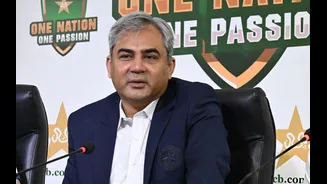
This wasn't the first instance of the Pakistan Cricket Board (PCB) executing a sudden change of course. Under the leadership of Mohsin Naqvi, a similar situation unfolded during the Asia Cup last year. At that time, Pakistan had threatened to withdraw from a match against the UAE, citing issues with match referee Andy Pycroft concerning a perceived 'handshake row' following a terrorist attack. However, just hours before the game was scheduled to commence, the PCB reversed its decision, attributing the change to an apology from Pycroft. The underlying reality, however, suggested that the PCB capitulated to practical pressures rather than ideological ones. This latest episode, involving the India fixture, represented a more significant gamble, targeting the most commercially vital match in cricket, a game strategically placed by the International Cricket Council (ICC) to maximize broadcast revenue.
The Lucrative Rivalry
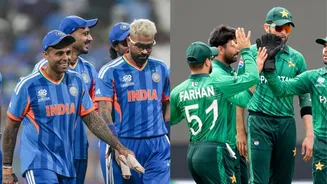
The India versus Pakistan cricket match is not merely a sporting encounter; it is a financial juggernaut within the global sports landscape. Broadcast circles estimate its value to be upwards of USD 200 million, a figure that dwarfs the PCB's annual revenue of approximately USD 35.5 million. This stark financial disparity made Pakistan's boycott threat a self-destructive proposition, a 'suicide pact' disguised as diplomatic leverage. The ICC, which relies heavily on the revenue generated by such high-profile fixtures to fund its operations and other cricketing nations, found itself in a delicate position. The ICC's pragmatic approach, prioritizing the continuity of its flagship tournaments and the financial health of its stakeholders, ultimately signaled that the boycott was untenable. Attempts to frame the withdrawal as a stand of regional solidarity, particularly in light of Bangladesh's earlier reservations about traveling to India, were overshadowed by the undeniable economic gravity of the situation.
Negotiations and Optics
Behind the scenes of Pakistan's public declaration, a flurry of negotiations took place. The ICC, keen to avoid disruption to its marquee event, dispatched negotiators to Lahore. Representatives from Bangladesh were also drawn into discussions, with their chairman, Aminul Islam, attending meetings alongside ICC director Imran Khawaja. These were not mere diplomatic pleasantries but critical damage control sessions. Pakistan reportedly presented a series of demands, including a resumption of bilateral cricket with India—a request outside the ICC's purview—and the formation of a tri-series. The ICC, while acknowledging the concerns, firmly rejected these proposals, adhering to its constitutional boundaries. However, to provide Pakistan with a plausible exit strategy and maintain regional harmony, the ICC agreed not to penalize Bangladesh financially, thereby offering Pakistan a 'win' on the optics front, despite the central threat of boycotting the India match having evaporated due to financial realities.
Reality Prevails Over Rhetoric
The truth beneath the grand pronouncements was that Pakistan could ill afford to forgo the revenue and prestige associated with playing India. The financial repercussions, including potential demands for rebates from broadcasters and sponsors, alongside fan backlash, would have been severe. The subsequent climbdown, though presented as a diplomatic achievement and a demonstration of support for Bangladesh, was fundamentally driven by economic imperatives. This episode exposed a pattern of brinkmanship where principles are loudly proclaimed but quickly abandoned when financial calculations prove unfavorable. While the ICC managed to navigate the crisis, the situation highlighted its limitations in controlling geopolitical tensions within cricket. Bangladesh secured its financial standing, but the overarching narrative is that certain sporting fixtures are simply too colossal to boycott, with common sense—or the looming specter of a substantial financial deficit—ultimately prevailing over ego and rhetoric.