






Istanbul's Grand Hub
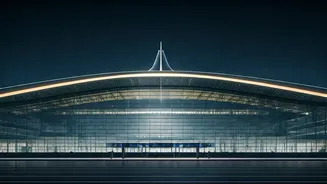
Istanbul Airport (IST) in Turkey stands as a testament to modern aviation infrastructure, boasting a colossal single-terminal structure that is slated
for phased expansion to become one of the globe's most significant air travel hubs. This facility is not only the largest airport serving Istanbul but also holds the distinction of being the world's largest privately operated airport and ranks as the second-busiest airport across Europe. Its design emphasizes efficiency and capacity, preparing it for future growth in air traffic and passenger volume. The sheer scale of the terminal underscores the strategic importance of Istanbul as a crossroads for international travel, connecting continents and cultures through its vast operational footprint. The continuous development plans ensure that it remains at the forefront of airport design and passenger service.
Beijing's Starfish Marvel
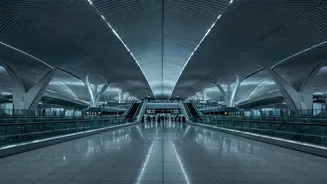
Beijing Daxing International Airport (PKX) in China, often nicknamed 'the starfish' due to its distinctive design, claims the title of the world's largest single-building terminal. Its main structure covers an astonishing 700,000 square meters of floor space, a space so vast it's often compared to the size of 97 football fields. Completed in June 2019 and operational by September of the same year, Daxing was built to accommodate the burgeoning air travel demands of China's capital city. The terminal's innovative layout is designed to minimize walking distances for passengers, a remarkable feat given its immense size. This architectural wonder signifies China's commitment to advanced infrastructure and its role as a major player in global aviation. The airport's efficient design and substantial capacity are key to managing the high volume of domestic and international flights originating from or transiting through Beijing.
Dubai's Former Giant
Dubai International Airport (DXB) Terminal 3 in the United Arab Emirates once held the prestigious record for the largest airport building globally, spanning an impressive 1,185,000 square meters. While Beijing Daxing is now more widely recognized as the largest structure under a single roof, DXB Terminal 3 remains an architectural titan and a crucial component of one of the world's busiest international aviation centers. Opened in October 2008, this terminal was a pioneering development in airport design, showcasing Dubai's ambition to become a premier global travel destination. Its immense size reflects the city's rapid growth and its strategic position as a hub connecting East and West. The terminal's extensive facilities and passenger services continue to impress, even as new benchmarks for sheer size are set by newer constructions.
Shanghai's Cargo Powerhouse
Shanghai Pudong International Airport (PVG) in China, which commenced operations in October 1999, is a significant player in global air cargo and passenger traffic. Beyond its main terminals, PVG features a satellite terminal that ranks among the largest in the world, measuring approximately 622,000 square meters. This impressive facility contributes to PVG's status as the busiest airport in China and the world's fourth-busiest in Asia. Furthermore, it holds the distinction of being the world's second-busiest airport for cargo traffic. The airport's comprehensive infrastructure, including its expansive satellite terminal, is engineered to manage enormous volumes of both freight and passengers, solidifying Shanghai's position as a vital economic and transport hub. Its ongoing development ensures it can meet the escalating demands of international trade and travel.
Jeddah's Hajj Gateway
King Abdulaziz International Airport (JED) in Saudi Arabia is a critical gateway, particularly for pilgrims traveling to Mecca and Jeddah. Its Terminal 1 is recognized as one of the world's largest single airport buildings, specifically designed to manage the massive influx of passengers during the Hajj season. Initially designed to accommodate 30 million passengers annually, the terminal's future plans aim to expand its capacity significantly to handle up to 80 million travelers. This focus on high passenger throughput, especially for religious tourism, showcases a unique requirement in airport design and operation. The terminal's scale and specialized facilities are vital for facilitating one of the world's largest annual religious gatherings, ensuring a smooth and efficient experience for millions of pilgrims.
Kuala Lumpur's Twin Terminals
Kuala Lumpur International Airport (KUL) in Malaysia features a substantial main terminal complemented by a large satellite terminal, creating a vast air travel complex. Terminal 1, which opened its doors in 1998, was envisioned by the celebrated Japanese architect Kisho Kurokawa. Although its name suggests proximity, the airport is actually situated in the Sepang District of Selangor, not directly within the capital city of Kuala Lumpur. The combined capacity and expansive layout of its terminals cater to a significant flow of international and domestic travelers, making it a key aviation hub in Southeast Asia. Its integrated design, combining multiple large structures, allows for efficient passenger movement and a wide range of amenities, reflecting its importance in regional connectivity.
Abu Dhabi's X-Shaped Terminal
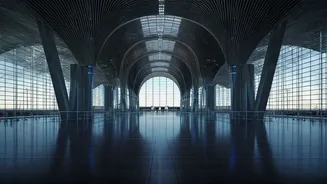
Abu Dhabi International Airport's Terminal A, also known as Zayed International Airport, represents a monumental leap in modern airport design, opening in November 2023. This expansive, X-shaped terminal is a marvel of engineering, covering 780,000 square meters and designed to welcome up to 45 million passengers each year. Its sheer size allows it to simultaneously accommodate approximately 79 Airbus A380-type aircraft, illustrating its immense capacity and advanced capabilities. As the primary international airport for the UAE's capital, Terminal A is poised to become one of the world's largest and most technologically advanced airport facilities, significantly enhancing passenger experience and operational efficiency for Abu Dhabi's growing aviation sector.