






Combating Cervical Cancer
The Union government is set to launch a significant Human Papillomavirus (HPV) vaccination campaign starting in Rajasthan on February 28. This public health
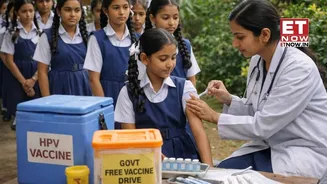
initiative is designed to protect young girls, specifically those aged 9 to 14 years, from the human papillomavirus. The primary objective is to prevent cervical cancer, which tragically remains a leading cause of cancer-related fatalities among women in India. The HPV vaccine's efficacy lies in its ability to shield against various strains of the virus, a common sexually transmitted infection that can lead to a spectrum of cancers, including those affecting the cervix, anus, and throat. The campaign will be accessible through both educational institutions and local healthcare facilities, underscoring the government's commitment to making this preventive measure widely available. Health authorities are strongly advocating for this vaccination, emphasizing its role in curbing HPV infections and ultimately reducing the considerable burden of cervical cancer across the nation. To ensure the campaign's success, a substantial supply of the vaccine has been procured to meet the needs of the targeted age group, complemented by extensive awareness programs aimed at educating parents and young girls about the vaccine's substantial benefits.
Vaccination Centers & Logistics
Prime Minister Narendra Modi will officially inaugurate the nationwide Human Papillomavirus (HPV) vaccination campaign on February 28, with the launch event taking place in Ajmer, Rajasthan. The campaign is specifically targeting 14-year-old girls and those who will reach this age within the following 90 days, as per directives from the Union Health Ministry to all states. This age group is crucial, given that persistent HPV infections are the primary cause of cervical cancer, which unfortunately continues to be the second most prevalent cancer among Indian women, impacting approximately 1.25 lakh individuals annually and leading to 75,000 deaths each year. Vaccination services will be provided at nearly 30,000 immunisation centres nationwide, located within government health centres and hospitals. These designated centres are equipped with a functional cold chain, personnel trained in administering vaccinations, and facilities prepared to handle any adverse reactions. The vaccine will be available daily at these locations for the initial 90 days of the campaign. Post this intensive period, the HPV vaccine will be offered on regular immunisation days, typically twice a week. Dr. Amit Yadav, director of the National Health Mission-Rajasthan, estimates that about 1% of a state's population falls within the eligible age bracket. Rajasthan alone will have around 1,000 vaccination points operational for this drive. The staff at these centres have undergone specialized training for administering the 0.5 ml dose into the left arm and managing any post-vaccination events. The storage of HPV vaccines is not posing a logistical challenge, as they require maintenance within a 2-8 degree Celsius temperature range, a standard requirement for many vaccines within the government's universal immunisation programme.
Awareness and Consent Protocols
To ensure a high turnout and encourage maximum participation in the HPV vaccination drive, extensive awareness initiatives have been undertaken, notably through collaborations with the education department to reach girls via their schools. A critical component of this campaign is the mandatory requirement for parental or guardian consent before any vaccination can be administered. Unlike the 'opt-out' system used for most childhood vaccines, where consent is assumed unless explicitly denied, the HPV vaccination employs an 'opt-in' approach. This means guardians must actively provide their approval for their child to receive the HPV shot. This consent can be registered either digitally through the U-win application or by submitting a hard copy if internet access is unavailable, as per the guidelines issued by the health ministry. During the initial 90-day intensive campaign period, girls who receive the vaccine will have their left index finger marked to indicate completion. Girls eligible for the vaccine are those who are exactly 14 years old based on their date of birth, or who will turn 15 within the 90-day campaign duration. However, certain contraindications apply. Girls experiencing moderate to severe illnesses are advised to postpone vaccination until they have fully recovered. Individuals with a history of allergic reactions to previous vaccinations or known allergies to yeast should also refrain from getting the HPV shot. Those outside the specified age range or who are pregnant are also excluded from receiving the vaccine under this campaign. Furthermore, girls who have already received any dose of existing HPV vaccines, such as Gardasil-4, Gardasil-9, Cervarix, or Cervavac, will not be eligible for a shot within this particular program; their vaccination status will be updated on the U-win platform. The guidelines also emphasize that vaccination centres should ensure recipients have consumed a meal prior to receiving the injection, suggesting parents provide breakfast beforehand. Centres are encouraged to arrange for refreshments on-site to support girls who may not have eaten at home, ensuring they are not on an empty stomach.
Post-Vaccination Care
Following their vaccination, all girls are required to wait at the centre for a period of 30 minutes. This observation period is crucial to monitor for any immediate adverse reactions to the vaccine. To help manage potential discomfort or anxiety during this time, the guidelines recommend that centres arrange engaging activities in the observation rooms, aiming to distract the girls from any post-vaccination pain or nervousness. Minimizing crowding at the centres is also a priority to ensure a calm environment. Common side effects after HPV vaccination are generally mild and manageable, typically including localized pain, redness, or swelling at the injection site, along with potential fever, headache, fatigue, nausea, or dizziness. Fainting or dizziness, in particular, are often linked to the apprehension of receiving an injection or having an empty stomach rather than a direct reaction to the vaccine itself. These symptoms can usually be addressed with simple interventions such as administering paracetamol, ensuring adequate fluid intake, removing excess clothing, or applying a cold compress to the injection site, and they typically resolve within a couple of days. Despite the rarity of severe reactions, vaccination centres are equipped with kits to manage anaphylaxis, a potentially life-threatening allergic reaction that requires immediate medical intervention. To ensure prompt assistance, each vaccination centre will be linked to its nearest 24/7 health facility, guaranteeing that help is readily available if needed. Girls have the flexibility to either walk in for their vaccination or pre-book their slots through the government's U-win vaccination management application.