
Master the Lid Technique
A fundamental yet often overlooked practice is the consistent use of lids on your cooking vessels. This simple act creates a sealed environment that traps
heat and steam efficiently. The captured heat accelerates the cooking process, meaning your food reaches the desired state much quicker. Consequently, the burner doesn't need to remain on for extended periods, directly leading to a reduction in LPG consumption. By ensuring all your pots and pans are covered during cooking, you can achieve substantial savings on your gas usage without compromising on meal preparation time.
Right Burner, Right Pot
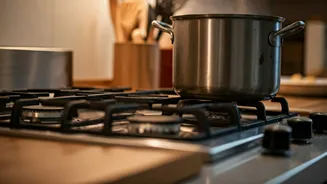
Gas stoves typically feature burners of varying sizes, but many individuals default to using the largest one for all their culinary needs. This is a significant source of gas wastage. When a small pot is placed on a large burner, the flame inevitably spreads beyond the base of the utensil, releasing a considerable amount of heat into the surrounding air. To optimize efficiency, it's crucial to match the burner size to the utensil. Employ smaller burners for smaller pots and pans, reserving the larger ones for bigger vessels or tasks requiring more intense heat. This mindful selection ensures that the flame is contained and directed effectively towards the food.
Pre-Soak for Speed
The time taken to cook staples like rice, lentils, and pulses can be dramatically reduced by adopting a pre-soaking routine. When these ingredients are submerged in water for a period before cooking, they absorb moisture, becoming softer and more pliable. This initial softening process significantly curtails the overall cooking time required on the stovetop. Even a brief soaking of 30 minutes to an hour can yield noticeable results, leading to both time and LPG savings. This simple preparatory step makes a tangible difference in your gas consumption patterns.
Chop for Faster Cooking
The physical size and shape of your ingredients play a vital role in how quickly they cook. Large, substantial pieces of vegetables or other food items require a longer duration on the heat to become tender. By cutting your produce into smaller, uniform pieces, you increase the surface area exposed to heat and facilitate faster, more even cooking. This not only reduces the time spent over the burner but also ensures that your dishes are cooked to perfection more efficiently, thereby conserving the amount of LPG used.
Batch Cooking Benefits
Engaging the gas stove multiple times throughout the day for individual dishes can lead to an unnecessary escalation in gas usage. A more economical approach involves strategic meal planning to cook several dishes concurrently. For instance, you can prepare your main course, a lentil dish, and a vegetable preparation within a single cooking session. This consolidated approach minimizes the number of times the burner needs to be ignited and maintained, offering a considerable saving on your LPG consumption compared to sequential cooking.
Simmer, Don't Blaze
A common culinary habit that contributes to gas wastage is maintaining a high flame even after the food has begun to boil. Once liquids reach a boiling point, the primary cooking can be effectively managed with a reduced flame, a process known as simmering. Continuing with a high heat setting at this juncture does not accelerate the cooking process and instead leads to the inefficient burning of LPG. Opting to lower the flame to a gentle simmer once boiling is achieved ensures continued cooking while significantly conserving gas.
Clean Burners, Efficient Flame
The cleanliness of your gas stove's burners has a direct impact on their operational efficiency. Over time, food particles, spills, and grease can accumulate and obstruct the small holes in the burner assembly. This blockage leads to uneven flame distribution and a less effective combustion of gas. Regularly cleaning your burners ensures a consistent, strong, and steady blue flame, which is indicative of optimal gas utilization and improved fuel efficiency. A well-maintained burner translates to less gas consumed for the same cooking outcome.
Match Utensil to Flame
A recurring oversight in the kitchen involves pairing utensils with burners in a way that leads to heat wastage. When a pot or pan is significantly smaller than the burner it's placed on, the flame flares up around the sides, escaping the confines of the utensil's base. This wasted heat dissipates into the atmosphere, failing to contribute to the cooking process. To maximize the effectiveness of your gas stove, it is imperative to select cookware whose base size is commensurate with the burner's diameter, ensuring that the heat is concentrated where it's needed most.
Flat Bottom Advantage
The design of your cookware can significantly influence cooking speed and gas consumption. Vessels with flat bottoms are generally superior to those with rounded bases when it comes to absorbing heat from the burner. A flat base ensures consistent contact with the heat source and facilitates a more uniform distribution of heat across the entire bottom surface. This enhanced heat transfer allows food to cook more rapidly and evenly, thereby reducing the overall time the burner needs to be active and consequently lowering LPG usage.
Residual Heat Cooking
A smart technique to conserve gas involves understanding the power of residual heat. Many dishes continue to cook for a short period even after the flame has been extinguished, thanks to the retained heat within the cookware and the food itself. By turning off the gas supply a minute or two before a dish is theoretically completely done, you can allow the remaining heat to finish the cooking process. This approach not only saves a small but significant amount of LPG but also ensures your food is perfectly cooked.