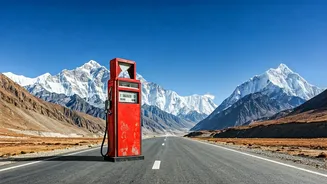








A Himalayan Marvel
At an altitude of 12,270 feet, nestled amidst the towering Himalayas, exists a remarkable petrol pump. This station is not just a place to refuel; it is a critical
resource for travelers and truck drivers navigating the demanding, high-altitude terrain. The pump is a beacon of essential services in a landscape where resources are scarce and distances vast. This remote location offers fuel to vehicles that often cover extensive distances, turning it into a crucial stopover point for transport across the region. Travelers have often described it as a lifeline, or 'lifesaver station', owing to its pivotal role in keeping vehicles on the move and supporting the flow of goods and people in the area. The pump's existence highlights human adaptability and the importance of infrastructure, even in the most challenging of environments.
500km Journey For Fuel
The petrol pump's importance is magnified by the long distances that vehicles cover to reach it. Trucks frequently undertake journeys of up to 500 kilometers to access this unique refueling point. This long-distance travel demonstrates the pump's importance to transportation in the area. The arduous journey undertaken by truckers emphasizes the critical role the station plays in supporting trade, tourism, and daily life in this remote region. The pump's strategic location ensures a continuous supply of fuel, which allows vehicles to continue operating efficiently and safely despite the harsh conditions. This pump acts as a pivotal element in a complex logistical network, facilitating movement and trade throughout the Himalayan landscape. The commitment required to maintain and reach this station highlights its significance to the local communities.
Above the Clouds
The location of the petrol pump above the clouds is not just a geographical detail; it represents the extreme conditions that surround this facility. The high altitude means reduced oxygen levels, making it harder for people to function and for vehicles to operate efficiently. These challenging atmospheric conditions are compounded by the often harsh weather patterns of the Himalayas, including freezing temperatures, heavy snowfall, and strong winds. The petrol pump's existence at this altitude shows a dedication to providing critical services, despite the difficult circumstances. It's an example of how human endeavor can overcome environmental challenges and create crucial infrastructure, even in the most unlikely and remote of places. The very location of the pump conveys a sense of resilience and commitment, underscoring its essential function in this formidable landscape.
Lifesaver Station
The term 'lifesaver station', often used by travelers to describe this high-altitude petrol pump, captures its significance to the people who depend on it. This description emphasizes the station's pivotal role, especially for those traveling through difficult terrains where help can be far away. It stands as a symbol of reliability and support in a region where such resources are not always readily available. For truck drivers and other travelers navigating the winding mountain roads, the availability of fuel means the difference between continuing their journey safely or being stranded in a harsh environment. The term ‘lifesaver station’ is a simple, yet powerful acknowledgment of the petrol pump's vital function in supporting the movement of goods and people across the mountainous area, offering peace of mind to those who travel the difficult routes.