
Origins and History
The origins of the Tarot remain shrouded in mystery, though they are often traced back to 15th-century Italy, where they initially appeared as playing
cards rather than tools for divination. Over time, the decks evolved, integrating symbolic imagery and allegorical narratives. This transformation marked the shift of the cards from games to vehicles of spiritual exploration. Esoteric traditions, from Kabbalism to Hermeticism, have influenced the evolution of Tarot, imbuing it with deeper layers of meaning. Early Tarot decks, often crafted by hand, were luxury items. Their images, rich in symbolism, held great appeal. As the printing press developed, Tarot spread throughout Europe, and the cards began to be associated with fortune-telling and occult practices. The popularity of the Tarot grew as a tool for introspection, personal growth, and gaining insight. The ongoing use of the Tarot is a testament to its enduring capacity to capture the imagination, while its capacity to unveil hidden truths and possibilities continues to fascinate those seeking self-understanding.
Structure of the Deck
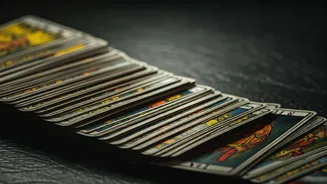
A standard Tarot deck consists of 78 cards, divided into two primary sections: the Major Arcana and the Minor Arcana. The Major Arcana comprises 22 cards, each representing a significant life archetype or pivotal event. The Fool, The Magician, The High Priestess, and The Empress are among the most notable cards of the Major Arcana, each one reflecting a distinct aspect of human experience. The Minor Arcana, on the other hand, consists of 56 cards, which are further divided into four suits: Wands, Cups, Swords, and Pentacles. Each suit represents a different element: Wands are linked with fire and energy; Cups, with water and emotions; Swords, with air and intellect; and Pentacles, with earth and material aspects. Each suit has fourteen cards, numbered one through ten, along with four court cards (Page, Knight, Queen, and King). These cards provide a more nuanced outlook, mirroring the day-to-day conditions and the dynamics of our lives.
Interpreting the Cards
Interpreting Tarot cards is a highly subjective and symbolic process. Each card possesses a wealth of meanings, often reflecting various aspects of life: love, career, health, or spirituality. The initial step in interpretation involves understanding the card's conventional meaning. This provides a baseline for understanding. However, the interpretation also greatly depends on context. The surrounding cards and the question being asked all contribute to the overall message. The reader's intuition also plays a crucial role. As you connect with the symbols and trust your feelings, the interpretation will become clearer. Many people use the cards for self-reflection and guidance. This practice promotes a deeper understanding of one's own character, desires, and obstacles. Consider reading Tarot as a form of communication with your subconscious mind. It can provide answers to questions and offer a different perspective on life's challenges.
Reading Spreads
Tarot readings frequently involve employing specific arrangements known as spreads. A spread is a predetermined pattern in which cards are laid out to answer a particular question or to explore a specific aspect of a person's life. Popular spreads include the three-card spread (which focuses on the past, present, and future), the Celtic Cross spread (a more comprehensive spread that provides a broader perspective), and the relationship spread (that explores the dynamics of relationships). The arrangement of the cards in a spread guides the interpretation. Each position in the spread represents a specific facet of the question being asked. For instance, in the Celtic Cross, the first card often represents the current situation, while cards in later positions provide insight into underlying influences or future outcomes. Different spreads provide different depths of understanding. Choosing the right spread is critical for getting the insight you need.
Ethical Considerations
Ethical considerations are a critical element of working with Tarot cards. Responsible Tarot readers prioritize honesty, respect, and accuracy. It's important to provide counsel and guidance, not to use the cards to manipulate or exploit others. Tarot is primarily a tool for self-discovery and personal growth. It shouldn't be used to make definitive predictions about the future or to make decisions for others. It's crucial to empower people to make their own choices. A skilled reader will encourage clients to take ownership of their paths. If a reader feels incapable of providing guidance or if the subject matter ventures into areas outside their expertise, it's ethical to decline the reading. This maintains professionalism and protects the integrity of the process. Always respect the confidentiality of clients and keep their personal information secure.