






Ingenious or Insane?
In a striking display of resourcefulness, a person identified as Himank Vasudeva has captivated and concerned online audiences with a video demonstrating
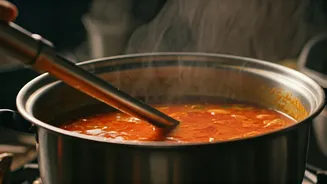
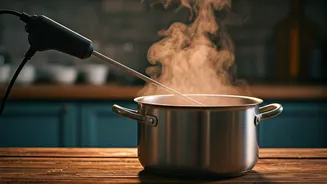
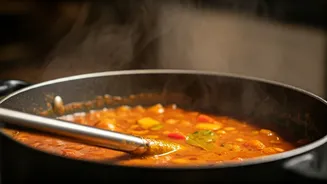
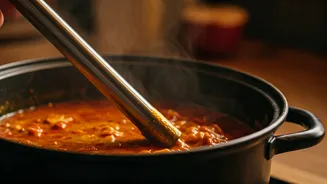
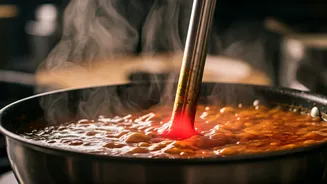
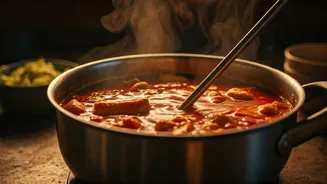
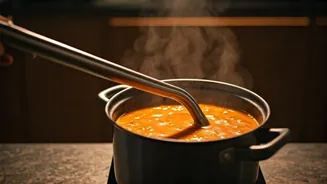
an unconventional cooking method. Faced with an empty LPG cylinder, Vasudeva opted to employ a metal immersion rod, typically used for heating liquids, to prepare a bubbling yellow curry. The visual evidence shows a steel pot resting on a kitchen counter, filled with simmering curry, devoid of any conventional stovetop flame. Instead, the immersion rod, with its heating elements submerged, diligently brings the dish to a boil. The sheer novelty of this approach, especially during a period marked by widespread cooking gas shortages across India, quickly propelled the clip to viral status, amassing millions of views and igniting a fervent discussion about its safety and feasibility.
Reasons Behind the Hack
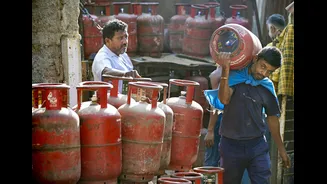
The viral kitchen workaround emerged against a backdrop of significant disruptions in the supply chain for Liquefied Petroleum Gas (LPG) cylinders in various parts of India. These shortages, reportedly exacerbated by global supply concerns linked to geopolitical tensions in West Asia, have led to substantial delays in cylinder deliveries. For many households, this has meant an inability to cook their daily meals, while some smaller eateries have been forced to temporarily halt operations. In this context, improvisational solutions like the immersion rod curry cooking, though inherently risky, serve as a stark reflection of the daily struggles and adaptive strategies many individuals are forced to adopt to navigate these supply chain challenges and maintain some semblance of normalcy in their domestic routines.
Mixed Reactions Online
The online reception to the immersion rod cooking hack was a kaleidoscope of amusement, admiration, and serious concern. Social media platforms buzzed with comments, ranging from lighthearted jokes to stern safety warnings. Some users expressed awe at the ingenuity, with one quick-commerce platform jokingly remarking, "100% brain unlocked." Others found humor in the situation, with a comment humorously questioning, "Is gravy ko khana hai ya isse nahana hai (Is this gravy meant to be eaten or bathed in?)." However, this wave of levity was met with a significant counter-current of apprehension. Many voiced strong objections, citing grave safety risks. A prominent concern highlighted was the fact that the immersion rod was not fully submerged according to its minimum level mark, potentially leading to overheating, electrical hazards, or even explosions. This dichotomy of reactions underscores the complex interplay between innovation, necessity, and safety in the face of unforeseen circumstances.
Safety and Health Concerns
Beyond the immediate shock value and amusement, a critical aspect of the viral trend lies in the significant safety and health implications raised by experts and concerned viewers. A recurring warning emphasized the potential danger of using immersion rods in a manner inconsistent with their design specifications. Specifically, the observation that the rod was not fully submerged up to its recommended minimum level mark was a major red flag, as this could lead to overheating of the appliance, potential electrical short circuits, or even hazardous explosions. Furthermore, a more nuanced health concern was brought to light by a commenter who cautioned against consuming food prepared using this method. The assertion was that prolonged use of such heating elements might leave behind residual deposits in the food, potentially posing health risks. This advice strongly urged individuals to prioritize conventional cooking methods like using gas stoves or traditional practices, like cooking with wood, to ensure both safety and food hygiene.