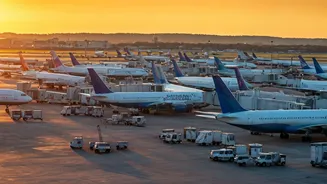

Flight Groundings Overview
IndiGo, one of India's largest airlines, was forced to cancel or delay a significant number of flights, leading to considerable disruption for travelers.
The crew shortages primarily impacted major metropolitan areas. This resulted in long delays and a challenging situation for passengers who had their travel plans upended. The airline was reportedly struggling to maintain its regular flight schedules due to insufficient staff availability. This situation brought about several challenges to the airline's daily operations.
Bengaluru Airport Chaos
Bengaluru, a major aviation hub, was heavily affected by the crew shortage. Travelers arriving at or departing from Kempegowda International Airport experienced delays and cancellations. Passengers reported crowded terminals and a scramble for alternative travel arrangements. The disruptions extended throughout the day, leaving many stranded and frustrated. The impact on Bengaluru's air travel network resulted in delayed connecting flights and significant inconvenience for the travelling public.
Delhi's Operational Issues
Delhi, being a major entry and exit point, faced intense operational hurdles. Indira Gandhi International Airport saw massive cancellations and delays, affecting both domestic and international flights. Travelers dealt with extended wait times and limited resources. The situation escalated, causing ripple effects that influenced other airlines and travel services within the airport complex. Furthermore, the overall efficiency of Delhi's aviation infrastructure came under considerable strain due to the widespread crew shortages experienced by IndiGo.
Hyderabad's Flight Troubles
Hyderabad also witnessed considerable disruption in its flight operations. Rajiv Gandhi International Airport experienced cancellations and delays, leading to packed terminals and stranded passengers. Travelers faced uncertainty and struggled to rebook flights or find alternate means of transport. The chaos in Hyderabad highlighted the interconnectedness of India's air travel network and the consequences of widespread flight disruptions on the passengers and airports alike. The impact in Hyderabad showcased how the crew shortage crisis affected multiple crucial urban hubs.
Causes of Shortage
The exact causes of the crew shortage are not explicitly mentioned in the provided text. However, such shortages can arise from several factors, including insufficient recruitment, increased sick leaves, or unexpected operational challenges. The airline's operations were severely impacted, which led to a cascade of flight disruptions. The shortages highlight the importance of effective crew management and contingency planning within the aviation sector. These operational challenges have repercussions beyond passenger experience, impacting the airline's reputation and financial performance.
Passenger Impact
Passengers across the affected cities faced considerable inconvenience, with significant disruptions to their travel plans. Many travelers were compelled to rearrange their itineraries, resulting in increased stress and financial burdens. Communication from the airline might have been delayed and unclear, contributing to passenger frustration. The flight cancellations and delays negatively impacted connecting flights, and led to a wider ripple of effects. Ultimately, the travel experiences of thousands of passengers were significantly disrupted due to the crew shortage.
Airline Response
Details on IndiGo's immediate response to address the crew shortage are not provided in the prompt. However, typically, airlines would try to reallocate staff, offer alternative flights, or provide compensation to affected passengers. Handling such large-scale disruptions needs effective communication and operational agility. The effectiveness of the airline’s response determines passenger satisfaction and public confidence. The specific actions taken by IndiGo would have been critical in mitigating the impact and regaining operational stability.
Long-Term Implications
The crew shortage's long-term effects could include an impact on passenger confidence and potential shifts in travel preferences. It might prompt a reevaluation of airline staffing strategies and operational preparedness. Enhanced training programs and more robust contingency plans may be considered. These disruptions underscore the need for airlines to manage their staff effectively. This instance could influence future travel patterns and the airline's operational readiness.