


Frontrunner Consortium Emerges
A formidable investment group, spearheaded by the Aditya Birla Group and bolstered by American sports financier David Blitzer, global investment firm Blackstone,
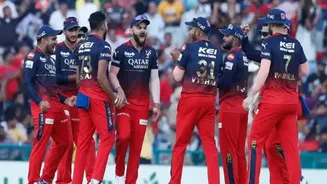
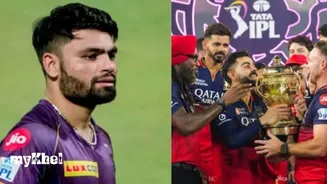
and the influential Bennett, Coleman & Co., has reportedly taken the lead in acquiring the much-coveted IPL franchise, Royal Challengers Bengaluru. This development signifies a significant shift in the ongoing sale process, with official confirmation anticipated in the near future. The consortium's strong position was further solidified when Blackstone decided to join the partnership, enhancing their collective bid. Notably, this group had previously explored an investment opportunity with the Rajasthan Royals but ultimately pivoted their focus to RCB, recognizing what they perceived as a more compelling prospect. This strategic move underscores the intense competition and the strategic evaluations undertaken by potential buyers in the highly valuable IPL market.
Intense Bidding War
While the Aditya Birla-Blackstone-led consortium appears to be in the driving seat, the race for Royal Challengers Bengaluru is far from over, with several other serious contenders vying for ownership. A notable bid comes from a group led by prominent healthcare entrepreneur Dr. Ranjan Pai, who has secured backing from the well-established American investment firm Kohlberg Kravis Roberts (KKR) and the Singaporean investment company Temasek. Adding to the intrigue, there is also a distinct alliance formed between EQT and Premji Invest, indicating diverse investment strategies at play. Further complicating the landscape, there are reports of potential interest from the Mittal family, known for their association with ArcelorMittal, hinting at the significant appeal of RCB as an investment. This multi-pronged competition ensures that the final decision will be a closely watched event within the sports and business communities.
Valuation and Deal Dynamics
The financial stakes in the potential sale of Royal Challengers Bengaluru are substantial, with the current owners reportedly targeting a valuation of approximately $2 billion, which translates to around Rs. 18,500 crore. However, the majority of the interested bidders have so far presented valuations in the range of $1.5 billion to $1.7 billion, indicating a potential gap in expectations between the seller and potential buyers. This valuation disparity is a common feature in high-stakes sports franchise acquisitions. Furthermore, any finalized deal for RCB, much like the recent sale of the Rajasthan Royals, is expected to officially take effect after the conclusion of the upcoming 2026 IPL season, allowing for continuity in operations and team management during the interim period.
Rajasthan Royals Precedent
In a recent landmark deal that set a new benchmark for IPL franchise valuations, the Rajasthan Royals were reportedly acquired by American businessman Kal Somani for an impressive $1.63 billion, or approximately ₹15,300 crore. This transaction, which is slated to be effective after the 2026 IPL season, received crucial backing from notable investors such as Rob Walton and the Hamp family. Prior to this acquisition, the Rajasthan Royals were primarily owned by Manoj Badale, with significant investments from entities like RedBird Capital and Lachlan Murdoch. The sale process itself was expertly managed by The Raine Group and attracted considerable interest from a diverse pool of bidders. Kal Somani, the new owner, is an American tech entrepreneur who has been a minority investor in the franchise since 2021, underscoring a strategic move towards full ownership.
Brand Value Discrepancy
A noteworthy aspect of the IPL landscape is the varying brand value attributed to different franchises, with Royal Challengers Bengaluru consistently ranking among the most valuable teams in the league. In contrast, the Rajasthan Royals are generally positioned at the lower end of the brand value spectrum. This difference in perceived worth is often influenced by factors such as historical performance, fan engagement, and marketability. The recent reported title win for RCB in 2025 is expected to further bolster its valuation, theoretically making it a significantly more attractive asset compared to franchises with lower brand equity. This disparity in brand value likely plays a crucial role in the negotiation dynamics and final valuation of any potential sale of these franchises.