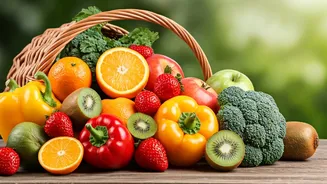

Citrus Powerhouses Unleashed
Citrus fruits are widely recognized as stellar vitamin C providers. Oranges, with their juicy sweetness, are a champion, with one medium orange supplying
a significant dose. Grapefruits, offering a tangy alternative, are also packed with this essential nutrient. Lemons and limes, often used as flavor enhancers, contribute substantially, too. These fruits aren't just for beverages; include them in salads or enjoy them as snacks. Consuming these fruits regularly supports a healthy immune system, preparing the body for various challenges. From bolstering resistance to everyday ailments to improving overall health, incorporating citrus into your diet is a flavorful and impactful strategy. It is easy to find them in India. These citrus fruits are accessible in local markets.
Berries: Tiny Treasures
Berries offer a delightful array of vitamin C sources. Strawberries, beloved for their sweetness, provide a generous amount per serving. Blueberries, with their antioxidant properties, and raspberries, known for their versatility, also contribute meaningfully. Blackberries, often enjoyed in desserts or jams, add to the mix, too. These berries can be mixed into smoothies, sprinkled on yogurt, or eaten by the handful. Beyond vitamin C, berries offer an assortment of antioxidants and nutrients, contributing to a robust health profile. Considering their availability and ease of consumption, incorporating berries into your diet is a simple yet potent way to bolster your health and well-being. Try to eat these during seasons in India.
Bell Peppers' Boost
Bell peppers are underrated sources of vitamin C, particularly the colorful varieties. Red bell peppers stand out with their impressive levels of the vitamin, followed closely by yellow and green peppers. They are a welcome addition to diverse dishes, whether roasted, sautéed, or added raw to salads. Bell peppers not only elevate the nutritional content of a meal but also add flavor and vibrancy. Eating them ensures a good amount of Vitamin C intake. Including these in your daily meals supports the immune system, promotes healthy skin, and assists in absorbing iron. Their versatility makes them an effortless inclusion in any meal plan, offering both health advantages and culinary delight.
Leafy Greens Abound
Leafy green vegetables are excellent for many nutrients. Spinach is a well-known source, providing a substantial amount of vitamin C. Kale, a superfood, also offers a significant dose. Other greens such as collard greens contribute, too. These greens can be incorporated into salads, blended into smoothies, or added to various cooked dishes. Leafy greens are not only rich in vitamin C but also packed with other crucial nutrients, including vitamins A and K, and essential minerals. Including these in meals strengthens the immune system, boosts energy levels, and promotes overall vitality. They can be found in abundance in local markets. Their versatility makes them easy to incorporate into any meal.
Kiwi: The Tropical Gem
Kiwi fruit is another great source of vitamin C. These small, fuzzy fruits contain a concentrated amount of the vitamin. Kiwis are usually eaten raw, either on their own or added to fruit salads and other dishes. Beyond their vitamin C content, kiwis also include vitamin K and fiber, promoting digestive health. They are easy to include in any meal plan. Their distinctive flavor adds a vibrant touch to any meal. Their simple form allows for quick and easy consumption. Incorporating kiwi into one's diet offers many benefits for overall health. Consuming kiwis regularly can significantly boost the immune system and increase energy levels.
Broccoli's Benefits
Broccoli is a nutritional powerhouse. It is a source of vitamin C and other vital nutrients. This cruciferous vegetable can be steamed, roasted, or added to stir-fries. Broccoli is versatile. It offers not only vitamin C but also essential fiber and antioxidants. It supports the immune system and promotes overall well-being. Adding broccoli to your diet provides a versatile and effective approach to improving health. Eating broccoli can significantly enhance your immune function, protect against chronic diseases, and improve overall health. Its easy availability and preparation make it easy to incorporate it into any meal.
Tomatoes' Tang
Tomatoes, a common food, provide a useful amount of vitamin C. This versatile fruit, often treated as a vegetable in cooking, can be added to salads, sauces, or enjoyed as a snack. Tomatoes provide vitamin C, which is essential to the diet. They also contain lycopene, an antioxidant linked to many health benefits. Whether used in raw form or cooked, tomatoes make it easier to add vitamin C to your daily consumption. They are easy to prepare and accessible. Adding tomatoes to your meals makes it easy to add important nutrients.
Brussels Sprouts' Value
Brussels sprouts, often overlooked, are a good source of vitamin C. Brussels sprouts, like broccoli, are cruciferous vegetables that can be roasted or steamed. Besides vitamin C, they offer fiber and other key nutrients. These additions can make a meaningful difference. Regularly including Brussels sprouts in meals will bolster immunity and assist overall well-being. They provide a nutritious way to support your health goals. They may seem difficult to use, but Brussels sprouts are adaptable to a number of cooking techniques. Adding Brussels sprouts to meals is a good decision.
Cantaloupe's Contribution
Cantaloupe is a sweet and tasty fruit, which is also a good source of vitamin C. Cantaloupe may be eaten alone or added to fruit salads. Cantaloupe adds more than simply vitamin C; it also contains a number of antioxidants. Cantaloupe is available during certain times of the year and it's easy to add to a healthy diet. You can eat cantaloupe at breakfast, as a snack, or any time of day. Its high water content helps with hydration, making it a great addition to your menu during the hotter months. Cantaloupe is a delicious and nutritious option for overall health.
Acerola Cherry's Potency
Acerola cherries have a very high concentration of vitamin C. These cherries are often used in supplements, but they can be found in some health food stores and markets. Consuming acerola cherries guarantees a large intake of vitamin C, greatly improving the immune system. They are often eaten with other fruits or combined in smoothies. Even though they may not be as common as other sources, their vitamin C content makes them useful for health. They can be a perfect choice for those who want to significantly boost their vitamin C intake.