





NIA Takes Over Probe
In a decisive move prompted by escalating concerns over election-related incidents, the Election Commission has officially handed over the investigation
into the distressing event in Malda, West Bengal, to the National Investigation Agency (NIA). This incident involved a group of villagers who reportedly held judicial officers 'hostage' during the Special Intensive Revision (SIR) of electoral rolls. The poll body's spokesperson confirmed that an NIA team is scheduled to arrive in the state imminently to commence its comprehensive inquiry. The EC conveyed its directive to the NIA Director General via a formal letter, requesting a thorough investigation and the submission of a preliminary report directly to the Supreme Court, adhering to its earlier directions. This transfer signifies the gravity with which the authorities are treating the security of officials involved in the election process, especially in a politically charged environment.
Supreme Court's Stern Rebuke
The Supreme Court's involvement underscored the severity of the Malda incident, delivering a sharp rebuke to the West Bengal administration for what it termed a 'complete failure' and 'inaction.' The court's strong stance came after it was apprised of the 'deplorable' gherao and detention of seven judicial officers, including three women, in Malda. These officers were engaged in the crucial task of revising voter lists. The Supreme Court did not mince words, directing that the matter be investigated by either the CBI or the NIA. Furthermore, it mandated the deployment of central forces within the state to bolster security. The court pointedly noted that the Mamata Banerjee-led state government had a responsibility to inform the Election Commission and request central forces to safeguard the judicial personnel. The permission granted to the Election Commission to seek an NIA or CBI probe highlights the exceptional circumstances surrounding the event.
The Malda Incident Unfolds
The controversial event unfolded during the ongoing Special Intensive Revision (SIR) process for voter lists in Malda district. According to officials, seven judicial officers, a group that included three women, found themselves surrounded and detained for several hours by a section of local residents. The protest originated outside the Kaliachak II Block Development Office, sparked by a group of individuals whose names had apparently been removed from the electoral rolls. Their demand for an immediate meeting with the officers was not met, leading to a demonstration that commenced around 4:00 PM. The situation escalated as the protesters blockaded the office premises, continuing their vigil and effectively holding the officers captive well into the night. This disruption to the revision process and the detention of officials marked a critical point in the pre-election period.
Political Repercussions Emerge
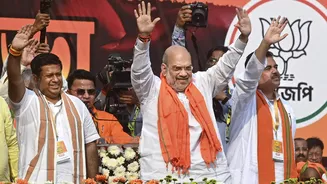
Following the Malda incident, West Bengal Chief Minister Mamata Banerjee publicly voiced strong opinions, accusing the Bharatiya Janata Party (BJP) of orchestrating efforts to potentially nullify the state elections and impose President's Rule. Addressing a political rally in Sagardighi, she further criticized the Election Commission, alleging its failure to effectively manage and maintain law and order within the state. These statements reflect the heightened political tensions surrounding the election process in West Bengal. The upcoming Assembly elections, slated to be conducted in two phases on April 23 and April 29, with vote counting scheduled for May 4, are being closely watched, especially in light of such controversies and the historical electoral performance, where the Trinamool Congress secured a significant majority in 2021 against the BJP.