





The Lunar Eclipse Explained
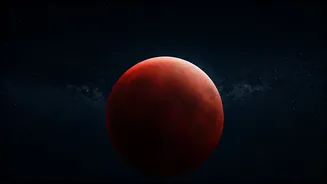
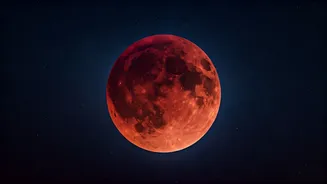
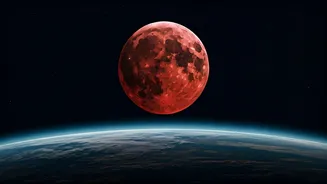
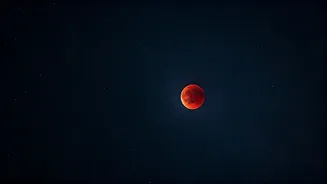
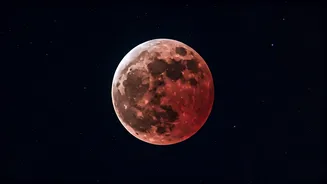
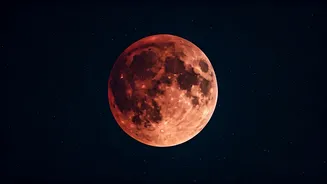
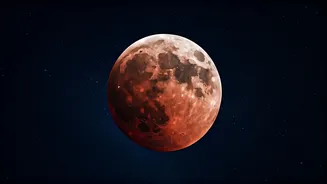
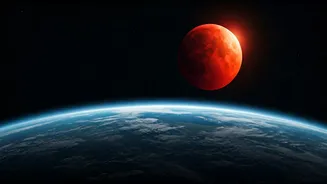
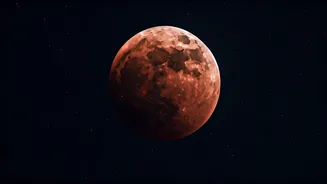
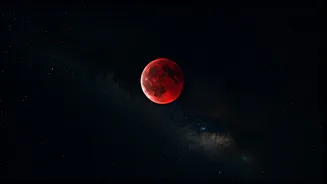
On March 3, 2026, a captivating astronomical event known as a total lunar eclipse is scheduled to occur, an occurrence often referred to as a 'Blood Moon'
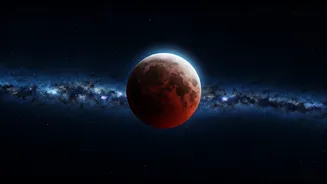
due to its distinctive reddish hue. This spectacular display happens when the Sun, Earth, and Moon align in a precise order, causing our planet to cast its shadow directly onto the lunar surface. This celestial alignment effectively obstructs the Moon from receiving direct sunlight, leading to its dramatic transformation in appearance. While lunar eclipses are not daily occurrences, they do manifest periodically, offering enthusiasts and the general public alike a chance to witness the grandeur of space.
Why Does the Moon Turn Red?
The mesmerizing red color of the 'Blood Moon' during a total lunar eclipse is a result of how Earth's atmosphere interacts with sunlight. When the Earth positions itself directly between the Sun and the Moon, it casts a shadow. However, not all sunlight is blocked; some rays manage to traverse through Earth's atmosphere. As these rays bend, a process known as refraction occurs. The Earth's atmosphere is particularly adept at scattering shorter, bluer wavelengths of light, while allowing longer, redder and orange wavelengths to pass through and reach the Moon. It's this filtered, reddish light that illuminates the Moon, imbuing it with its characteristic crimson glow and earning it the evocative name 'Blood Moon'.
Viewing the Eclipse in India
For sky gazers in India, the total lunar eclipse on March 3, 2026, will present a unique viewing experience. The event is anticipated to occur under 'moonrise eclipse' conditions, meaning that by the time the Moon ascends above the horizon in various parts of the country, the eclipse will already be in progress. Consequently, viewers will not be able to witness the initial phases of the eclipse. The specific time at which the eclipse becomes visible will differ across cities, as will the duration of observation, depending on the local moonrise times. Despite this, the latter stages and the peak of the 'Blood Moon' phenomenon will be observable.
Eclipse Timing and Visibility
The total lunar eclipse is slated for March 3, 2026, with the celestial event unfolding from approximately 03:20 PM to 06:47 PM. For India, the Moonrise is expected around 06:26 PM, marking the earliest point at which the eclipse can be observed nationwide, although this time varies slightly by city. The period of maximum eclipse, when the Moon will be most deeply enshrouded in Earth's shadow and exhibit its most intense red hue, is predicted to occur between 06:33 PM and 06:40 PM. The eclipse will conclude at 06:47 PM. Major Indian cities like Delhi will see moonrise and eclipse visibility around 06:22 PM, Lucknow at 06:02 PM, Chennai at 06:21 PM, and Hyderabad at 06:26 PM.
Global Viewing Opportunities
While India experiences the eclipse during its moonrise, other regions will have different viewing windows for the March 3, 2026, total lunar eclipse. North America, for instance, will observe the event in the early morning hours. Cities like Los Angeles can expect to see it around 3:04 AM, Denver at 4:04 AM, Chicago and St. Louis at 5:04 AM, and New York and Washington D.C. at 6:04 AM. These varied timings highlight the global nature of this astronomical phenomenon, allowing different parts of the world to catch a glimpse of the 'Blood Moon' as Earth's shadow traverses the lunar surface.