







The Hydrogen Innovation
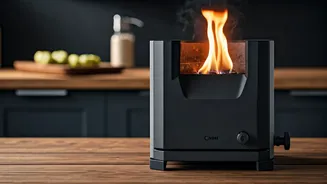
Amidst the persistent challenges with LPG availability, a pioneering Indian company has unveiled a remarkable hydrogen-powered cooking stove. This sophisticated
appliance operates on a 'plug-and-play' principle, ingeniously converting water and electricity into green hydrogen right at the point of use. This breakthrough offers a cooking method that is entirely free from emissions and operates with exceptional quietness. While the current price point of ₹1,50,000 per unit positions it primarily for commercial and institutional applications, its development signifies a major leap forward in exploring and implementing alternative energy sources for our kitchens and beyond.
Unique Operating Mechanism
This pioneering stove distinguishes itself by functioning exclusively on green hydrogen, boasting a dual-burner setup. It presents as a sleek, stainless steel table-top unit, activated by manual ignition, mirroring the familiar form of conventional stoves but operating on entirely different principles. Developed by Greenvize, this appliance integrates a proton exchange membrane (PEM) electrolyzer directly into its design. This means it can produce hydrogen from simple water, eliminating the need for cumbersome external hydrogen tanks or extensive pipeline networks. Each operational cycle requires a mere 100 ml of distilled or RO water, complemented by 1 kWh of electricity, to provide up to six hours of continuous cooking. While both induction and this hydrogen system utilize electricity, their efficiency, adaptability, and practical use cases are vastly dissimilar. Induction burners typically consume between 1.5 to 2 kW, whereas the hydrogen system operates efficiently on approximately 1 kWh. A significant advantage is its compatibility with all types of cookware, unlike induction cooktops that necessitate specialized pots and pans.
Environmental Impact
The standout feature of this innovative gas stove is its commitment to environmental sustainability, evidenced by its zero-emission operation. It generates no harmful by-products such as CO or carbon monoxide, nor does it produce any visible smoke during use. The cooking process is remarkably quiet and free from vibrations, making it an ideal candidate for indoor environments where air quality and noise pollution are significant concerns. The sole by-product released is water vapor, reinforcing its status as an exceptionally eco-friendly cooking solution that contributes positively to a cleaner environment.
Commercial Viability
Although the stove is designed to function effectively in domestic settings, its immediate market focus extends to larger-scale applications. It is currently undergoing testing and consideration for use in community kitchens, large canteens, government-backed clean-energy initiatives, and various institutional and industrial culinary facilities. This strategic targeting acknowledges its premium price point and emphasizes its suitability for environments where the benefits of clean, efficient, and sustainable cooking are most critically needed and can be most effectively demonstrated.
Cost and Practicality
With an individual unit priced at approximately ₹1,50,000, this advanced stove is not currently positioned for widespread adoption by typical households. Its introduction is framed as a pilot project, meticulously engineered for the demands of large-scale kitchen operations. While it may not immediately displace LPG in residential kitchens, its existence unequivocally signals a significant stride towards exploring and integrating novel cooking methodologies. It represents a forward-thinking approach to energy consumption in culinary spaces, paving the way for future advancements in kitchen technology.