


Eclipse Timings Unveiled
On March 3, 2026, skygazers in India can anticipate the first lunar eclipse of the year, known as Chandra Grahan. While the full celestial ballet begins
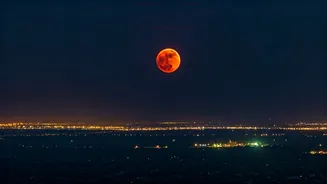
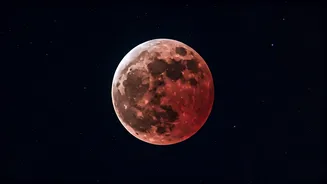
earlier, the timings relevant to India Standard Time (IST) are crucial for optimal viewing. The penumbral phase, where the Earth's fainter shadow begins to obscure the Moon, commences at 4:58 PM IST. Critically, the much-anticipated phase of totality, when the Moon is fully immersed in the Earth's darkest shadow, also begins at 4:58 PM IST. This spectacular phase will conclude at 5:32 PM IST, with the penumbral phase finally ending at 7:53 PM IST. However, a significant point for Indian observers is that the Moon will already be in its eclipse phase as it ascends the horizon in many parts of the country. This means that only the latter stages of the eclipse will be visible. The most visually striking part of the eclipse for those in India is anticipated to occur around sunset, offering a fleeting but memorable window of approximately 20 minutes as the Moon gradually emerges from Earth's shadow.
Visibility Across India
For many across India, the lunar eclipse on March 3, 2026, presents a unique viewing opportunity, particularly for its latter stages around sunset. While the full eclipse unfolds over several hours, the visibility within India is concentrated on the final, most dramatic phases. Several cities in the northeastern part of the country are expected to experience complete obscuration during the total phase of the eclipse, meaning the Moon will be 100 percent covered by Earth's shadow. Among these locations, Dibrugarh in Assam will witness 100 percent obscuration, with the maximum phase occurring around 5:11 PM IST and the totality phase lasting for an impressive 3 hours, 27 minutes, and 8 seconds. Similarly, Dispur and Guwahati, also in Assam, will experience 100 percent obscuration, with their maximum eclipse timings around 5:25 PM IST and the same lengthy duration for totality. Itanagar, the capital of Arunachal Pradesh, is also projected to have 100 percent obscuration, with its maximum eclipse around 5:17 PM IST, and Shillong, Meghalaya, will see its maximum eclipse around 5:25 PM IST, both sharing the extensive 3-hour, 27-minute, 8-second totality period. These northeastern hubs offer prime viewing locations for the full spectacle.
Understanding Lunar Eclipses
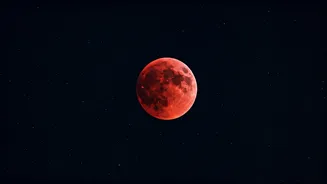
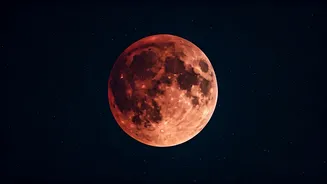
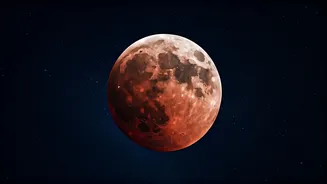
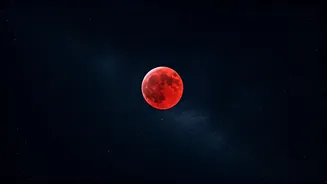
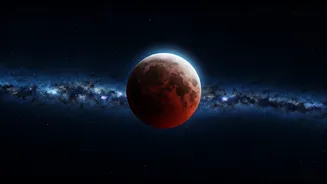
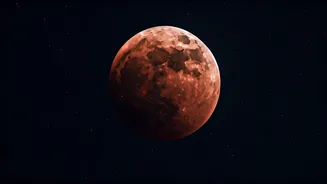
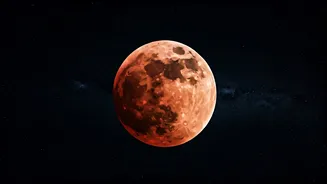
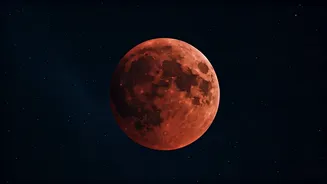
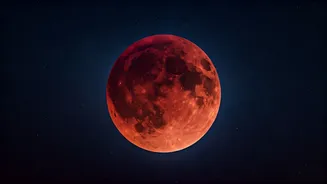
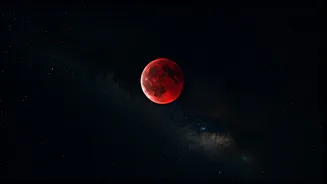
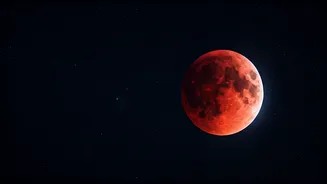
A lunar eclipse is a captivating astronomical event that occurs when the celestial alignment results in the Earth positioning itself directly between the Sun and the Moon. During this cosmic arrangement, the Earth casts its shadow onto the lunar surface. This shadow can cause the Moon to appear noticeably dimmer than its usual luminous self, and in some instances, it can take on a distinct reddish hue, often referred to as a 'Blood Moon.' These phenomena are not exceedingly rare, with lunar eclipses happening a few times each year. However, not all of these events are observable from every geographical location. The specific alignment and Earth's orbital path mean that a lunar eclipse visible from India is a noteworthy occasion, making the March 3, 2026, event particularly special for residents of the subcontinent.
Effortless Viewing Guide
The beauty of observing a lunar eclipse lies in its sheer simplicity and accessibility. Unlike its solar counterpart, which requires specialized protective eyewear to prevent eye damage, a lunar eclipse is entirely safe to view with the naked eye. There is no need for any specialized equipment or tickets. All that is required is a clear evening sky and a few moments of your time to look upwards. For those who wish to enhance their viewing experience, binoculars can offer a more magnified and detailed look at the Moon's changing appearance. However, these are strictly optional; even without any optical aids, the subtle yet significant transformation of the Moon as it passes through Earth's shadow is easily discernible. As the date approaches, it's an event that many amateur astronomers and casual skywatchers alike will want to mark. Although the visible portion for many in India may be brief, the chance to witness such a grand celestial display can be profoundly rewarding.