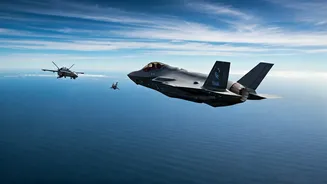










Drone Engagement Incident
In a significant development within the Arabian Sea, a United States F-35 fighter jet took decisive action to neutralize an Iranian drone. The unmanned
aerial vehicle was reported to have approached the USS Abraham Lincoln aircraft carrier in an aggressive manner, creating a direct security concern. Captain Tim Hawkins of the US Central Command confirmed that the F-35C fighter, operating from the Abraham Lincoln, downed the drone as a measure of self-defense to safeguard the carrier and its personnel. Fortunately, this encounter resulted in no injuries to any American service members and caused no damage to U.S. equipment. This incident unfolded against a backdrop of ongoing diplomatic efforts to arrange nuclear talks between Iran and the United States, with President Donald Trump issuing warnings about potential negative consequences should an agreement not be reached, especially as U.S. warships were strategically positioned closer to Iran.
Regional Power Dynamics
The presence of the Abraham Lincoln carrier strike group in the Middle East signifies a major military deployment by the U.S., particularly in the wake of Iran's severe crackdown on internal anti-government protests. This unrest was the most lethal since the 1979 revolution, and while President Trump had previously refrained from direct military intervention, he has since pivoted to demanding nuclear concessions from Tehran, reinforcing his stance by sending naval assets toward Iran's coastline. These actions are part of a broader strategy to deter Iranian provocations amid delicate diplomatic negotiations. Last week, President Trump indicated that Iran was showing a willingness to engage in serious discussions, a sentiment echoed by senior Iranian official Ali Larijani, who confirmed that arrangements for negotiations were indeed being made. This tense atmosphere was further exacerbated by a separate incident in the Strait of Hormuz, where Iran's Revolutionary Guard reportedly harassed a U.S.-flagged merchant vessel, the M/V Stena Imperative, with two IRGC boats and a Mohajer drone threatening to board and seize the ship, as reported by Captain Hawkins.
Diplomacy and Deterrence
The White House Press Secretary, Karoline Leavitt, corroborated the F-35's engagement of the Iranian drone near the Arabian Sea, stating that CENTCOM's decision was based on the drone's unmanned nature and its aggressive trajectory towards the USS Lincoln. She emphasized President Trump's unwavering commitment to pursuing diplomacy as the primary course of action. However, she also stressed that effective diplomacy necessitates a reciprocal effort from all parties involved, encapsulated in the idiom 'it takes two to tango.' This statement underscores the U.S. administration's dual approach of seeking dialogue while maintaining a firm defensive posture. The escalating tensions, fueled by stalled nuclear talks and Iran's assertive regional activities, have created a volatile environment. The U.S. military buildup in the region serves as a deterrent, aiming to prevent further Iranian aggression while simultaneously signaling a readiness to respond if necessary, thereby creating a complex interplay of diplomatic overtures and military readiness.