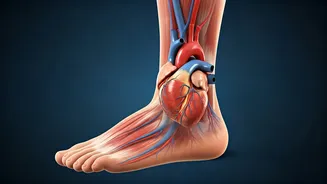









Swollen Feet: More Than Meets the Eye
Persistent swelling in your feet and ankles, especially if it develops in the evening and lingers into the morning, can be a significant signal. This condition,
known as peripheral edema, occurs when excess fluid accumulates in your lower extremities. Symptoms might include a feeling of puffiness, skin that feels tight or looks shiny, a sense of heaviness, and potentially some discomfort or reduced ease of movement. While often associated with heart disease, this swelling can also arise from simpler causes like standing or sitting for extended periods, consuming too much salt, or even issues with your kidneys or liver. The crucial factor is its persistence; if the swelling doesn't subside, it warrants closer medical attention, potentially indicating a problem with how your heart is pumping blood effectively throughout your body, leading to fluid backup.
The Chilling Truth of Cold Feet
Experiencing unusual coldness in your feet, regardless of the ambient temperature, might be more than just poor circulation. This symptom can point towards peripheral artery disease (PAD), a condition where the arteries supplying blood to your limbs become narrower. This restricted blood flow can lead to a chilling sensation and may also manifest as leg pain when walking, a general feeling of numbness, or a noticeable delay in wound healing. While not every instance of cold feet signals a major health crisis, persistent coldness, particularly when accompanied by other concerning signs, should prompt a medical evaluation to assess the health of your vascular system and its connection to your heart's pumping efficiency.
Leg Hair Loss: A Circulation Clue
A less commonly recognized but important sign of compromised circulation in your lower limbs is the gradual loss of hair on your legs and feet, often accompanied by skin that feels unusually smooth and appears shiny. This phenomenon occurs because reduced blood flow means the hair follicles aren't receiving adequate oxygen and essential nutrients necessary for healthy growth. Over time, this deprivation can lead to a noticeable thinning or complete loss of leg hair. While this symptom might not be immediately apparent and is often overlooked, when it appears alongside other indicators like cool-to-the-touch skin or diminished pulses in your feet, it can strongly suggest an underlying vascular issue that may be indirectly affecting your heart's ability to perfuse the extremities efficiently.
When Wounds Refuse to Heal
Perhaps the most serious indicator among these foot-related signs is the presence of wounds on your feet or legs that stubbornly refuse to heal for weeks on end. This delayed healing is a critical red flag, strongly suggesting that your arteries may be blocked or that you have peripheral artery disease. The constricted blood flow severely impairs the body's natural repair mechanisms, as oxygen and vital nutrients are unable to reach the damaged tissue effectively. This not only slows down the healing process but also significantly elevates the risk of developing serious complications such as chronic ulcers or extensive tissue damage, demanding immediate medical intervention to address the root cause, often related to cardiovascular health.