






The Ubiquitous Potato
It's hard to imagine Indian culinary landscapes without the humble potato. This versatile tuber finds its way into almost every conceivable Indian dish,
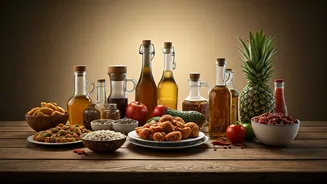
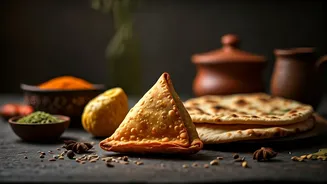
from the crispy delight of samosas and the comforting layers of parathas to the rich gravies of curries and the vibrant chaos of chaats. Its presence feels so natural, so deeply ingrained, that it's easy to assume it's always been a native ingredient. However, the potato's journey to Indian kitchens began thousands of miles away in the towering Andes Mountains of South America. It was in this region, cultivated by the Inca civilization for centuries, that the potato first took root. Its subsequent travels across continents eventually led it to India, where it proved to be an exceptional culinary chameleon. Its affordability, substantial nature, and remarkable ability to absorb and complement any blend of spices made it the ultimate ingredient for everyday cooking, a true shapeshifter in the Indian pantry.
Tomato's Andean Origin
The vibrant red of the tomato is now a cornerstone of countless Indian preparations, lending its essential tang and body to gravies, chutneys, and sauces. It's so fundamental to modern Indian cooking that picturing a dish without it is almost impossible. Yet, this vital kitchen staple also embarked on a transatlantic voyage to reach Indian shores. Originating from the same Andean highlands as the potato, the tomato was first domesticated in the ancient lands of Mexico. Spanish explorers introduced it to Europe in the 16th century, and from there, its influence gradually spread, eventually making its way into the kitchens of India. Here, it became indispensable for balancing flavors and adding a crucial element of acidity. Beyond its culinary importance, tomatoes are a fantastic source of lycopene, a potent antioxidant responsible for their striking color, which is known to promote cardiovascular health and may help lower the risk of certain illnesses. Additionally, the antioxidants present in tomatoes play a role in protecting skin from environmental damage, contributing to a healthier, more radiant complexion.
Chilli's Fiery Arrival
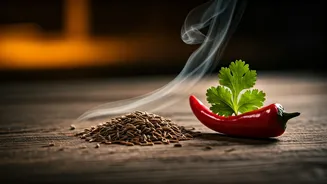
The concept of Indian food is often inextricably linked with a robust sense of heat and spice, a characteristic many associate with the nation's own culinary heritage. However, the fiery kick that defines so many Indian dishes did not originate within India's geographical boundaries. Chilli peppers, the source of this beloved warmth, are native to the Americas. Extensive research indicates that the lineage of the domesticated Capsicum annuum, a common species, can be traced back to Mexico, with other chilli varieties independently cultivated across Central and South America. These peppers were introduced to Europe in the late 15th century and subsequently dispersed throughout Asia and Africa. While India may not be the birthplace of the chilli, its cooks demonstrated an unparalleled mastery in incorporating and adapting them, leading to an integration so profound that the chilli now feels like an instinctually Indian ingredient.
Cauliflower's Global Roots
Cauliflower presents a particularly convincing argument for being an indigenous Indian vegetable, seamlessly fitting into iconic dishes like aloo gobi, enriching creamy korma preparations, starring in stir-fries, and gracing street food stalls. Its commonality in Indian cuisine is so profound that many would be surprised to learn of its foreign provenance. In reality, cauliflower's origins lie in Western Asia, where it was a recognized vegetable among ancient civilizations such as the Persians, Greeks, and Romans. Through centuries of trade and cultural exchange, it journeyed and adapted, eventually becoming a staple in households across India. While its current Indian identity is undeniable and deeply felt, it represents a more recent chapter in the vegetable's long and extensive global history.
Samosa's Ancient Pastry
The samosa, a cherished snack deeply woven into the fabric of Indian culinary tradition, actually traces its lineage back to lands far beyond India's borders. Historical evidence points to medieval precursors originating in the Middle East and Central Asia, where similar folded pastries were known by names such as 'sanbusak.' These early versions of the snack made their way to the Indian subcontinent, often through royal kitchens and established trade routes. Upon arrival, they were meticulously transformed, evolving into the distinctively crisp, spice-filled triangular delight that is now synonymous with Indian tea time and celebrations. India didn't simply adopt the samosa; it reimagined and perfected it, giving it the iconic status it holds today.
Naan: A Persian Inheritance
The beloved naan, a soft, often buttery flatbread, is a standard feature in Indian restaurants worldwide, yet its very name carries a Persian resonance. According to Britannica, the word 'naan' derives from the Persian 'nân-e sangak,' and documented evidence of its presence in India dates back to the 14th century, noted by the poet Amir Khosrow. This bread likely traveled along the extensive cultural and culinary pathways connecting Persia, Central Asia, and the Indian subcontinent over many centuries. As culinary techniques and ingredients were shared among cooks, traders, and royal establishments, wheat-based breads baked in intensely hot ovens began to adapt to local palates. This evolution eventually integrated naan into the everyday dining practices of North India, becoming particularly associated with Mughal aristocracy before its widespread adoption. Therefore, in its purest sense, naan is not a native Indian invention or word but rather a borrowed bread that found its most celebrated existence in India.
Jalebi's Western Trail
The sight and taste of jalebi, with its syrupy sweetness and distinctive coiled shape, evoke strong associations with Indian festivals, gift boxes of mithai, and bustling roadside sweet shops. However, the historical threads of this popular sweet lead westward. Early references indicate similar confections in Arabic and Persian culinary texts, referred to by names such as 'zalabiya' and 'zolbiya.' These variations gradually spread through the Middle East before eventually entering India. Over time, the Indian iteration of this sweet underwent a significant transformation, becoming brighter, crispier, and more visually dramatic. It ultimately acquired the iconic orange, spiraled form that is now inseparable from Indian bazaars and celebrations. While the sweet itself may have been an import, India is undoubtedly credited with bestowing upon it its final, unforgettable character and widespread popularity.