





A Growing Legacy
As of 2026, India proudly boasts 44 UNESCO World Heritage Sites, a remarkable achievement placing it sixth globally in heritage recognition. This diverse
collection encompasses 36 cultural, 7 natural, and 1 mixed site, each a vibrant chapter in India's vast story. These locations serve as tangible links to over 4,000 years of Indian civilization, manifesting through awe-inspiring temples, formidable forts, ancient caves, intricate stepwells, historic railways, meticulously planned cities, and remnants of early settlements. The journey began in 1983 with four iconic sites, setting the stage for an ever-expanding list that now spans 18 states and union territories, offering a profound glimpse into the subcontinent's enduring cultural and natural wealth.
Ancient Wonders
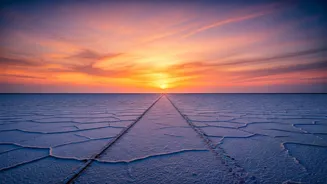
India's heritage extends back to some of the world's oldest civilizations, with sites like the 4,000-year-old Harappan city of Dholavira in Gujarat offering a window into ancient urban planning. The list also includes newer narratives, such as the Moidams burial mounds of Assam, which in 2024 marked the first cultural UNESCO site from Northeast India. The Ajanta and Ellora Caves in Maharashtra are particularly noteworthy. Ajanta preserves exquisite Buddhist paintings and monasteries dating back over two millennia, while Ellora presents a unique synthesis of Buddhist, Hindu, and Jain monuments within a single complex, exemplifying remarkable religious harmony and artistic expression through rock-cut architecture.
Southern & Eastern Splendor
The southern and eastern regions of India contribute significantly to the UNESCO roster, showcasing exceptional temple architecture and historical narratives. Odisha's 13th-century Konark Sun Temple is a marvel of intricate stone carving, depicting the sun's chariot in breathtaking detail. Further south, Tamil Nadu's Great Living Chola Temples stand as testaments to the Chola Empire's architectural prowess and engineering ingenuity. The recent addition of the Hoysala temples in Karnataka, located in Belur, Halebid, and Somnathapura, recognized in 2023, highlights a unique blend of multiple architectural traditions, resulting in highly detailed sculptural masterpieces that have captivated the world.
Mughal Masterpieces
The imperial grandeur of the Mughal era is prominently featured, with several sites representing its architectural zenith. Humayun's Tomb in Delhi, a magnificent 16th-century mausoleum, served as a precursor and inspiration for the iconic Taj Mahal. The Red Fort in Delhi, built in the 17th century, symbolizes the pinnacle of Mughal imperial power and architectural design. Fatehpur Sikri, once the grand capital of the Mughal Empire, offers a glimpse into a fleeting but spectacular period of history, despite its short-lived reign as an operational city, showcasing remarkable urban planning and palatial structures.
Modern & Colonial Legacies
India's more recent history is also etched into the UNESCO list, with sites reflecting colonial influence and modern urban development. Mumbai is home to several significant sites, including the magnificent Chhatrapati Shivaji Terminus (formerly Victoria Terminus) and the city's charming Victorian Gothic and Art Deco Ensemble. Chandigarh's Capitol Complex, a modernist masterpiece designed by the renowned architect Le Corbusier, is part of a select global recognition shared by only 17 of his projects worldwide, underscoring its international architectural importance and innovative urban planning.
Expanding Horizons
Recent years have seen UNESCO recognition extend to diverse geographical areas and historical periods, enriching India's heritage narrative. Dholavira, inscribed in 2021, stands as one of the most significant and well-preserved cities of the ancient Indus Valley Civilization. The Moidams of Assam joined the list in 2024, representing a crucial addition from Northeast India. Furthermore, the Maratha Military Landscapes, a collection of 12 strategically important forts from the Maratha Empire, were recognized in 2025, highlighting a significant period of military history and architectural fortification in western India.
Living Heritage
Not all of India's UNESCO sites are static historical relics; many continue to thrive as active centers of culture and operation. Santiniketan in West Bengal, established by the Nobel laureate Rabindranath Tagore, remains a vibrant hub for education and cultural activities. The Mountain Railways of India, including the Darjeeling Himalayan Railway, the Kalka-Shimla Railway, and the Nilgiri Mountain Railway, are still operational, offering breathtaking journeys more than a century after their construction. These sites demonstrate that heritage can be dynamic, integrating historical significance with contemporary relevance and functionality.