







Mission's Core Purpose
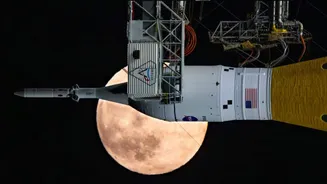
Artemis II is a vital mission for NASA, serving as a crucial stepping stone in the Artemis program. This mission is pivotal because it facilitates the first
crewed journey beyond low Earth orbit in over half a century. The primary goal is to conduct a crewed flyby of the Moon. This test flight will validate the systems needed for subsequent lunar missions, including the Artemis III mission, which aims to land humans on the Moon. This mission is a direct continuation of the unmanned Artemis I, which successfully launched and completed a lunar orbit. It's essentially a proving ground for the technology and processes required to establish a sustained human presence on the Moon and, in the future, venture further into space. This mission is critical for the success of future missions, and it paves the way for deeper space exploration.
February 2026 Launch
The confirmed launch window for Artemis II is set for February 2026. This timeframe is significant as it provides the optimal conditions for the mission's trajectory and overall success. NASA's meticulous planning involves aligning the launch with specific orbital mechanics and ensuring all systems are thoroughly tested and ready. The timing also takes into account the positions of the Earth, Moon, and Sun, ensuring that the spacecraft can efficiently reach its destination. The extended preparation time is essential for the necessary tests, simulations, and integration of the spacecraft's numerous components. The launch window will influence mission duration, energy efficiency, and the overall capacity for crew safety. The agency’s focus on February 2026 reflects a commitment to safety and the best chances for a successful mission, underscoring the importance of precise planning and preparation for the momentous lunar journey.
Astronaut Team Revealed
The Artemis II mission is crewed, adding immense excitement and importance to the venture. The astronauts selected will be the first humans to journey beyond low Earth orbit in over fifty years. This elite team has undergone extensive training to prepare for this historic mission. The astronauts' responsibilities include managing the spacecraft, conducting scientific experiments, and dealing with any unforeseen issues. Their mission profile requires specialized expertise in operating the complex systems of the spacecraft, managing the unique conditions of deep space, and responding to potential emergencies. The names of the astronauts have been unveiled, and they are preparing for a journey that will test the limits of human space exploration. These crew members will become symbols of humanity's ongoing quest to explore and comprehend the universe.
Why This Matters
The Artemis II mission is more than just a flight; it signifies a revival in human space exploration. The crewed flyby of the Moon provides the chance to assess critical systems, such as the Orion spacecraft and the Space Launch System (SLS) rocket, under real space conditions. This validation is critical for the safety of future missions and will inform enhancements to spacecraft design and operational procedures. The mission enables NASA to strengthen its partnership with international space agencies and commercial partners, creating opportunities for shared knowledge and technological progress. In a broader context, Artemis II helps inspire the next generation of scientists, engineers, and explorers. The successful completion of this mission will renew the global community’s passion for space and motivate further advancements in human exploration. The entire mission underscores the significance of expanding our understanding of the cosmos.