



A Leisurely Pace
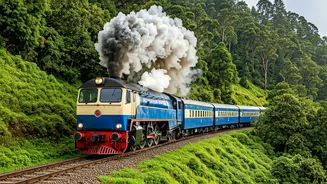
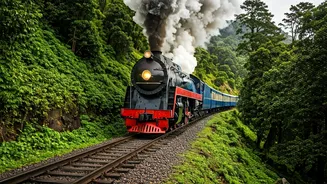
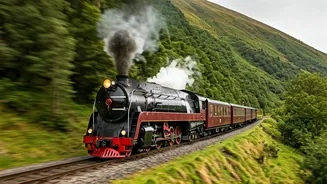
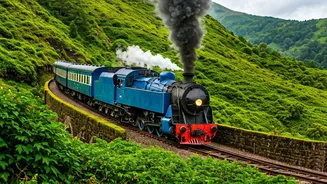
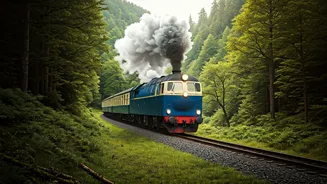
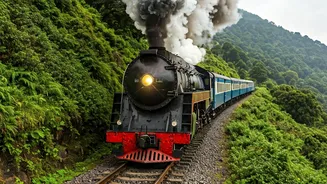
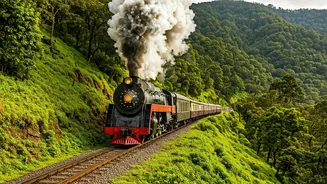
While India races towards high-speed rail, a different kind of magic unfolds on the Nilgiri Mountain Railway. This iconic train winds its way through the picturesque
Nilgiri Hills, so slowly that passengers might feel they could alight, capture a moment, and reboard without a hitch. This unhurried rhythm isn't a glitch, but rather the essence of its allure. As it meanders through misty mountain crests, dives into shadowy tunnels, skirts emerald tea plantations, and traverses dense woodlands, the journey transforms into one of India's most enchanting rail experiences, a cherished escape from the ordinary.
Journey Statistics
Connecting Mettupalayam to the famed hill station of Ooty, the Nilgiri Mountain Railway holds the title of India's slowest train. Its average speed hovers around a mere 9 kilometers per hour, dedicating nearly five hours to cover a distance of approximately 46 kilometers. Far from being a drawback, this deliberate pacing is precisely what captivates travelers, allowing them to fully immerse themselves in the evolving scenery. Each slow turn and gentle ascent offers a unique perspective, making the entire expedition a cherished memory rather than just a commute.
Engineering Ingenuity
The train's remarkably slow speed is a direct result of the challenging terrain it navigates. Ascending the steep inclines of the Nilgiri Hills requires a robust and specialized approach. The narrow tracks, meticulously designed for mountain travel, accommodate sharp bends and steep gradients. To conquer these inclines, the railway employs a unique rack-and-pinion system on its uphill stretches. This intricate engineering, coupled with numerous tunnels, bridges, and winding routes, ensures a safe yet leisurely passage through the formidable mountain landscape.
Heritage Recognition
This remarkable railway is a distinguished part of the UNESCO-listed Mountain Railways of India heritage network, standing as a testament to exceptional mountain railway engineering from the early 1900s. The route itself is a marvel, featuring around 16 tunnels that punctuate the landscape, over 200 distinct curves that test its agility, and more than 250 bridges that span ravines and streams. Travelers are treated to vistas of dense forests, cascading waterfalls, and sprawling tea estates, all part of this historical and natural spectacle.
Bollywood's Charm
The cinematic world has also embraced the enchanting appeal of the Nilgiri Mountain Railway. Its fame was significantly amplified after featuring in the iconic song 'Chaiyya Chaiyya' from the Bollywood film 'Dil Se'. Starring Shah Rukh Khan and Malaika Arora, the visually stunning sequence filmed atop the moving train introduced this heritage railway to a global audience, cementing its legendary status and adding another layer to its romantic mystique.
Enduring Appeal
Despite faster road alternatives to Ooty now existing, the train journey remains a preferred choice for many. The allure lies in the immersive experience: the sweeping, panoramic views of the Western Ghats, the nostalgic charm of its vintage wooden carriages, and the tranquil journey through pristine natural settings. It provides a much-needed antidote to the hurried pace of modern life, offering a peaceful and memorable escape into a bygone era of travel.
Ideal Travel Window
To best appreciate the Nilgiri Mountain Railway's splendor, the period between October and June is highly recommended. During these months, the weather is generally pleasant, offering clear skies and optimal visibility for the stunning mountain vistas. While the monsoon season, from July to September, transforms the landscape into a lush, verdant paradise with dramatic misty scenes, heavy rainfall can occasionally cause journey disruptions or delays, so planning around it is advisable.
Reaching the Start
The adventure commences from Mettupalayam, a town conveniently accessible through various modes of transport. For air travelers, Coimbatore International Airport is the nearest hub. By rail, Mettupalayam is well-connected via Coimbatore, linking it to major railway networks across India. Road travel is also straightforward, with easy access from Coimbatore and other nearby hill stations, ensuring a smooth start to this heritage journey.