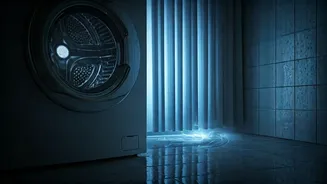







The Hidden Electrical Hazard
The common advice to avoid showering while the washing machine operates isn't just about preventing a sudden blast of cold water. There's a more sinister,
unseen danger: the intersection of water and 'leakage current.' Even minor electrical leaks within your washing machine can find their way through shared plumbing. If this stray electricity encounters you in the shower, your body could complete the electrical circuit, leading to a serious shock. This risk is amplified when metallic pipes are involved, as they can inadvertently electrify entire bathroom surfaces during such malfunctions. Proper grounding and Ground Fault Circuit Interrupter (GFCI) protection are paramount to mitigating this life-threatening risk, as faulty wiring can lead to unexpected energization of common household water systems.
Washing Machine Faults Electrify Showers
The peril isn't solely from faulty plumbing; it's deeply rooted in electrical grounding faults. Washing machines, due to their substantial weight and significant vibrations, are prone to internal wiring degradation over time. When a live electrical wire comes into contact with the machine's metal chassis or the wet pump mechanism, the electrical current doesn't remain contained. Instead, it can escape through discharged water and travel through your home's copper piping or communal sewer lines. Water's high electrolytic conductivity makes it an excellent conductor for this 'leakage current.' Consequently, your shower becomes an unintended endpoint for this stray electricity, posing an immediate and severe danger.
Short Circuits and Shower Safety
In many residences, the plumbing systems for washing machines and showers are interconnected. This shared waste pipe becomes a critical pathway. If the washing machine's motor experiences a short circuit, the wastewater exiting the appliance is no longer just greywater; it's electrically charged. This effluent, laden with minerals and detergents, exhibits extremely high conductivity. If you happen to be in the shower when this electrified greywater is discharged and accumulates on the wet floor, it creates a hazardous standing water situation, posing a significant threat to your health and safety.
The 40-Minute Buffer
To ensure your safety, it's crucial to implement a waiting period of at least 30 to 40 minutes after your washing machine signals the 'End' of its cycle. This buffer allows residual water to fully drain from the machine and the entire system to safely power down. Even after the drum ceases its motion, moisture lingering near the motor or within discharge hoses can still act as a conduit for electricity. Granting adequate time for the pipes to clear and machine components to cool down helps sever any potential electrical pathway between your laundry area and your bathroom, thereby preventing accidental shocks.