




Nitish Kumar 'Compromised,' Says Gandhi
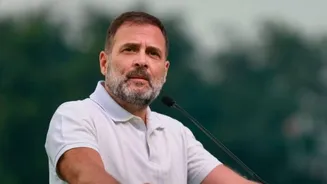
During a lively campaign event held in Thoothukudi, Tamil Nadu, Rahul Gandhi directed sharp criticism towards the National Democratic Alliance (NDA), with
a particular focus on the Bharatiya Janata Party (BJP) and the former Chief Minister of Bihar, Nitish Kumar. Gandhi put forth a significant allegation, asserting that Nitish Kumar had been 'compromised' amidst recent political shifts. He further alluded to Kumar's transition to the Rajya Sabha as a quiet conclusion to his extensive political career in Bihar. This statement suggests a narrative where Kumar's political decisions were not entirely his own, but rather influenced or dictated by external forces, specifically the BJP. The remarks aim to portray Nitish Kumar's political maneuvers as a result of being strategically cornered or manipulated.
BJP's Tamil Nadu Ambitions
Beyond critiquing Nitish Kumar's political standing, Rahul Gandhi also leveled accusations against the BJP regarding their intentions for Tamil Nadu. He voiced concerns that the BJP was actively maneuvering to establish a government in the state that would be entirely under its direct control. This warning to the electorate implies a perceived overreach by the BJP, suggesting an ambition to dominate the political landscape of Tamil Nadu. Gandhi's commentary underscored the importance of regional autonomy and cautioned against what he presented as an attempt by a central party to impose its will on a state, thereby seeking to influence voter sentiment in the upcoming elections.
Election Campaign Intensifies
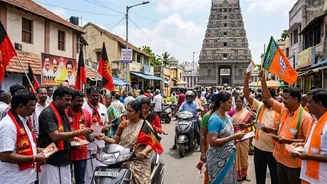
Rahul Gandhi's pointed remarks were made as he actively participated in the campaign efforts for the Dravida Munnetra Kazhagam (DMK)–Congress alliance in Tamil Nadu. These statements are part of a broader strategy to galvanize support and intensify the electoral contest in the state. As political parties across the spectrum escalate their outreach and campaign activities in anticipation of the upcoming polls, Gandhi's pronouncements add a significant layer to the heated political atmosphere. The timing and location of his address indicate a deliberate attempt to sway public opinion and highlight key opposition talking points during a critical phase of the election cycle.