





Tournament Shakes Up
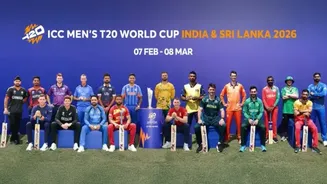
The lead-up to the 10th T20 World Cup was marked by unexpected developments, adding a layer of intrigue to the tournament's commencement. Initially, Bangladesh
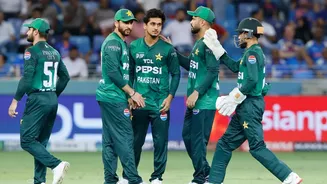
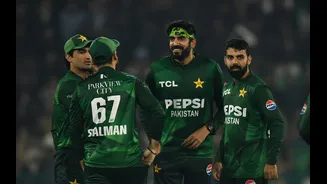
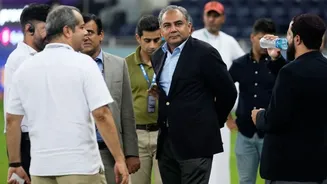
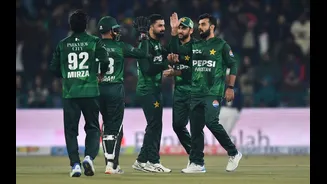
declared they would not participate, a decision stemming from the ICC's denial of their request to host matches in Sri Lanka. Consequently, Scotland stepped in to fill their spot. However, the drama escalated just over a week before the event's kickoff when Pakistan announced a peculiar stance: while they would compete in the tournament, they explicitly stated their refusal to face India on the scheduled date of February 15. This marked an unprecedented moment in T20 World Cup history, as no team had previously forfeited a match in this format, though such occurrences had happened four times in the ODI World Cup.
Protest or Pretext?
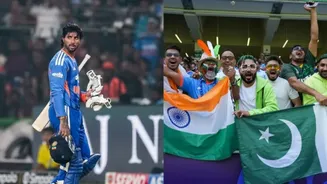
Pakistan's official justification for their refusal to play India was presented as a unified stand against the ICC, expressing solidarity with Bangladesh's earlier boycott. While this explanation was put forth, it raised several pertinent questions. The ICC's decision that led to Bangladesh's withdrawal had no direct involvement from India, making Pakistan's chosen method of protest seem indirect. Furthermore, the scenario where India and Pakistan could still meet in the semi-finals or the final means that the guaranteed group stage clash is now off the table. This encounter would have been their fourth meeting in less than five months, adding to the intrigue surrounding the boycott. Was there a deeper, perhaps more cricket-related, reason for specifically avoiding the match against India?
India's Dominance
Examining recent head-to-head records provides a stark picture of the performance disparity between the two nations in the shortest format of cricket. In the Asia Cup held last September, India emerged victorious in all three encounters against Pakistan, including the final. This trend of Indian success extended to junior-level cricket as well, with India securing a win in the Under-19 World Cup, despite Pakistan having won their regional Under-19 Asia Cup. However, focusing on senior T20Is, India has consistently outperformed Pakistan. India has won their last five consecutive T20I matches against Pakistan, with Pakistan's most recent victory dating back to the 2022 Asia Cup. Across all T20I meetings, India holds a significant advantage, having won 13 out of 16 matches. Within the T20 World Cup specifically, India's record is even more dominant, with seven wins in eight encounters. This historical data overwhelmingly favors India, prompting speculation about whether Pakistan's decision was an attempt to bypass a statistically superior opponent in the early stages of the tournament.
The Verdict Is Yours
The decision by Pakistan to withdraw from their scheduled T20 World Cup fixture against India leaves room for considerable interpretation. While the team has cited a stand against the ICC in solidarity with Bangladesh, the specific targeting of the India match, given India's lack of involvement in the ICC's decision regarding Bangladesh, raises eyebrows. Coupled with India's dominant record against Pakistan in T20Is, both historically and in recent times, the possibility of a strategic avoidance of a challenging opponent cannot be entirely dismissed. Ultimately, the true motivations behind Pakistan's boycott remain speculative. Whether it was a genuine protest or an attempt to escape unfavorable match-up is a question that the fans and observers must ponder. The article concludes by leaving the final judgment to the reader: was this a principled stance against the governing body, or a calculated maneuver to steer clear of India?