



Constant Solar Surveillance
As the Artemis II mission prepares for its groundbreaking lunar flyby, NASA has initiated a round-the-clock observation of the Sun. This vigilant monitoring
is paramount because the greatest potential hazard to the astronauts stems from Solar Energetic Particles (SEPs). These high-energy particles, unleashed during intense solar events like flares and coronal mass ejections, possess the capacity to breach the protective hull of spacecraft. Once inside, they pose significant health risks to the crew and can also wreak havoc on delicate electronic systems. To proactively address this invisible threat, NASA has established the Moon to Mars Space Weather Analysis Office. This dedicated facility is tasked with providing crucial forecasts of impending hazardous solar activity, ensuring that mission planners and astronauts are equipped with vital advance warning for the 10-day lunar mission.
How Eruptions Penetrate
Astronauts embarking on the Artemis II mission will face a unique challenge as they venture beyond the protective embrace of Earth's magnetic field. Outside this shield, they become vulnerable to a barrage of Solar Energetic Particles (SEPs). These particles are ejected from the Sun at incredibly high velocities, often reaching spacecraft in under an hour. Their immense speed and energy allow them to penetrate the very walls of the spacecraft. This penetration is perilous, as these particles can directly damage human cells, leading to radiation sickness or long-term health issues. Furthermore, SEPs can scramble or destroy sensitive onboard electronics, jeopardizing mission control and vital life support systems. The speed and potency of these solar emissions necessitate a robust defense strategy, as even a brief exposure can have severe consequences.
Mars Rover's Crucial Role
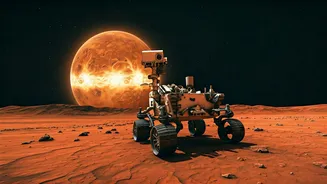
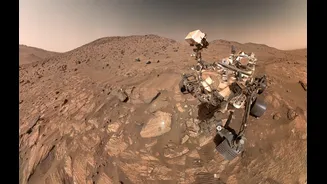
In a remarkably innovative approach to space weather prediction, NASA is leveraging the Mars Perseverance rover to bolster the safety of the Artemis II mission. By positioning itself at a Martian vantage point, Perseverance offers a cost-effective method for observing solar activity. Specifically, its advanced Mastcam-Z cameras are capable of capturing images of sunspots and other solar phenomena on the far side of the Sun, which are not yet visible from Earth. This capability provides scientists with a critical two-week lead time. By seeing what's coming around the solar bend, they can issue timely warnings to astrometeorologists about potential solar flares and SEP events. This foresight is invaluable for preparing the Artemis II crew and ensuring their journey is as safe as possible.
Onboard Radiation Defense
The Orion spacecraft, carrying the Artemis II crew, is equipped with a sophisticated defense system against space radiation: the Hybrid Electronic Radiation Assessment (HERA) system. This system comprises six sensors strategically placed throughout the cabin, meticulously monitoring real-time radiation dose rates. Should these sensors detect a significant and concerning spike in radiation levels, the HERA system will immediately trigger an audible alarm. This alert is designed to be unambiguous, immediately notifying the crew that protective measures must be taken. Astronauts have been rigorously trained to respond to such warnings by creating an 'improvised storm shelter' within the spacecraft. They will utilize the available mass of their equipment and supplies to create a more shielded environment, offering essential protection from the potential dangers of solar radiation during their lunar flyby.