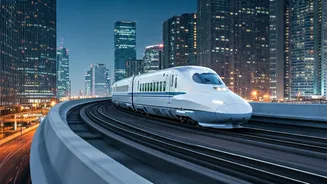







High-Speed Rail Vision
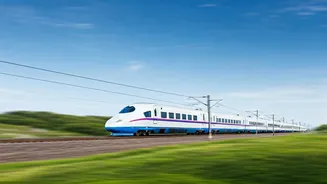
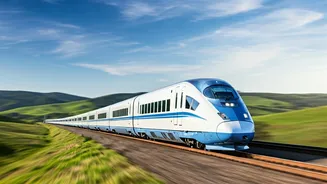
The Indian government has initiated a monumental plan by introducing seven fresh bullet train corridors across the nation, signifying a major leap in the country's
transportation infrastructure. This initiative is designed to greatly enhance connectivity between crucial cities and regions, promoting economic development and streamlining travel. With this expansion, the government aims to modernize the railway system, offering quicker and more comfortable journeys for passengers. These new corridors are not just about speed; they also symbolize a dedication to sustainable development, integrating the latest technologies to lessen environmental impact and boost operational efficiency. The government's vision of high-speed rail extends beyond simply connecting cities; it anticipates transforming the very way people travel and experience India.
Strategic Route Planning
Strategic planning is pivotal to the success of India's bullet train initiative. The newly proposed corridors have been meticulously designed to link significant metropolitan areas and commercial hubs. The process involved comprehensive assessments and surveys to identify optimal routes, considering factors such as population density, geographical characteristics, and existing infrastructure. Each route has been designed with specific objectives. Some are focused on connecting major economic centers, thereby facilitating trade and investment, while others are geared towards enhancing tourism by linking popular destinations. The alignment process also took into account the minimization of land acquisition and the reduction of environmental effects. The government's dedication to strategic route planning reflects its comprehensive approach to ensure that the bullet train network maximizes its benefits, boosting both connectivity and economic prosperity throughout India.
Economic Impact Anticipated
The introduction of seven new bullet train corridors is expected to generate a substantial positive impact on the Indian economy. The increased connectivity between cities will significantly boost commerce and investment, making it easier for businesses to grow and for goods to be transported efficiently. The project is anticipated to create numerous employment opportunities, from construction to operation and maintenance, thus driving economic growth across multiple sectors. Furthermore, bullet trains could enhance tourism, as they enable faster and easier access to various destinations. The faster and more reliable transportation could also improve productivity by reducing travel times for professionals and commuters. The infrastructure developments related to the bullet trains, like the construction of stations and associated facilities, will boost real estate and related industries, adding to overall economic development. Overall, the new corridors are anticipated to stimulate economic activity and foster sustainable progress across the nation.
Technological Advancements
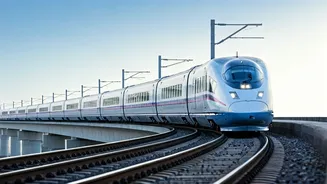
The new bullet train corridors will bring cutting-edge technological advancements to the Indian railway system. State-of-the-art train sets, equipped with the latest safety features, are planned for deployment. These trains will feature advanced signaling systems that ensure precise and secure operations, boosting both passenger safety and efficiency. The integration of high-speed rail technology involves sophisticated track systems, designed to manage the high speeds and heavy loads. There is a strong focus on sustainability, with energy-efficient trains and the implementation of eco-friendly practices throughout the construction and operation phases. The project also explores smart technologies such as real-time monitoring and data analytics to optimize performance and reduce operational costs. The use of innovative technologies will place India at the forefront of railway technology, resulting in a more efficient, safe, and environmentally friendly transportation system.
Environmental Considerations
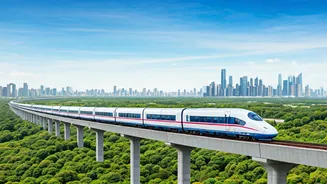
Environmental sustainability is a primary focus of the new bullet train projects. The government is committed to minimizing the environmental impact through comprehensive environmental impact assessments before the commencement of construction. The planning includes measures to protect natural habitats and biodiversity along the routes. The initiative promotes the use of eco-friendly construction materials and sustainable building methods to lessen the carbon footprint. The incorporation of renewable energy sources to power the trains and stations is also being explored. The implementation of noise barriers and other mitigation strategies minimizes noise pollution in populated areas. Through this multi-faceted approach, the government aims to build a modern high-speed rail network, while also protecting the environment and promoting sustainable development practices.
Challenges and Solutions
Implementing seven new bullet train corridors presents a number of logistical and operational challenges. Securing land acquisition can be complex, involving extensive negotiations and careful management of stakeholder interests. The requirement for significant investments in infrastructure and technology necessitates strong financial planning and careful allocation of funds. Managing the integration of the new high-speed rail system with the existing railway network demands meticulous coordination and advanced engineering solutions. The government is addressing these issues through robust project management frameworks and proactive collaboration with state governments, industry partners, and international experts. Innovative financing models are under consideration to secure the required financial resources. Emphasis is placed on streamlining the approval processes and deploying advanced construction technologies to speed up project execution. By systematically addressing these obstacles, the project aims to effectively manage the challenges and make sure the successful implementation of the new bullet train corridors.
Future Prospects
The introduction of seven new bullet train corridors offers promising prospects for the future of India's transportation landscape. These corridors are envisioned to improve travel experiences and transform how people move across the nation. They will facilitate quicker travel, leading to time savings and greater convenience for passengers. The project is likely to stimulate economic growth and boost regional development by connecting major metropolitan areas and commercial centers. The modernization of railway infrastructure will promote technological advancements and boost the country's standing in the international community. The initiative marks a decisive step toward a sustainable and efficient transportation system, reflecting India's dedication to innovation and progress. As the bullet train network expands, it is anticipated to contribute significantly to the country's overall development, creating a more connected and prosperous India.